


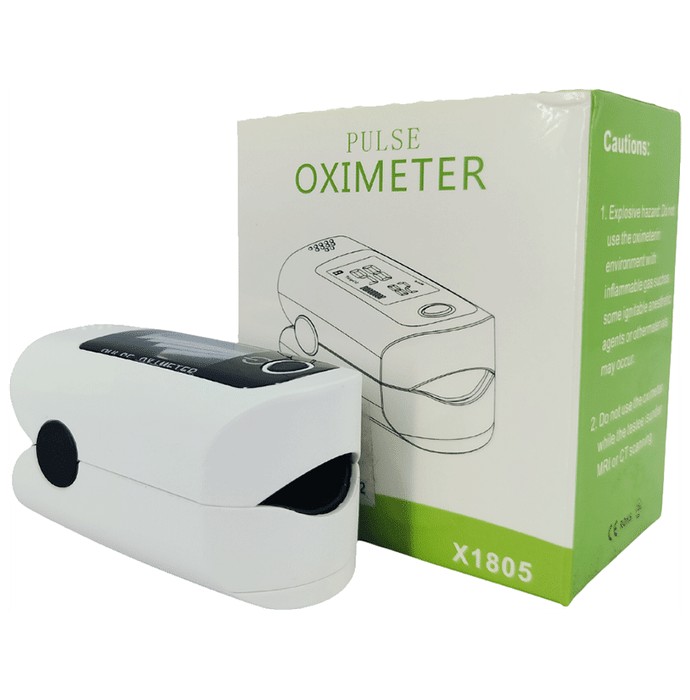

Bos Medicare Surgical Finger Tip Pulse Oximeter
Bos Medicare Surgical
Product highlights
- Precise determination of oxygen levels and heart rate.
- Appropriate for a range of health issues.
- Offers rapid, comfortable evaluations.
- Robust instrument
- Suitable for administration
Overview Bos Medicare Surgical Finger Tip Pulse Oximeter
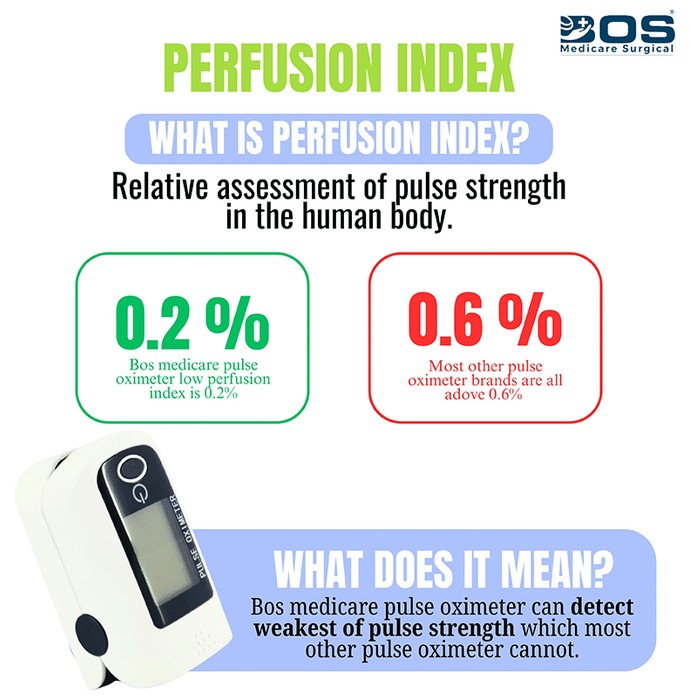
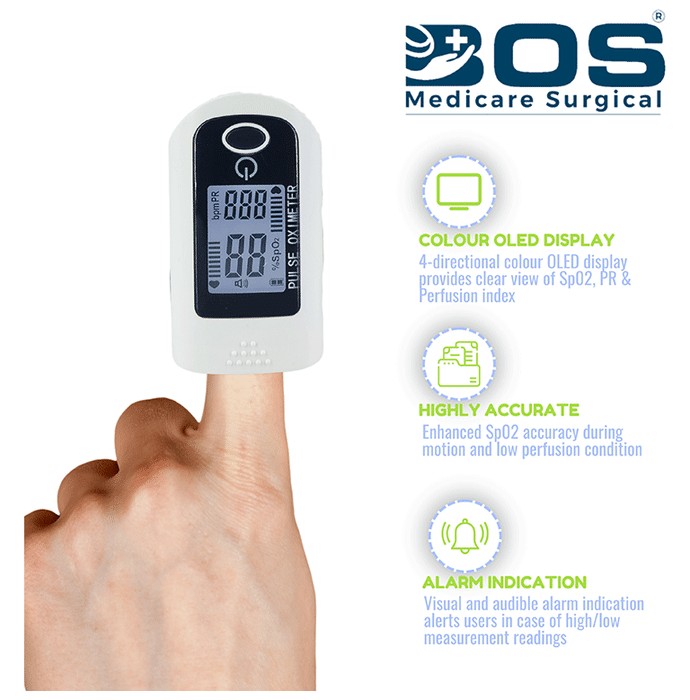
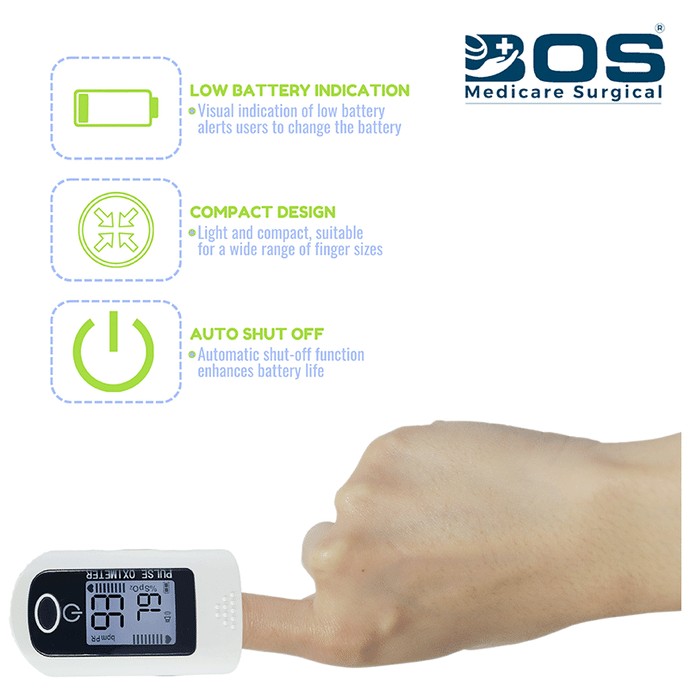
The Bos Medicare Surgical Fingertip Pulse Oximeter is a non-invasive device measuring blood oxygen saturation and pulse rate. It utilizes light beams to assess oxygen levels, providing crucial data on the body's oxygen transport capacity. Physicians frequently recommend its use for patients with cardiac or pulmonary ailments, experiencing shortness of breath, or undergoing surgical procedures. Post-surgery monitoring, evaluating the effectiveness of respiratory medications, and assessing activity tolerance are further applications. **Uses:** This device is ideal for continuous oxygen saturation and pulse rate monitoring, particularly beneficial for individuals with heart or lung conditions, pre- and post-surgery, and for gauging exercise tolerance. **Specifications and Features:** * **Oxygen Level Tracking:** Provides continuous oxygen level monitoring, flagging potential hypoxemia requiring immediate medical attention. * **Supplemental Oxygen Needs:** Assists in determining the necessity and efficacy of supplemental oxygen therapy and ventilatory support. * **Blood Oxygen Condition Management:** Facilitates ongoing health monitoring for patients with conditions impacting blood oxygenation. * **Medication Efficacy Assessment:** Tracks the effectiveness of new pulmonary medications. * **Exercise Safety:** Enhances safety during physical activity, especially for individuals with respiratory or cardiovascular compromise. Pulse oximetry offers a rapid, painless, and economical method of assessment, suitable for both inpatient and outpatient settings. Applications include diagnosing dyspnea, tracking oxygen levels during operations, and evaluating supplemental oxygen effectiveness. A normal SpO2 range, per the American Lung Association, is 95-97%; values below 90% necessitate immediate emergency care. **Disclaimer:** This information serves solely for educational purposes and does not provide medical guidance or constitute a diagnosis. **Instructions for Use:** 1. Prepare your hand (warm it, remove nail polish/artificial nails). 2. Rest your hand below heart level for at least five minutes. 3. Position the oximeter on an index or middle fingertip (earlobe or toe are alternatives). 4. Remain still for at least one minute to obtain a stable reading. Extend monitoring time if readings fluctuate. **Safety Precautions:** * Always read the product label before use. * Several factors influence oximeter accuracy, including poor circulation, skin pigmentation, thickness and temperature, tobacco use, and nail polish application. * Inaccurate readings can result from probe dislodgment, improper placement (e.g., ear vs. finger), unclean fingers, dark/thick/poorly perfused skin, cold skin, dark nail polish, artificial nails, or current tobacco use. * The probe's adhesive may cause skin irritation. Nail polish can underestimate saturation by up to 6%; sideways probe placement is recommended. * The FDA mandates clinical testing for prescription oximeters to validate accuracy.
How to Use Bos Medicare Surgical Finger Tip Pulse Oximeter:
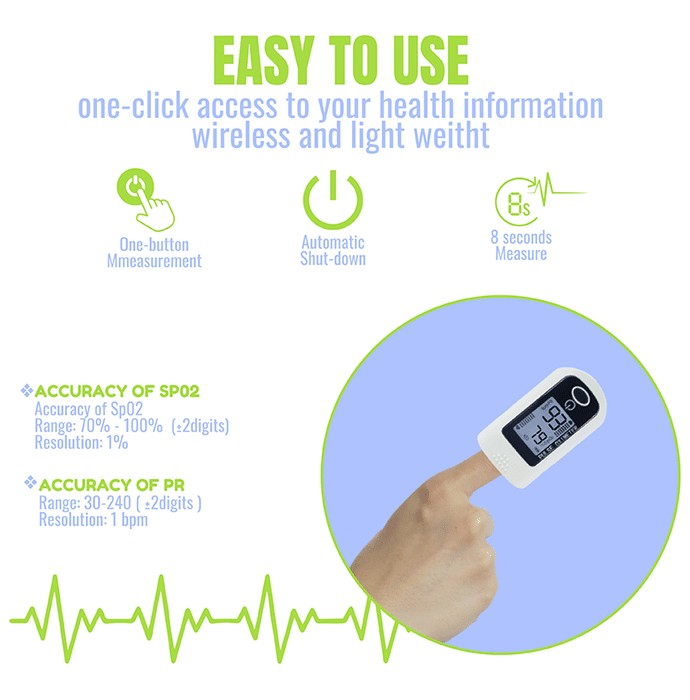
Get your hand ready; warm it up. Remove nail polish or artificial nails. Let your hand rest for at least five minutes. Position your hand below heart level. Attach the oximeter to the index or middle fingertip of either hand; the earlobe or toe are also suitable locations. Remain motionless; keep the oximeter area still for at least one minute. For fluctuating readings, extend the measurement time.
Safety Instruction of Bos Medicare Surgical Finger Tip Pulse Oximeter:
- Always check the product label before administering.
- Pulse oximeter readings can be inaccurate due to several influences, including inadequate blood flow, skin color, skin depth, skin temperature, smoking, and nail polish.
- Erroneous measurements: Should the sensor detach from the earlobe, toe, or finger, the resulting measurement may be flawed. Inaccurate readings can also occur if:
- It's affixed to the ear (or conversely).
- A baby or child is connected to it (or the other way around).
- The fingers are soiled.
- The epidermis exhibits hyperpigmentation, increased thickness, or compromised vascular supply.
- The patient's skin feels cool to the touch.
- The individual has dark nail polish, long artificial nails, or a history of tobacco use.
- Probe adhesion can irritate the skin.
- Fingernail coatings can lead to pulse oximetry readings being up to 6% lower than actual values. Therefore, it's advisable to position sensors laterally on digits with polish or longer nails.
- The U.S. Food and Drug Administration mandates clinical trials for prescription pulse oximeters to validate their precision.

Rate your recent purchases
Your ratings and reviews help lakhs of people purchase the right product.
Ratings & Reviews
Ratings 0 Reviews
 3,018 People bought this recently