


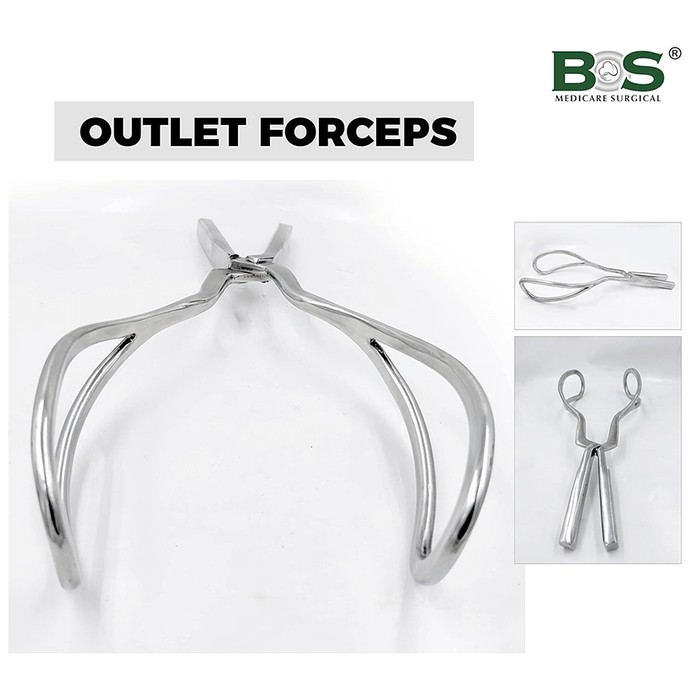
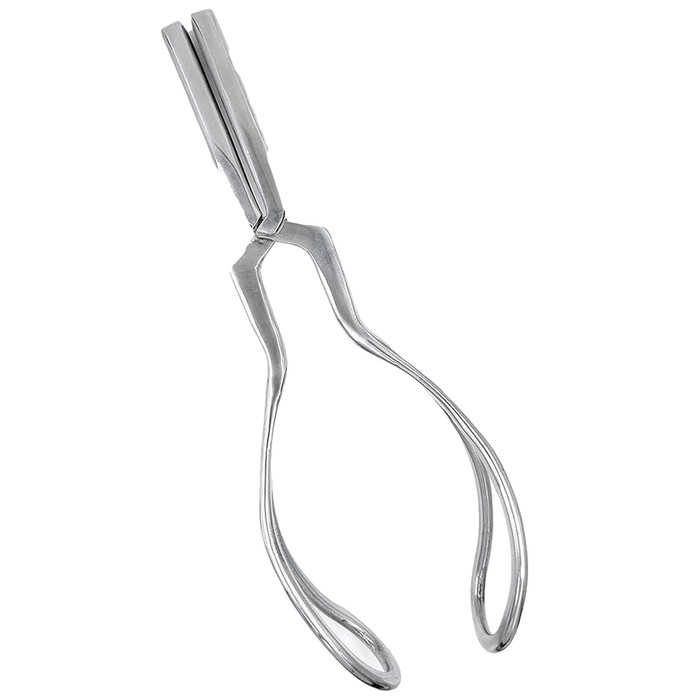
Bos Medicare Surgical Outlet Forceps Stainless Steel
Bos Medicare Surgical
Product highlights
- Simple to disinfect
- Constructed from premium stainless steel.
- Resistant to corrosion and long-lasting.
- Supports safe and effective administration.
Overview Bos Medicare Surgical Outlet Forceps Stainless Steel
High-quality stainless steel Bos Medicare surgical outlet forceps are designed for assisted vaginal deliveries, particularly during Cesarean sections when the fetal scalp is visible at the pelvic floor. Their robust construction ensures durability and resistance to corrosion for extended use. Weighing 200 grams, these forceps offer a safe alternative to prolonging the second stage of labor in high-risk pregnancies, as recommended by the American College of Obstetrics and Gynecology (2015) for operative vaginal deliveries with a low complication profile. **Application:** The forceps are applied from below the fetal head, using forearm traction, not chest force. The left blade is typically inserted first, rotating counterclockwise between the fetal head and the operator's right hand, before locking both blades. Gentle traction (maximum 30 lbf or 130 Newton) along the pelvic axis facilitates delivery. Post-delivery, the baby's head is assessed and rotated to the occiput anterior position if necessary. An episiotomy may be performed as needed. **Indications:** These forceps are indicated for prolonged second-stage labor, suspected fetal compromise, or maternal conditions such as exhaustion, hemorrhage, cardiac/pulmonary issues, or prior pneumothorax. They are also useful for malpresentations, including after-coming heads in breech deliveries. **Precautions:** Outlet forceps deliveries, while often safe, carry risks for both mother and baby. Potential maternal complications include vaginal tearing (episiotomy), pelvic organ prolapse, incontinence (urinary or fecal), and prolonged recovery. Infants may experience facial nerve injury, clavicle fracture, intracranial hemorrhage, or damage to cranial nerve VI (strabismus). Forceps application requires full cervical dilation, confirmed fetal vertex presentation, and engagement.
How to Use Bos Medicare Surgical Outlet Forceps Stainless Steel:
During a seated delivery, forceps are introduced beneath the fetal head, applying traction using forearm strength, avoiding chest strain. The left blade is typically inserted first; the operator's right hand guides it, positioned between the fetal head and the left vaginal wall. Holding the left blade handle vertically, a counter-clockwise rotation facilitates its placement. After locking the blades, gentle traction (a maximum of 30 lbf or 130 N) along the pelvic axis delivers the infant. Post-delivery, the infant's head is examined and, if needed, rotated to an occiput anterior position. An episiotomy may be considered. Forceps are warranted in cases of prolonged second stage labor, suspected immediate or potential fetal distress during the second stage, or maternal conditions such as exhaustion, hemorrhage, cardiovascular or respiratory issues, or prior pneumothorax. Fetal malpresentations, including a breech delivery's after-coming head, also constitute indications.
Safety Instruction of Bos Medicare Surgical Outlet Forceps Stainless Steel:
- Assisted vaginal delivery using forceps, sometimes called outlet forceps delivery, carries potential risks and complications for both parent and child. Maternal complications may include:
- Lacerations of the vagina, sometimes involving an episiotomy, are typically mended using absorbable sutures.
- Prolapse of the pelvic organs: A higher incidence is observed in cases of perineal laceration.
- Loss of bladder or bowel control: This may affect urination or defecation.
- Extended postpartum healing and discomfort: This may also involve bowel movement challenges.
- The infant might show:
- Elevated likelihood of facial nerve damage.
- Elevated risk for collarbone fracture.
- Elevated risk of bleeding in the brain
- Injury to the sixth cranial nerve causing misalignment of the eyes.
- Cervical dilation must be complete, fetal presentation confirmed as vertex, and the vertex engaged before forceps application.

Rate your recent purchases
Your ratings and reviews help lakhs of people purchase the right product.
Ratings & Reviews
Ratings 0 Reviews
 3,018 People bought this recently