


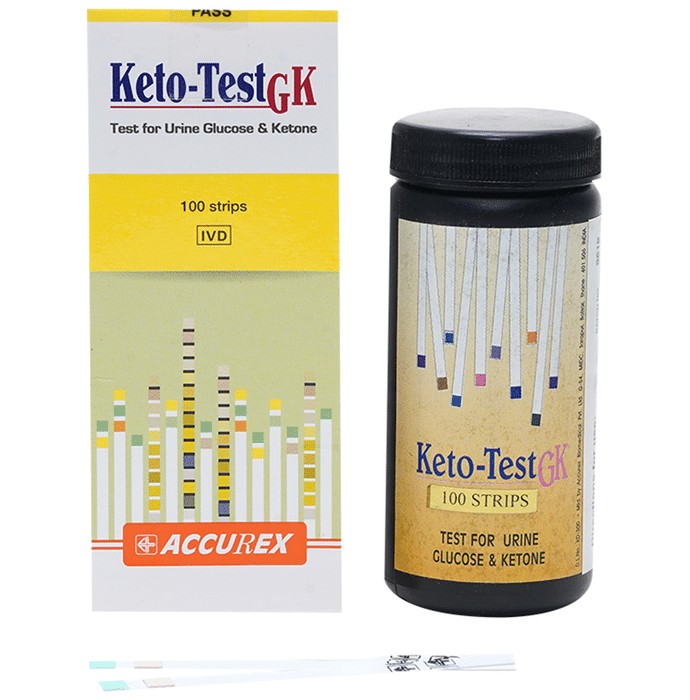
Keto-Test GK Test Strip
Accurex Biomedical Pvt. Ltd
Product highlights
- Urine samples are analyzed with this to provide a semi-quantitative assessment of glucose and ketone levels.
- A single-use plastic strip, pre-coated with two distinct reagent zones, allows for simultaneous glucose and ketone detection.
- Sealed within a hermetically sealed plastic container, including a moisture absorber.
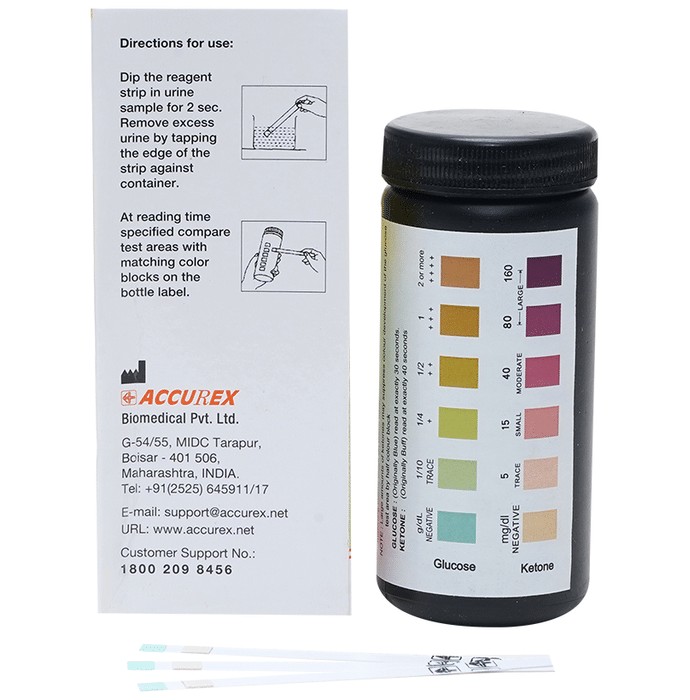
- Visual interpretation of the strip's color change, following immersion in the urine specimen, provides results within 40 seconds; no specialized laboratory instruments are needed.
Overview Keto-Test GK Test Strip
The Keto-Test GK Test Strip facilitates semi-quantitative urine analysis for glucose and ketone levels. This single-use plastic strip, featuring distinct reagent zones for each analyte, is packaged within a desiccant-containing, airtight container. Visual colorimetric interpretation, requiring no specialized equipment, is achieved within 40 seconds of urine immersion. Application: Semi-quantitative assessment of urinary glucose and ketones. Product Details: Glucose determination employs a double sequential enzymatic reaction. Glucose oxidase converts glucose to gluconic acid and hydrogen peroxide; subsequently, peroxidase transforms hydrogen peroxide into water and nascent oxygen, which liberates iodine from potassium iodide, generating a color gradient (green to brown) proportional to glucose concentration. Ketone detection utilizes a Rothera's test adaptation. Acetoacetic acid, in an alkaline environment, reacts with sodium nitroprusside, yielding a purple hue. The test identifies acetoacetic acid, a ketone body; it shows limited sensitivity to acetone (only in the presence of glycine) and does not detect β-hydroxybutyric acid. Usage Instructions: Accurate results necessitate strict adherence to these instructions. Use a clean, dry container for a fresh, well-mixed urine sample. Remove one strip, immediately resealing the container. Submerge the reagent areas for 1-2 seconds; remove excess urine by tapping the strip against the container's rim. Compare the strip's color to the provided chart under adequate (but not direct sunlight) illumination. Glucose readings are at 30 seconds, ketones at 40 seconds. Avoid direct chart contact. Interpret results based on the nearest color block; post-40-second color changes are diagnostically irrelevant. Storage & Safety: Retain strips in their original container; do not remove the desiccant. Immediately reseal the container after each use to preserve reagent integrity. Protect from moisture to prevent degradation. Avoid touching reagent areas. Use within four months of opening. Ensure clean testing surfaces and containers, free of detergents or contaminants. Briefly (1-2 seconds) immerse the strip to prevent reagent dissolution. Adhere strictly to the specified reading times for accurate results.
How to Use Keto-Test GK Test Strip:
Precise adherence to this protocol is crucial for accurate test outcomes. Use a clean, dry container to collect a fresh, thoroughly mixed urine sample; avoid centrifugation. Remove test strips individually, immediately and securely recapping the bottle after each removal. Briefly immerse the reagent area in urine (1-2 seconds), then gently remove, drawing the edge along the container to eliminate excess fluid. Compare the resultant color to the provided chart under adequate (non-direct sunlight) illumination. Glucose readings are valid at 30 seconds, ketone readings at 40 seconds. To prevent contamination, avoid direct contact between the strip and the color chart. Interpret results by approximating color matches between adjacent blocks on the chart. Colorimetric changes beyond 40 seconds are diagnostically insignificant.
Safety Instruction of Keto-Test GK Test Strip:
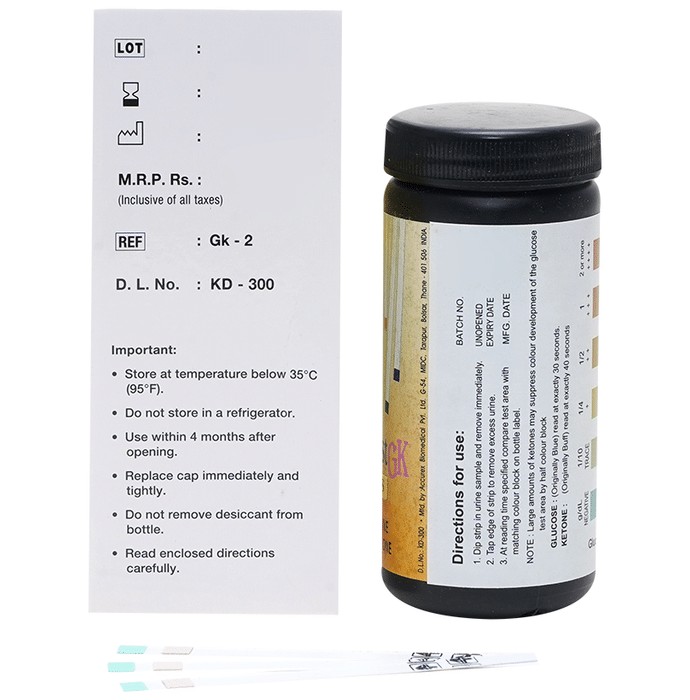
- Keep the test strips in their original container.
- Keep the desiccant in the bottle.
- Ensure reagent strips remain reactive by promptly and securely replacing the container's cap after each use.
- Keep Keto-lestGK dry to maintain its quality throughout storage.
- Avoid contact with the reagent zones on any unneeded test strips.
- Discard reagent strips four months after initial container access.
- Maintain clean workspaces and sample receptacles; ensure the absence of detergents and other contaminants.
- Submerge the test zones in urine fully, yet momentarily (1-2 seconds), to prevent reagent dissolution from the test strip.
- Review your test findings as instructed.

Rate your recent purchases
Your ratings and reviews help lakhs of people purchase the right product.
Ratings & Reviews
Ratings 0 Reviews
 3,018 People bought this recently