


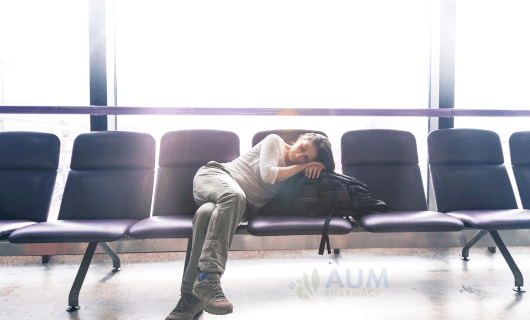
Jet lag
Overview of Jet lag
While the advent of quick air travel has made it easier to cross continents, it also brings with it some undesirable effects, one of which is jet lag. Jet lag is a temporary sleep disorder that occurs when there is a mismatch between a person’s usual daily rhythm and the new time zone they travel to.
This disruption to the body’s internal clock can lead to various symptoms, including difficulty sleeping, fatigue, irritability, excessive daytime drowsiness, mood swings, memory issues, and physical discomfort.
Typically, jet lag resolves within a few days without requiring any treatment.
Preventive and management strategies often involve gradually adjusting sleep schedules before traveling, staying hydrated, avoiding caffeine and alcohol, and getting exposure to natural light. In more severe cases, sleep medications or melatonin supplements may be recommended under the guidance of a healthcare provider.
Important Facts of Jet lag

Usually seen in
- People of all age groups

Gender affected
- Affects both men and women

Body part(s) involved
- Primarily the brain

Prevalence

Mimicking Conditions
- Alcohol use disorder
- Anxiety disorders
- Bipolar disorder
- Sleep apnea
- Chronic obstructive pulmonary disease
- Depression
- Hyperthyroidism
- Hypoparathyroidism
- Obstructive sleep apnea
- Opioid use disorder
- PTSD

Necessary health tests/imaging
- Sleep study

Treatment
General Management
Medications:
- Chronobiotics: Melatonin
- Hypnotics: Benzodiazepines
- Stimulants: Armodafinil, Caffeine
- Melatonin analogs: Tasimelteon, Ramelteon

Specialists to consult
- General Physician
- Sleep Specialist
- Neurologist
Symptoms Of Jet lag
Jet lag is a short-term sleep disorder that typically occurs after crossing multiple time zones. The severity of symptoms may vary based on the number of time zones crossed and individual sensitivity to time changes. Common symptoms include:
- Fatigue
- Irritability
- Headaches
- Dehydration
- Nausea
- Reduced appetite
- Constipation and digestive issues
- Daytime drowsiness
- Apathy
- Impaired decision-making
- Memory lapses
- Difficulty sleeping at night
Triggering Factors Of Jet lag
Jet lag occurs when the body’s internal clock (circadian rhythm) becomes misaligned with the time zone of the destination.
Risk Factors for Jet Lag
Although jet lag can affect anyone who travels rapidly across multiple time zones, certain factors may heighten the likelihood of experiencing more severe symptoms:
Travel-Related Factors
- Number of Time Zones Crossed: The greater the number of time zones crossed, the more disruption there is to the body’s internal clock, leading to more intense symptoms.
- Duration of Travel: Longer flights that span several time zones increase the risk of jet lag.
- Direction of Travel: Traveling eastward, which results in losing hours, typically causes more significant jet lag than traveling westward.
- Frequency of Travel: Frequent travelers or those on long trips may be at higher risk.
- Light Exposure: Traveling to a new time zone disrupts the body's light exposure, further confusing the internal clock.
- Air Travel Conditions: Changes in cabin pressure and high altitudes can exacerbate jet lag symptoms.
Individual Factors
- Age: Children and elderly individuals may be more susceptible to jet lag.
- Sensitivity to Time Zone Changes: Some people’s internal clocks are more sensitive to time zone shifts due to genetic and biological differences.
- Health Conditions: Those with sleep disorders, such as insomnia or sleep apnea, may have a harder time adjusting to new time zones.
- Caffeine and Alcohol: Consuming caffeine or alcohol just before traveling can disrupt sleep and worsen jet lag symptoms.
- Dehydration: Air travel’s low humidity can lead to dehydration, intensifying fatigue and discomfort.
- Meal Timing: Irregular eating habits, especially when traveling across time zones, can contribute to jet lag.
- Irregular Work Schedules: People with rotating or irregular work shifts may already have disrupted circadian rhythms, making them more vulnerable to jet lag.
- Stress and Fatigue: Long flights can be mentally and physically taxing, adding to the severity of jet lag.
- Poor Preparation: Failing to gradually adjust sleep schedules before a trip can increase the likelihood of experiencing more severe jet lag.
Potential Risks for Jet lag
Diagnosis Of Jet lag
Jet lag is typically self-diagnosable based on the symptoms experienced after traveling across multiple time zones. However, in more severe cases, you may need to consult a healthcare provider who may confirm the diagnosis through:
Physical Examination and Medical History
The doctor will examine you physically and ask about your symptoms, sleep habits, and any pre-existing medical conditions that could influence the severity of jet lag.
Sleep Study
- A sleep study might be recommended to identify severe jet lag symptoms or other sleep-related issues.
Prevention of Jet Lag
Although it may be impossible to entirely prevent jet lag, certain strategies can help ease the transition and reduce its effects. These tips can make adjusting to a new time zone smoother:
Before Travel
Start adjusting your sleep schedule a few days before your journey to match the time zone at your destination. Here are some helpful strategies:
- For westward travel, gradually delay your bedtime by an hour or two, and for eastward travel, go to bed an hour or two earlier.
- Try to arrive at your destination at least two days before any significant events to give your body time to adjust.
- Eating lighter, smaller meals before traveling can help alleviate stomach issues and other digestive discomforts caused by jet lag.
- Opt for flights that arrive during the day to increase alertness and aid your adjustment to the new time zone.
During Travel
During the flight, follow these tips to reduce the effects of jet lag:
- Drink plenty of water to combat dehydration caused by the low humidity in the plane.
- Avoid alcohol and caffeine, as they can disrupt sleep patterns and cause dehydration.
- Wear comfortable, loose clothing.
- Use noise-canceling headphones, earplugs, eye masks, and a travel pillow for better sleep.
- Whenever possible, move around in the cabin to promote circulation.
- If it’s daytime at your destination, stay awake and seek exposure to natural light. If it’s nighttime, try to sleep to adjust to the local time.
- If crossing multiple time zones, consider the direction of travel when selecting your seat. For example, when traveling eastward, sitting on the east side of the plane may help expose you to morning light, which can aid in adjustment.
After Travel
Once you've arrived, adjusting quickly to the new time zone is essential to reduce the effects of jet lag. Here are some tips:
- Spend time outside in natural daylight to help reset your body’s internal clock.
- A refreshing shower can help you feel more energized and aid in overcoming jet lag.
- Resist the urge to nap unless it’s part of your normal routine, as napping can delay your adjustment.
- Set alarms to prevent oversleeping and expose yourself to light as soon as you wake up.
- Engage in light physical activities, such as walking or stretching, to reduce fatigue and enhance your well-being.
- Eat smaller, lighter meals in the evening to avoid digestive issues and promote better sleep.
- Develop a calming bedtime routine, such as reading or practicing relaxation exercises, to signal to your body that it’s time to sleep.
- Talk to your doctor about using melatonin supplements to help regulate your sleep-wake cycle.
Specialists to Visit
If you need assistance with managing jet lag, the following specialists can help:
- General Physician
- Sleep Specialist
- Neurologist
A general physician can help assess your condition, refer you for sleep studies if necessary, and develop a treatment plan. A sleep specialist can provide guidance on resetting your circadian rhythm, offer medications if needed, and advise on sleep hygiene and light exposure. A neurologist can assist with any neurological sleep disorders related to jet lag.
When to See a Doctor
Consult a doctor if:
- Your jet lag symptoms persist for an extended period.
- Jet lag severely disrupts your daily activities.
- You have underlying health conditions that could be affected by travel.
- You have concerns about using medications to treat jet lag.
Preventive Measures Of Jet lag
Treatment Of Jet lag
Managing jet lag typically involves strategies aimed at alleviating symptoms and helping the body adjust to the new time zone. Treatment may include:
General Management
- Spend time outdoors during the morning and early afternoon to increase alertness.
- Engage in light activities during the day, but avoid strenuous exercises close to bedtime.
- Take short naps upon arrival, but avoid longer naps to help adjust to the new time zone.
- Shift your eating schedule to the destination’s time zone, and avoid heavy meals in the evening.
- Limit caffeine consumption during the day.
- Avoid alcohol and caffeine in the hours before bedtime.
Medications
- Chronobiotics: Melatonin supplements are often used to regulate the body’s internal clock and alleviate jet lag.
- Melatonin Analogs: Medications like tasimelteon and ramelteon have shown to be effective in easing jet lag symptoms.
- Stimulants: Research suggests that armodafinil and caffeine can help reduce jet lag symptoms after long flights.
- Hypnotics: Benzodiazepines may be prescribed for managing severe jet lag symptoms.
Health Complications Of Jet lag
While jet lag typically does not lead to serious medical complications, it can significantly impact your overall well-being and daily functioning as your body adjusts to the new time zone.
Alternative Therapies For Jet lag
Alternative therapies, when combined with traditional approaches, can help manage jet lag symptoms and support faster adaptation to new time zones. While their effectiveness varies for each individual, these therapies are generally considered safe and can be a helpful addition to your routine. Some options include:
Acupuncture
Acupuncture involves the insertion of thin needles at specific points on the body. Many people report that acupuncture can enhance sleep quality and reduce the symptoms of jet lag.
Massage Therapy
Massage therapy helps to relax tense muscles and ease stress, potentially improving your sense of well-being after a long flight.
Yoga and Meditation
Engaging in yoga and meditation can alleviate stress, promote relaxation, and improve sleep. These practices are particularly beneficial for managing the anxiety and mood changes that often accompany jet lag.
Mindfulness and Relaxation Techniques
Techniques like mindfulness-based stress reduction (MBSR) and progressive muscle relaxation can aid in relaxation and stress management, facilitating the transition to a new time zone. Simple techniques such as deep abdominal breathing can also help reduce stress and encourage relaxation.
Homemade Remedies for Jet lag
Lifestyle Modifications Jet lag
Frequently Asked Questions
Subscribe to stay informed
Subscribe to our carefully crafted informative emailers by Medical Experts and be the first to get the latest health news, tips, and important updates.