


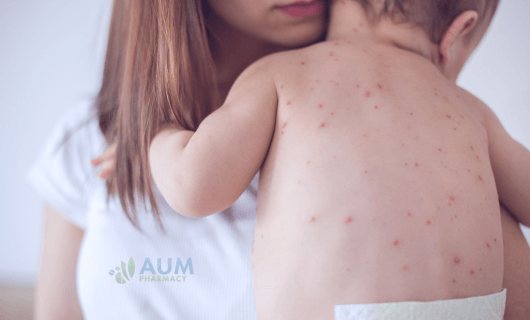
Measles
Overview of Measles
Measles is a highly contagious, preventable, and serious viral disease caused by a virus from the paramyxovirus family. It spreads through the air, initially affecting the respiratory system before disseminating throughout the body. Symptoms typically manifest 7 to 14 days after exposure to the virus and last around 10 to 14 days. Common symptoms include fever, runny nose, cough, and small white spots in the mouth during the early stages. Severe complications from measles can include blindness, pneumonia, and ear infections.
Measles spreads quickly from person to person, and even minimal contact with an infected individual can result in transmission. Special care should be taken to prevent its spread, particularly to individuals with weakened immune systems, such as infants, children, pregnant women, and those with compromised immunity.
Measles can be prevented through the timely administration of the MMR (measles, mumps, rubella) vaccine, which is both safe and effective. While there is no specific treatment for measles, supportive care such as proper nutrition, hydration, rest, and vitamin A supplementation can help alleviate symptoms.
Important Facts of Measles

Usually seen in
- Children under 5 years
- Adults over 20 years

Gender affected
- Both males and females

Body part(s) involved
- Skin
- Lungs
- Ears
- Central nervous system

Prevalence

Mimicking Conditions
- Kawasaki disease
- Infectious mononucleosis
- Scarlet fever
- Rocky Mountain spotted fever
- Chickenpox
- Dengue
- Malaria
- Drug-related infections
- Erythema infectiosum
- Meningitis
- Parvovirus B19 infection
- Pediatric enteroviral infections
- Pediatric rubella
- Pediatric sepsis
- Pediatric toxic shock syndrome

Necessary health tests/imaging
- IgM antibody test
- Real-time polymerase chain reaction (PCR)
- Urine sample collection
- Molecular analysis

Treatment
- Paracetamol
- Ibuprofen
- Vitamin A supplementation
- Fluid therapy

Specialists to consult
- General physician
- Pediatrician
- Infectious disease specialist
Symptoms Of Measles
Symptoms begin to appear 7 to 14 days after exposure to the virus. Early symptoms include cough, runny nose, watery eyes, and fever. The measles rash typically appears 3 to 5 days after the onset of the initial symptoms.
1. Initial Symptoms
Initial symptoms begin 7 to 14 days post-infection and are marked by a high fever, reaching up to 104°F. Additional symptoms include a cough, runny nose, swollen eyelids, fatigue, loss of appetite, watery eyes, and sensitivity to light due to red eyes.
2. Koplik Spots
A day or two before the rash develops, small grayish-white spots known as Koplik spots may appear inside the mouth. These spots typically last for a few days, though not everyone will have them.
3. Measles Rash
The measles rash appears 2 weeks after the first symptoms. It is a sign of the immune system’s response to the virus and often starts as red spots. The rash is typically made up of small red to brown spots that may merge into larger blotches. Initially, it appears on the head or neck and gradually spreads across the body. As the rash fades, it typically disappears in the same order it appeared. In malnourished children, the rash may be followed by the shedding of the skin’s outer layers (desquamation).
In individuals with weakened immune systems, the rash may be absent as the immune response may be less pronounced.
4. Other Symptoms
Additional symptoms may include headaches, abdominal pain, vomiting, diarrhea, and muscle aches.
Triggering Factors Of Measles
Measles is caused by a highly contagious virus called morbillivirus, which belongs to the paramyxoviridae family. The virus spreads through:
- Droplets from coughing, sneezing, talking, or coming into direct contact with infected nasal or throat secretions. The virus can remain in the air for up to two hours.
- Sharing food, drinks, or utensils with someone infected.
- Kissing an infected individual.
- Shaking hands or hugging someone who is infected.
- Transmission from a pregnant woman to her baby during pregnancy, childbirth, or breastfeeding.
It may take one to three weeks for symptoms to appear after exposure to the virus, known as the incubation period, which can be shorter in infants and longer in adults.
Note: A person is contagious from about four days before the rash appears to about four days after the rash develops.
Types Of Measles
The most common type of measles is caused by the Rubeola virus, but there are other variations, including:
1. Atypical Measles Syndrome
This occurs in individuals who have been vaccinated but may have incomplete immunity. Symptoms include headache, fever, cough, swelling, and rash.
2. Modified Measles
This form appears in people who have received immunoglobulin as post-exposure treatment. It is characterized by a brief rash and a prolonged incubation period.
3. Hemorrhagic Measles
This severe form is characterized by purplish spots and bleeding from the nose, mouth, or bowels.
Potential Risks for Measles
Though measles can affect anyone, certain factors increase the likelihood of infection:
1. Vitamin A Deficiency
Individuals with vitamin A deficiency are at a significantly higher risk of contracting measles, which can lead to serious complications.
2. Lack of Vaccination
Unvaccinated children and adults are especially vulnerable to measles and its complications, including death. Pregnant women and non-immune individuals can also become infected.
3. International Travel
Traveling to regions where measles is more prevalent and less controlled increases the risk of infection.
4. Outbreaks in Specific Regions
Countries facing natural disasters or recovering from emergencies, which disrupt routine vaccination programs, may see an increased risk of measles outbreaks.
Diagnosis Of Measles
Prompt diagnosis of measles is essential due to its contagious nature. To diagnose measles, the following steps are generally taken:
Clinical Evaluation
A healthcare provider will evaluate symptoms of fever with a rash and presence of Koplik spots (small white lesions inside the mouth). Koplik spots are especially useful for diagnosis as they appear before the rash. If the patient has recently traveled or is unvaccinated, measles is more likely. Measles rashes are distinctive, usually appearing first on the hands and face rather than the torso, which helps in distinguishing it from other rashes.
Lab Tests
After the clinical examination, lab tests can confirm measles:
- IgM Antibody: Detection of IgM antibodies in the serum indicates a recent measles infection, typically present soon after the rash appears and peaking by the 14th day. These antibodies disappear after 30 days.
- IgG Antibody: A significant rise in IgG levels (fourfold increase) between the acute and recovery stages can confirm measles.
- Virus Culture: The virus can also be identified by culturing respiratory secretions, nasopharyngeal or conjunctival swabs, urine, or blood.
- Giant Cell Test: The presence of giant cells in samples from respiratory secretions, urine, or biopsied tissue is another diagnostic approach.
- Real-Time PCR (RT-PCR): RT-PCR is a standard method to detect measles RNA from throat swabs or serum samples.
- Urine Sample: Collecting urine can increase the likelihood of detecting the measles virus.
Molecular Analysis
Genotyping helps map the transmission route of the virus and differentiate between wild-type measles and vaccine-induced rashes.
Specialist Consultation
If measles is suspected, a general physician is the first point of contact. If necessary, they may refer you to a pediatrician or an infectious disease specialist for further assessment and treatment.
Preventive Measures Of Measles
Since measles is a viral infection, antibiotics are not effective in treating it. Preventive measures are key:
MMR Vaccine (Measles, Mumps, Rubella)
Vaccination is the most effective way to prevent measles. The MMR vaccine can be administered with the MMRV vaccine, which also protects against varicella. Boosters are required periodically to maintain immunity.
Vaccination is recommended for:
- Individuals who have never had measles.
- Infants aged 6 to 11 months.
- Anyone unsure about previous vaccination status.
- A second dose should be administered at 3 years and 4 months of age.
- Note: The measles vaccine is generally safe for HIV-positive individuals, although its efficacy may be reduced. Routine vaccination is advised, except for those severely immunocompromised.
Human Normal Immunoglobulin (HNIG)
HNIG provides immediate but short-term protection and is recommended for people exposed to measles, including:
- Infants under 6 months.
- Pregnant women who have not been vaccinated.
- Immunocompromised individuals.
- If administered within 72 hours of exposure, HNIG can prevent measles, and when given up to 6 days after exposure, it can lessen the severity of the disease.
Special Circumstances
Under certain conditions (e.g., local outbreaks or exposure to measles), a dose of MMR vaccine may be given to children older than 6 months.
Isolation
Infected individuals should be isolated to prevent the spread of measles, staying away from public places until fully recovered.
Hygiene Practices
Good hygiene is essential for preventing measles. These steps can help minimize the risk:
- Avoid touching the face, especially the eyes, nose, and mouth.
- Use tissue when coughing or sneezing.
- Regularly use hand sanitizers.
Treatment Of Measles
There is no specific cure for measles, and it typically resolves within 7 to 10 days. To minimize the spread and alleviate symptoms, follow these treatment methods:
Controlling Fever and Pain
To reduce fever and discomfort, medications like paracetamol and ibuprofen can be used. Liquid paracetamol is suitable for young children.
Vitamin A Supplements
Vitamin A is recommended for children with measles, as deficiency can worsen symptoms. The WHO advises daily doses of 200,000 IU for children over 12 months and smaller doses for children aged 6-12 months.
Hydration
Ensure adequate fluid intake to prevent dehydration, especially during high fever.
Soothing Sore Eyes
Close curtains or dim lights to reduce sensitivity to light, and clean the eyelids to ease discomfort.
Managing Cold Symptoms
Warm drinks containing honey and sitting in a steamy bathroom can help ease respiratory symptoms.
Monitoring for Complications
Seek immediate medical attention if complications such as difficulty breathing, seizures, or severe chest pain occur.
Ribavirin (Antiviral)
Though there are case reports suggesting the use of ribavirin in immunocompromised patients, its effectiveness in treating measles remains inconclusive.
Health Complications Of Measles
Measles can lead to various complications, ranging from common issues to severe health problems:
Common Complications
The most frequently observed complications are otitis media (ear infections) and bacterial pneumonia. Other respiratory problems that may arise include laryngitis, tracheitis, bronchitis, giant cell pneumonia, bronchiectasis, and reactivation of latent tuberculosis (M. tuberculosis). Gastrointestinal complications can also occur, such as persistent diarrhea, appendicitis, hepatitis, and ileocolitis.
Severe Complications in Children and Adults
Serious complications include pneumonia and encephalitis (brain inflammation). These conditions can be life-threatening and typically require hospitalization for appropriate treatment and recovery.
Long-Term Complications
Subacute sclerosing panencephalitis (SSPE) is a rare but fatal condition affecting the central nervous system, which can develop 7 to 10 years after measles infection, affecting 1 in 100,000 cases.
Rare Complications
In rare instances, measles can result in heart problems, nervous system disorders, or severe eye complications.
Alternative Therapies For Measles
While conventional treatments focus on relieving symptoms, several home remedies may aid in recovery:
Aloe Vera
- Aloe vera can be applied to inflamed skin to soothe irritation and reduce inflammation.
Neem Leaves
- Neem has antibacterial and anti-allergic properties. A paste made from neem leaves can be applied to the skin to relieve itching caused by the measles rash.
Licorice Herb
- Licorice, an ancient remedy, can be used to prepare tea that helps soothe a cough and other symptoms associated with measles.
Baking Soda
- Adding a cup of baking soda to bathwater can help alleviate itching from the rash.
Coconut Water
- Coconut water is rich in nutrients and helps cleanse the body, keeping you hydrated while flushing out toxins.
Turmeric
- Known for its antioxidant and antiseptic properties, turmeric can be consumed in hot water with honey to reduce symptoms of measles.
Green Tea
- Green tea, particularly caffeine-free, is beneficial for its antioxidant and anti-inflammatory properties and can help boost the immune system.
Phyllanthus Amarus
- This medicinal plant has been used in treating measles. However, it may interact with certain medications like lithium or blood thinners, so it's important to consult a doctor before using it.
Dietary Modifications
- Drink at least 8 glasses of filtered water daily to stay hydrated.
- Avoid processed foods like white bread, pasta, and sugary items.
- Cook with healthy oils such as olive oil, coconut oil, or ghee.
- Limit or avoid trans fats found in packaged foods like biscuits, snacks, and cakes.
- Reduce or eliminate caffeine, including coffee and energy drinks.
- Avoid alcohol and tobacco products.
Nutritional Supplements
- A daily multivitamin containing antioxidants and essential vitamins (A, B, C, E) and minerals like magnesium, calcium, zinc, and selenium is recommended.
- Omega-3 fatty acids, such as those from fish oil or flaxseed oil, can help reduce inflammation and support immune health.
- Probiotic supplements may be helpful for maintaining gut health and overall immunity.
Homemade Remedies for Measles
While there’s no specific home care regimen for measles, supportive care is important to manage symptoms:
- Get plenty of rest.
- Use sponge baths to alleviate fever-related discomfort.
- Drink lots of fluids to stay hydrated.
- Over-the-counter pain relievers (e.g., acetaminophen) can help manage pain and fever.
- For itching, apply witch hazel to rashes or add oatmeal to bath water to soothe the skin.
Lifestyle Modifications Measles
Frequently Asked Questions
Subscribe to stay informed
Subscribe to our carefully crafted informative emailers by Medical Experts and be the first to get the latest health news, tips, and important updates.