


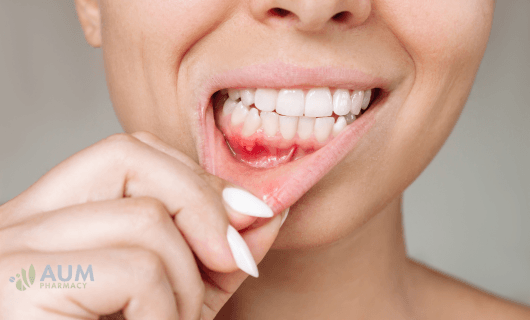
Mouth ulcers
Overview of Mouth ulcers
Mouth ulcers are small, painful lesions that form on the soft tissues inside the mouth. While they can affect anyone, they are typically harmless. Although the exact cause is not always clear, several factors such as stress, lack of sleep, nutritional deficiencies, injury from brushing too hard, accidental bites, allergies, and infections can trigger their occurrence.
Most mouth ulcers heal on their own or with the help of over-the-counter (OTC) treatments within one to two weeks. However, if they persist for more than three weeks, recur frequently, or become extremely painful, it may be necessary to seek medical attention.
While mouth ulcers cannot be completely prevented, certain lifestyle changes can help alleviate symptoms and reduce their frequency. OTC products like oral gels and mouthwashes are often helpful, and prescription medications may be required for recurrent or persistent ulcers.
Important Facts of Mouth ulcers

Usually seen in
- Adults over 25 years of age

Gender affected
- Both men and women, though more common in women

Body part(s) involved
- Mouth,
- Tongue,
- Gums,
- Lips

Prevalence
- 1 in 10 people worldwide (2019)

Mimicking Conditions
- Cold sores,
- Stomatitis,
- Hand-foot-and-mouth disease,
- Herpangina, Erythema multiforme,
- Herpes simplex virus infections,
- Varicella-Zoster infections,
- Oral lichen planus,
- Oral cancer

Necessary health tests/imaging
- Complete Blood Count (CBC),
- Erythrocyte Sedimentation Rate (ESR),
- C-Reactive Protein (CRP),
- Vitamin B12,
- Vitamin B9

Treatment
- Antiseptics,
- Steroids,
- GERD medications,
- Topical anesthetics,
- Multivitamins,
- Antibiotics,
- Antipyretics,
- Analgesics,
- Sucralfate,
- Mouthwashes containing dexamethasone

Specialists to consult
- General physician,
- Dentist
Symptoms Of Mouth ulcers
Mouth ulcers are easy to recognize. They usually start as small yellowish spots or bumps with a red border, which later become larger, round ulcers covered with a white, yellowish, or grayish film. The surrounding tissue typically remains unaffected. Common symptoms associated with mouth ulcers include:
- A tingling or burning sensation
- Pain and difficulty when chewing, drinking, or swallowing
- Increased pain when speaking, brushing teeth, or eating foods like citrus fruits
- Severe ulcers may also lead to fever and swollen lymph nodes
Triggering Factors Of Mouth ulcers
The exact cause of mouth ulcers remains unknown, but several factors are known to contribute to their formation:
Physical Factors:
- Accidentally biting the cheek or tongue, ill-fitting dental braces or dentures, dental treatment injections, impacted or misaligned wisdom teeth, external trauma, or excessive pressure while brushing.
Lifestyle Factors:
- Excessive consumption of citrus, spicy, or sour foods, stress, lack of sleep, excessive alcohol intake, smoking, quitting smoking, chewing tobacco, and using toothpaste or mouthwashes containing Sodium Lauryl Sulfate.
Health Conditions:
- A weakened immune system due to conditions like HIV/AIDS or chemotherapy, vitamin deficiencies (B1, B2, B6, B12, folic acid, zinc), Helicobacter pylori infection, hormonal changes during menstruation, gastrointestinal diseases (like Crohn’s disease or ulcerative colitis), oral cancers, and certain medications (e.g., Sodium hypochlorite, Piroxicam, Phenobarbital).
Types Of Mouth ulcers
Mouth ulcers are very common, with approximately 1 in 10 individuals affected. Depending on their severity, they can be classified into the following types:
Minor Mouth Ulcers:
- These are the most common and make up about 85% of cases. They are small, rounded, or oval-shaped with well-defined edges, and they typically heal within a week or two without leaving scars.
Major Mouth Ulcers:
- These account for roughly 10% of cases. They are larger, deeper, and more painful, often lacking well-defined edges. They can take longer to heal and may cause significant scarring.
Herpetiform Mouth Ulcers:
- These are smaller, pinpoint lesions with irregular edges that occur in clusters. They are rare and often appear on the tongue. These ulcers usually heal within a month without causing scars.
Potential Risks for Mouth ulcers
The following factors increase the likelihood of developing mouth ulcers:
- Being female
- Having a family history of mouth ulcers
- Poor oral hygiene
- A compromised immune system or weak immunity
- Experiencing high levels of stress
Diagnosis Of Mouth ulcers
Preventive Measures Of Mouth ulcers
Although mouth ulcers cannot be entirely prevented, their frequency and severity can be reduced by following these tips:
- Limit the consumption of foods that irritate the mouth. Different foods may trigger ulcers in different individuals, and identifying these triggers can help prevent flare-ups.
- Cut back on alcohol intake.
- Avoid smoking. If you're trying to quit, be aware that mouth ulcers may appear during the cessation process.
- Manage emotional stress and engage in activities that enhance mental well-being.
- Ensure you get enough rest and quality sleep.
- Practice good oral hygiene. Brush your teeth gently with a soft-bristled toothbrush after each meal, and avoid using toothpaste or mouthwashes containing Sodium Lauryl Sulfate.
- Maintain a balanced diet rich in essential vitamins and minerals to avoid deficiencies.
- Consult a dentist if you have ill-fitting dentures or braces that could be causing irritation.
Specialists to Consult
Most mouth ulcers heal naturally within a week or two without medical intervention. However, over-the-counter treatments can help relieve pain and discomfort. If the ulcers persist beyond two weeks or if you experience:
- Frequent occurrences of mouth ulcers
- Multiple or large ulcers
- Intense pain that affects chewing, speaking, or swallowing
- Fever along with the ulcers
It is advisable to seek help from:
- General physician
- Dentist
Treatment Of Mouth ulcers
Mouth ulcer treatment can be broadly categorized into two main approaches:
1. Symptomatic Relief
Various over-the-counter (OTC) and prescription medications are available to alleviate discomfort and expedite the healing process of mouth ulcers:
- Topical anesthetic gels containing ingredients like benzocaine and lidocaine provide pain relief.
- Antiseptic applications help prevent and manage infections that may occur alongside ulcers.
- Chlorhexidine gluconate mouthwash can reduce ulcer duration and aid healing.
- Tetracycline-based antibiotic mouthwash can help minimize ulcer size and associated pain.
- Oral analgesics such as diclofenac may be recommended for pain management.
- Steroid-based mouthwashes and oral corticosteroids, including dexamethasone, may be prescribed for severe ulcers.
- Gastrointestinal ulcer medications, such as sucralfate, may also offer some relief.
- Dental laser therapy can be used to perform cauterization, promoting faster healing.
2. Supportive Care
- Vitamin supplements, particularly B-complex vitamins, are often recommended for deficiencies contributing to ulcers.
- Antipyretics, such as paracetamol, may be used to manage fever accompanying mouth ulcers.
- Antibiotics can be prescribed if a secondary infection develops.
Health Complications Of Mouth ulcers
Mouth ulcers typically resolve within one to two weeks. However, in some cases, complications may arise, including:
- Nutritional deficiencies due to difficulty in eating.
- Increased risk of oral cancer, especially if ulcers are persistent or chronic.
- Secondary infections, potentially leading to oral cellulitis.
- Tooth abscess formation due to bacterial infection.
- Ulcer bleeding, which may require medical attention.
Alternative Therapies For Mouth ulcers
Dietary Adjustments
Recurrent mouth ulcers may indicate nutritional deficiencies, which can create a cycle of poor nutrition and frequent ulceration. A diet rich in vitamins and minerals and low in irritants such as spicy, oily, or acidic foods is advisable. Incorporating leafy greens, whole grains, legumes, and pulses can support oral health.
Homeopathy
Homeopathic remedies such as Borax, Arsenicum album, Sulphuricum acidum, Mercurius solubilis, and Kali muriaticum are sometimes used for treatment. Since homeopathy follows an individualized approach, it is best to consult a professional before using these treatments.
Ayurvedic Remedies
In Ayurveda, mouth ulcers are known as "Mukhpak" or "Sarvasar Rog." Topical applications of herbal treatments, including aloe vera gel, chamomile, and licorice, have shown benefits. Oral formulations containing amla, draksha, hareetaki, chandan, and triphala are also used for relief.
Homemade Remedies for Mouth ulcers
If you experience mouth ulcers, the following home-care measures can help alleviate symptoms and support faster healing:
- Maintain good oral hygiene by using a soft-bristled toothbrush and rinsing your mouth regularly with an OTC mouthwash.
- Avoid spicy, acidic, or very hot foods that can aggravate ulcers.
- Try not to chew food on the affected side to prevent further irritation.
- Use warm saline rinses to help ease discomfort.
- Apply ice directly to the ulcer or suck on ice chips for pain relief and to reduce inflammation.
- Consume a balanced diet rich in essential vitamins and minerals to maintain overall health.
Lifestyle Modifications Mouth ulcers
Recurrent mouth ulcers can cause significant pain and discomfort, making eating difficult and increasing the risk of nutritional deficiencies. Poor oral hygiene and bad breath may contribute to social discomfort and anxiety. The inability to enjoy favorite foods can add to emotional distress.
Adopting proper oral hygiene habits, such as regular flossing, gentle brushing, and consistent mouth rinsing, is crucial. While most mouth ulcers heal without intervention, recurrent or persistent ulcers accompanied by severe pain, fever, or other symptoms should be evaluated by a healthcare professional.
Frequently Asked Questions
Subscribe to stay informed
Subscribe to our carefully crafted informative emailers by Medical Experts and be the first to get the latest health news, tips, and important updates.