


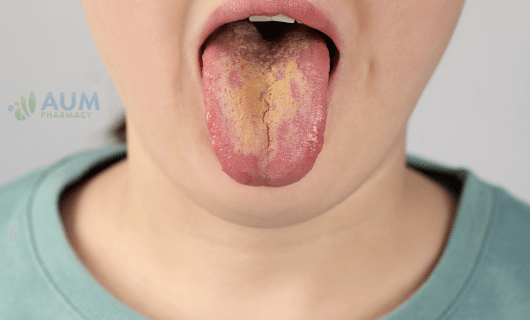
Oral thrush
Overview of Oral thrush
Oral thrush is a fungal infection of the mouth caused by Candida albicans, a yeast-like fungus. It leads to the development of creamy white patches, typically on the tongue and inner cheeks. In some cases, the infection may extend to the roof of the mouth, gums, tonsils, or the back of the throat.
Symptoms of oral thrush include a burning sensation in the mouth, loss of taste, pain or difficulty swallowing, and cracking at the corners of the mouth. Patients may also experience a sensation of food being stuck in the throat and, in severe cases, fever.
While oral thrush can affect anyone, it is more prevalent in infants, older adults, and individuals with weakened immune systems. It is common in newborns and usually harmless, with a good prognosis for mild cases. However, the outcome of severe cases depends on the patient’s immune status and the underlying cause.
Maintaining proper oral hygiene, caring for dentures in older adults, and regular dental visits are essential for preventing oral thrush.
Treatment typically involves topical or systemic antifungal medications. Mild cases can often be managed with over-the-counter antifungal mouth rinses and ointments. For recurrent cases, identifying and addressing the underlying cause is necessary.
Important Facts of Oral thrush

Usually seen in
- Infants below six months and older adults

Gender affected
- Both men and women

Body part(s) involved
- Tongue
- Inner cheeks
- Roof of the mouth
- Gums
- Tonsils
- Throat
- Esophagus

Prevalence
- Prevalence in India (2018): 20%

Mimicking Conditions
Erythematous form:
- Oral mucositis
- Erythroplakia
- Thermal burns
- Erythema migrans
- Anemia
Chronic hyperplastic form:
- Leukoplakia
- Lichen planus
- Pemphigoid
- Pemphigus
- Oral squamous cell carcinoma (OSCC)
Other conditions:
- Oral hairy leukoplakia
- Angioedema
- Aphthous stomatitis
- Herpes gingivostomatitis
- Herpes labialis
- Measles (Koplik spots)
- Perioral dermatitis
- Stevens-Johnson syndrome
- Histiocytosis
- Blastomycosis
- Lymphohistiocytosis
- Diphtheria
- Esophagitis
- Syphilis
- Streptococcal pharyngitis

Necessary health tests/imaging
- Blood Tests: Serum iron and vitamin B12 levels
- Laboratory Tests: Biopsy and paper point test
- Imaging Tests: Endoscopy

Treatment
Topical Antifungal Medications:
- Nystatin
- Amphotericin B
- Fluconazole
- Miconazole
Systemic Antifungal Medications:
- Itraconazole
- Voriconazole
- Ketoconazole
- Posaconazole

Specialists to consult
- General physician
- Dentist
- Pediatrician
- Immunologist
- Infectious disease specialist
- Internal medicine specialist
Symptoms Of Oral thrush
Oral thrush presents with various symptoms affecting the mouth, throat, and esophagus.
In Adults:
- Thick white or cream-colored patches on the tongue, inner cheeks, throat, and roof of the mouth
- Redness and soreness in the mouth
- Cracks and redness at the corners of the mouth
- Cotton-like sensation in the mouth
- Loss of taste
- Pain when eating or swallowing (if the infection spreads to the esophagus)
In Children:
- White, cottage cheese-like coating on the tongue or inside the cheeks that is difficult to wipe off
- Feeding difficulties
- Diaper rash (in some cases)
Triggering Factors Of Oral thrush
Oral thrush is caused by Candida species, with Candida albicans being the most common, responsible for over 80% of cases.
Candida normally exists in the mouth, skin, gastrointestinal tract, throat, and vagina of healthy individuals without causing harm. However, when the immune system is weakened, the fungus can overgrow and lead to infection.
Types Of Oral thrush
Oral thrush is categorized into primary and secondary forms.
Primary Oral Candidiasis (Group I)
Acute Forms:
- Pseudomembranous candidiasis: The most common type, frequently seen in infants, elderly individuals, and immunocompromised patients.
- Erythematous candidiasis: Appears as a painful, red, localized area, often observed in HIV-positive individuals.
Chronic Forms:
- Chronic erythematous candidiasis: Also known as "denture stomatitis," it causes chronic inflammation beneath partial or full dentures.
- Chronic pseudomembranous candidiasis: Characterized by widespread white patches on the tongue, mouth, and throat.
- Angular cheilitis: A form of oral candidiasis presenting as white patches at the corners of the mouth, which may potentially progress to cancer.
- Median rhomboid glossitis: A rare form featuring a rhomboid-shaped red patch in the center of the tongue.
- Linear gingival erythema: Typically seen in HIV patients, it appears as a red band over the gums of one or more teeth.
Secondary Oral Candidiasis (Group II)
Occurs as a result of other underlying conditions, including:
- Thymic aplasia: A genetic condition characterized by reduced T-cell receptors, compromising immunity.
- Candidiasis endocrinopathy syndrome: A group of disorders leading to recurrent or persistent superficial infections affecting the skin, mucous membranes, and nails.
Potential Risks for Oral thrush
Although oral thrush is not life-threatening, it is a common condition that can negatively impact overall well-being. Several local and systemic factors can increase the likelihood of developing this infection.
Local Factors:
Saliva Issues:
- Dysfunction of the salivary glands can make individuals more susceptible to oral thrush. Conditions that affect the volume (e.g., xerostomia) and quality of saliva can create a favorable environment for Candida overgrowth.
Dentures:
- Wearing dentures, particularly if not cleaned properly, can promote the growth of Candida by creating a moist, warm environment. Individuals with full dentures are at a higher risk of developing oral candidiasis.
Topical Medications:
- The use of inhaled or topical corticosteroids, as well as overuse of antimicrobial mouthwashes, can temporarily weaken local immunity and alter the oral microbiome, making candidiasis more likely.
Smoking:
- Studies indicate that smoking, either alone or combined with other factors, significantly alters the oral environment, making it more conducive to Candida colonization.
Poor Oral Hygiene:
- Insufficient oral care, including the buildup of plaque and tartar, increases the risk of oral thrush. Many individuals with thrush have poor oral hygiene practices.
Diet:
- Excessive consumption of refined sugars, carbohydrates, and dairy products can lower the pH in the mouth, promoting fungal growth.
Systemic Factors:
Age:
- Infants and older adults are more prone to oral thrush due to immature or weakened immune defenses.
Malnutrition:
- Deficiencies in iron, essential fatty acids, folic acid, vitamins A and B6, magnesium, selenium, and zinc can promote the proliferation of Candida species.
Medications:
- Prolonged use of broad-spectrum antibiotics and immunosuppressants can cause dry mouth (xerostomia), creating an environment conducive to fungal growth.
Endocrine Disorders:
- Individuals with hormonal imbalances, such as diabetes or Cushing’s syndrome, are more prone to aggressive oral thrush due to impaired immune responses.
Weakened Immunity:
- Conditions like Acquired Immunodeficiency Syndrome (AIDS) and Severe Combined Immunodeficiency Syndrome (SCID), which significantly impair immune function, are major predisposing factors for oral thrush.
Cancer:
- Cancer treatments, including chemotherapy and radiation, can compromise the immune system, making patients more susceptible to fungal infections like oral thrush.
Congenital Disorders:
- Individuals with congenital immune system defects are at an increased risk of developing candidiasis.
Diagnosis Of Oral thrush
Oral thrush is usually identifiable through visual examination of the characteristic white patches in the mouth. However, diagnostic tests may be necessary to confirm the condition or rule out other underlying issues.
Physical Examination:
Doctors or dentists assess the appearance, location, and scrapeability of the lesions to diagnose oral thrush.
Blood Tests:
A blood test may be recommended to check for conditions that increase susceptibility to oral thrush, such as iron, vitamin B12, or folic acid deficiencies.
Laboratory Tests:
Histopathology Examination:
- A sample of the lesions is scraped and analyzed under a microscope to detect fungal presence.
Biopsy:
- For suspected chronic hyperplastic candidiasis, a biopsy specimen is collected and sent for histopathological evaluation.
Impression Culture Technique:
- Impressions of both the upper and lower jaws are taken to assess Candida growth.
Saliva Collection:
- This involves collecting and analyzing saliva samples from patients displaying clinical signs of oral thrush.
Paper Points Test:
- A sterile absorbable paper point is inserted into the lesion site for 10 seconds. The point is then treated with a solution to check for fungal growth.
Imaging Tests:
In rare cases, an endoscopy may be performed to detect lesions deeper in the throat or esophagus.
Preventive Measures Of Oral thrush
Maintaining a healthy mouth is essential for preventing oral fungal infections. The following measures can reduce the risk of oral thrush:
Practice Good Oral Hygiene:
- Proper brushing and cleaning of dentures can help prevent oral thrush, especially in people with weakened immune systems.
Use Medicated Mouthwash:
- Antiseptic mouthwashes containing chlorhexidine digluconate or cetylpyridinium chloride can be used preventively, particularly for individuals undergoing chemotherapy or radiation therapy.
Rinse the Mouth After Using Inhalers:
- Those using inhaled corticosteroids can reduce their risk of thrush by rinsing their mouth with water or mouthwash after inhaler use.
Clean Dentures Thoroughly:
- Denture wearers should remove their dentures at night and soak them in 0.2% chlorhexidine solution or white vinegar for 15–30 minutes to prevent fungal buildup.
Quit Smoking:
- Since smoking increases the risk of oral thrush, quitting can reduce the likelihood of recurrent infections.
Regular Dental Visits:
- Routine dental checkups help detect early signs of oral thrush. Professional cleanings and reinforcement of oral hygiene practices can prevent infections.
Specialists to Consult
Mild oral thrush can often be treated with over-the-counter antifungal gels. However, if left untreated, the infection may spread to other parts of the body. Healthcare professionals who can help diagnose and treat oral thrush include:
- Dentist
- General physician
- Pediatrician
For severe or recurrent cases, consultation with the following specialists may be necessary:
- Immunologist
- Infectious disease specialist
- Internal medicine specialist
When to Seek Immediate Medical Attention
- If an infant under four months shows symptoms of oral thrush.
- When no improvement is seen after using an antifungal gel for one week.
- If you experience pain or difficulty swallowing.
Treatment Of Oral thrush
The occurrence of Candida infections has grown significantly, largely due to an increase in the use of removable dentures and poor oral hygiene practices. The primary treatment involves antifungal medications, which are categorized into:
Topical Antifungal Agents
Topical antifungal treatments are typically the first-line therapy for mild, localized oral thrush in individuals with a healthy immune system. These include:
- Nystatin
- Amphotericin B
- Fluconazole
- Miconazole
Systemic Antifungal Agents
For more extensive or severe cases, or when the patient has a weakened immune system, systemic antifungal medications are recommended. These include:
- Fluconazole
- Itraconazole
- Voriconazole
- Ketoconazole
- Posaconazole
Health Complications Of Oral thrush
Although oral thrush is typically manageable, it can lead to complications in individuals with weakened immune systems. These complications include:
- Difficulty swallowing (dysphagia): Thrush may spread to the throat, causing pain, burning, and discomfort while swallowing.
- Respiratory issues: In severe cases, the infection can extend to the lungs, causing breathing difficulties.
- Candidal esophagitis: When thrush spreads to the esophagus, it results in esophageal candidiasis, a common complication in individuals with HIV/AIDS.
Alternative Therapies For Oral thrush
While oral thrush is generally managed with antifungal medications and good oral hygiene, some alternative therapies have shown promise in treating recurrent cases. These include:
Traditional Chinese Medicine (TCM)
TCM uses herbal remedies to strengthen the immune system and treat infections. Research indicates that a specific Chinese herbal formula (Cao Huang Gui Xiang, or CHGX) may have antifungal effects against Candida species.
Homeopathy
Homeopathic remedies, though not widely studied, are sometimes used by professional homeopaths to address candidiasis based on their clinical experience.
Homemade Remedies for Oral thrush
In addition to medical treatment, certain home care practices and natural remedies can help ease the symptoms and support recovery. These include:
Lukewarm Salt Water Rinses
Salt is believed to have antifungal properties. Rinsing the mouth with lukewarm salt water can provide relief from symptoms and help reduce oral thrush.
Probiotics
Probiotics contain beneficial bacteria that can help restore the natural oral flora, preventing Candida overgrowth. Consuming unsweetened yogurt or taking Lactobacillus acidophilus supplements may aid in maintaining a healthy microbial balance.
Apple Cider Vinegar
Apple cider vinegar, known for its antifungal properties, may help inhibit Candida growth. However, its effectiveness in treating oral thrush is not yet fully proven.
Lemon Juice
Lemon juice is considered a natural antifungal agent. Using a mixture of lemon juice and water as a mouth rinse may help combat oral thrush. This remedy has shown some effectiveness in people with HIV-related thrush.
Gentian Violet (1%)
This over-the-counter antiseptic dye has antifungal properties and can be applied to the affected areas using a cotton swab. It is advisable to consult a doctor before using gentian violet.
Baking Soda
Baking soda can help eliminate Candida and balance the pH levels in the mouth. A paste made of baking soda and water can be applied to the affected areas for a few minutes before rinsing with warm water. Alternatively, you can mix baking soda with water and use it as a mouth rinse twice daily.
Essential Oils
Certain essential oils have antifungal properties and may offer relief from oral thrush:
- Clove oil: Acts as a natural pain reliever and can be used as a mouth rinse.
- Lemongrass oil: Possesses antimicrobial properties that may inhibit Candida growth.
- Tea tree oil: Rinsing with a tea tree oil solution multiple times a day may help treat oral thrush in people with AIDS.
Coconut Oil
Raw virgin coconut oil has antifungal properties that may prevent Candida overgrowth. Oil pulling, an Ayurvedic practice, involves swishing coconut oil in the mouth to promote oral health. Nursing mothers can apply coconut oil to their nipples and the baby’s mouth to prevent thrush transmission.
Pomegranate Peel
Research suggests that pomegranate peel has antifungal properties that may help combat Candida infections.
Lifestyle Modifications Oral thrush
Frequently Asked Questions
Subscribe to stay informed
Subscribe to our carefully crafted informative emailers by Medical Experts and be the first to get the latest health news, tips, and important updates.