


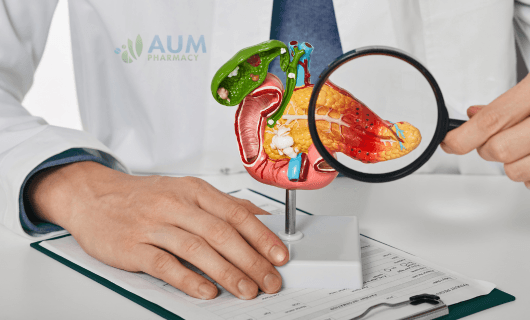
Pancreatic cancer
Overview of Pancreatic cancer
The pancreas is a small, spongy, and elongated gland located deep in the abdomen, positioned between the stomach and the spine. Its primary functions include producing enzymes that aid digestion and releasing hormones like insulin and glucagon, which regulate blood sugar levels.
Pancreatic cancer arises when the natural process of replacing old cells with new ones malfunctions. Instead of dying off, abnormal pancreatic cells multiply uncontrollably, forming tumors. In some cases, these malignant cells can spread to other parts of the body. The most prevalent form of pancreatic cancer, known as pancreatic ductal adenocarcinoma, originates in the cells lining the pancreatic ducts, which transport digestive enzymes.
Pancreatic cancer is predominantly diagnosed in older adults, with 90% of cases occurring in individuals over the age of 55. The disease is more frequently seen in men than in women. Risk factors include smoking, obesity, excessive alcohol consumption, diabetes, and genetic predisposition.
Early-stage pancreatic cancer often goes undetected, as symptoms are rarely noticeable until the disease has advanced and spread to other organs. Treatment depends on the stage of the cancer and may involve surgery, chemotherapy, radiation therapy, or a combination of these. However, due to delayed diagnosis, the prognosis is generally poor.
Important Facts of Pancreatic cancer

Usually seen in
- Adults over 55 years of age

Gender affected
- More common in men, but can affect both genders

Body part(s) involved
- Pancreas,
- Lymph nodes,
- Liver,
- Peritoneum

Prevalence

Mimicking Conditions
- Acute and chronic pancreatitis,
- Cholangitis,
- Cholecystitis,
- Choledochal cyst,
- Ceptic ulcer disease,
- Gastric cancer,
- Cholangiocarcinoma

Necessary health tests/imaging
- Imaging: CT scan, PET-CT, ultrasound, and MRI
- Blood tests: Bilirubin levels
- Biopsy procedures: Fine needle aspiration cytology (FNAC) and core needle biopsy

Treatment
- Surgery: Pancreatectomy, laparoscopic surgery, and vascular resection
- Chemotherapy: Modified leucovorin, 5-fluorouracil, irinotecan, and oxaliplatin
- Radiotherapy: External beam radiation and brachytherapy
- Targeted therapy: Pembrolizumab

Specialists to consult
- Gastroenterologist
- Oncologist
Symptoms Of Pancreatic cancer
Pancreatic cancer rarely presents symptoms in its early stages. A doctor may suspect the disease if a patient develops recent-onset diabetes or pancreatitis (inflammation of the pancreas). As the condition progresses, individuals may experience the following symptoms:
- Pain in the upper abdomen that may radiate to the back
- Jaundice (yellowing of the skin and eyes)
- Fatigue and weakness
- Loss of appetite
- Pale or clay-colored stools
- Dark urine
- Unexplained weight loss
- Blood clot formation
- Dry, itchy skin
- Worsening diabetes or a new diagnosis of the condition
- Nausea and vomiting
Pancreatic Neuroendocrine Tumors (PNETs), a rarer form of pancreatic cancer, originate from hormone-producing cells. These tumors may cause distinctive symptoms due to excessive hormone secretion, such as:
- Zollinger-Ellison syndrome: Excess stomach acid production, leading to ulcers
- Tongue and mouth irritation: Sores or inflammation at the corners of the mouth
- Malnutrition: Due to impaired digestion and nutrient absorption
- Breathing difficulties: Resulting from hormonal imbalances
- Skin rashes or blisters
- Excessive thirst
Triggering Factors Of Pancreatic cancer
The precise cause of pancreatic cancer remains unknown. However, it develops when genetic mutations cause pancreatic cells to grow abnormally and uncontrollably.
- DNA mutations: Genetic changes instruct cells to grow without regulation, preventing them from dying when they should.
- Tumor formation: This abnormal cell growth results in the development of tumors, which can spread to nearby organs and tissues if left untreated.
Types Of Pancreatic cancer
Pancreatic cancer is classified based on the type of cells from which it originates:
1. Exocrine Pancreatic Cancer
Most pancreatic tumors arise from exocrine cells, which produce digestive enzymes. These include:
- Adenocarcinoma: The most common form of pancreatic cancer, originating in the duct-lining cells that produce digestive enzymes.
- Mucinous cystic neoplasm: A tumor containing thick fluid, which may be benign unless it becomes invasive.
Rare exocrine tumors include:
- Squamous cell carcinoma: An uncommon tumor arising in the pancreatic ducts, composed entirely of squamous cells, which are not normally found in the pancreas.
- Adenosquamous carcinoma: An aggressive and rare form of pancreatic cancer with a poor prognosis.
- Colloid carcinoma: Develops from a benign cyst known as intraductal papillary mucinous neoplasm (IPMN).
2. Neuroendocrine Pancreatic Cancer (PNETs)
These tumors stem from the abnormal growth of endocrine cells, which are responsible for regulating blood sugar levels. Common types include:
- Gastrinoma: A tumor that produces gastrin, a hormone that stimulates gastric acid secretion, often found in the pancreas or duodenal wall.
- Glucagonoma: A rare tumor of the pancreatic islet cells, leading to an overproduction of glucagon.
- Insulinoma: A tumor that causes excess insulin secretion, resulting in low blood sugar levels (hypoglycemia).
- Somatostatinoma: Originates in neuroendocrine cells that produce somatostatin, a hormone that regulates several bodily functions.
- VIPoma: A tumor that secretes vasoactive intestinal peptide (VIP), causing severe diarrhea and dehydration.
- Nonfunctional islet cell tumor: A rare tumor of pancreatic islet cells that does not secrete hormones.
Potential Risks for Pancreatic cancer
Pancreatic cancer risk factors are categorized into environmental and genetic causes:
Environmental Factors
These can be divided into modifiable and non-modifiable factors that influence the likelihood of developing pancreatic cancer:
1. Modifiable Factors
- Smoking: Tobacco use significantly raises the risk of pancreatic cancer.
- Alcohol Consumption: Heavy alcohol intake (more than 30 g per day) is linked to a higher risk.
- Chronic Pancreatitis: Long-standing inflammation of the pancreas increases susceptibility.
- Obesity: Being overweight is associated with a greater risk.
- Diet: Poor dietary habits may contribute to the development of pancreatic cancer.
- Infections: Helicobacter pylori (H. pylori) and hepatitis C infections have been linked to an elevated risk.
- Occupational Exposure: Prolonged exposure to pesticides or metalworking fluids has been identified as a potential risk factor.
2. Non-Modifiable Factors
- Age: The risk of pancreatic cancer increases with age, with most cases diagnosed in individuals over 55, especially between 70 and 80 years.
- Gender: Men are more commonly affected by pancreatic cancer compared to women, especially in developed countries.
- Geographical Location: The lowest incidence is reported in Africa, while China sees a higher prevalence.
- Blood Type: People with blood types A, AB, or B face a higher risk compared to those with type O.
- Diabetes: Both type 2 diabetes and newly diagnosed diabetes can be linked to an increased risk of pancreatic cancer. HbA1c levels are being investigated as a possible early detection marker.
- Gut Microflora: Imbalances in oral and gut bacteria, such as reduced Neisseria elongata and Streptococcus mitis, and increased Porphyromonas gingivalis and Granulicatella adiacens, are associated with greater pancreatic cancer risk.
Genetic Factors
Certain inherited genetic mutations and syndromes heighten the risk of developing pancreatic cancer, including:
- Hereditary Breast and Ovarian Cancer Syndrome (HBOC)
- Lynch Syndrome (HNPCC)
- Familial Atypical Multiple Mole Melanoma Syndrome (FAMMM)
- Hereditary Pancreatitis (HP)
- Familial Adenomatous Polyposis (FAP)
- Peutz-Jeghers Syndrome (PJS)
- Cystic Fibrosis (CF)
Diagnosis Of Pancreatic cancer
Diagnosing pancreatic cancer is challenging due to its tendency to remain asymptomatic until the disease is advanced. The cancer is classified into five stages based on tumor size, spread, and severity:
- Stage 0: Known as carcinoma in situ, abnormal cells are present in the pancreatic lining. These cells may turn cancerous and invade nearby tissues.
- Stage 1: The tumor is confined to the pancreas.
- Stage 2: Cancer has spread to nearby tissues, organs, or lymph nodes.
- Stage 3: The tumor has extended to nearby major blood vessels and possibly the lymph nodes.
- Stage 4: The cancer has metastasized to distant organs, such as the liver, lungs, or abdominal cavity.
Diagnostic Methods:
1. Physical Examination
Doctors check for jaundice, indicated by yellowing of the skin, eyes, and tongue. They also look for signs of ascites, an abnormal accumulation of fluid in the abdomen, which can be associated with cancer.
2. Blood Tests
Blood samples are analyzed to measure bilirubin and other substances. High bilirubin levels, caused by bile duct obstruction due to a tumor, may indicate pancreatic cancer.
3. Imaging Tests
These tests help identify the tumor's location and determine if it has spread:
- CT Scan (Computed Tomography): Pancreatic protocol CT scans with contrast offer detailed images to detect tumors and assess their proximity to surrounding blood vessels.
- PET-CT Scan (Positron Emission Tomography): Combines PET and CT imaging to provide comprehensive insights into the affected area.
- Endoscopic Retrograde Cholangiopancreatography (ERCP): Uses an endoscope to examine the bile ducts and place stents if necessary, though it is less frequently used for diagnostic purposes.
- Ultrasound: Uses sound waves to capture images of internal organs. Transabdominal ultrasound assesses the abdomen, while endoscopic ultrasound (EUS) provides a closer view of the pancreas via an endoscope.
- Percutaneous Transhepatic Cholangiography (PTC): An X-ray technique that detects bile duct obstructions caused by tumors by injecting contrast dye through a needle.
- Magnetic Resonance Imaging (MRI): Produces detailed images of the pancreas and surrounding tissues. Magnetic Resonance Cholangiopancreatography (MRCP) is a specialized MRI scan used to examine the pancreatic ducts.
4. Biopsy
A biopsy involves collecting tissue samples for microscopic analysis to confirm the diagnosis. Methods include:
- Fine Needle Aspiration Cytology (FNAC): Uses a thin needle to extract tissue samples.
- Core Needle Biopsy: Involves removing a small piece of pancreatic tissue with a hollow needle.
5. Biomarker Testing
- CA 19-9: A tumor marker used to monitor pancreatic cancer.
- Emerging Techniques: Ongoing research explores breath tests and DNA analysis of pancreatic fluids for early detection.
Preventive Measures Of Pancreatic cancer
Although complete prevention is not possible due to genetic and environmental factors, individuals can reduce their risk by:
- Avoiding smoking and limiting alcohol consumption.
- Maintaining a healthy weight through regular exercise and a balanced diet.
- Managing chronic conditions such as diabetes and pancreatitis.
- Undergoing genetic testing and screening for individuals with a family history or genetic predisposition.
Specialists to Consult
Pancreatic cancer requires a multidisciplinary approach. Specialists involved in diagnosis, treatment, and management include:
- Gastroenterologist: Specializes in diseases of the gastrointestinal tract, including the pancreas.
- Oncologist: A cancer specialist who oversees diagnosis, treatment, and patient care.
Treatment Of Pancreatic cancer
Pancreatic cancer treatment involves various modalities, often combined for optimal outcomes:
1. Surgical Management
- Pancreatectomy: Includes the Whipple procedure (pancreaticoduodenectomy) or the removal of part or all of the pancreas, based on the tumor’s location.
- Laparoscopic Surgery: A minimally invasive technique commonly used for distal pancreatectomy.
- Vascular Resection: Involves the removal and reconstruction of blood vessels affected by the tumor.
2. Chemotherapy
- FOLFIRINOX Regimen: A combination of modified leucovorin, 5-fluorouracil, irinotecan, and oxaliplatin, administered over six months.
- Gemcitabine and Capecitabine: Used in combination for six months.
- Gemcitabine with Erlotinib: Combined with a radiation dose of 54 Gy for locally advanced cases.
3. Radiotherapy
Radiation therapy uses high-energy beams to destroy cancer cells:
- External Beam Radiation Therapy: Applies radiation from an external source to target the tumor.
- Brachytherapy: An internal radiation therapy where radioactive seeds or ribbons are placed near the tumor.
4. Targeted Therapy
- Pembrolizumab: An FDA-approved targeted drug for pancreatic cancer.
5. Latest Treatment Protocols
- Gene Therapy: Delivers specific genes to cancer cells using engineered viruses.
- Cancer Stem Cells: Research focuses on therapies targeting pancreatic cancer stem cells.
- Genetic and Molecular Studies: Ongoing research explores methods to identify and repair defective genes and proteins.
- Circulating Tumor DNA (ctDNA): Used to monitor treatment response, detect early recurrence, and identify resistance to treatment.
6. Additional Treatment Approaches
- Percutaneous Bile Duct Drainage: Relieves bile duct blockages caused by tumors.
- Surgical Gastrojejunostomy: Creates a connection between the stomach and jejunum to bypass obstructions.
- Endoscopic Duodenal Stents: Stents inserted to keep the duodenum open when blocked by a tumor.
Health Complications Of Pancreatic cancer
Pancreatic cancer often remains undetected until it reaches an advanced stage, leading to various complications, including:
1. Common Complications
- Jaundice
- Unintentional weight loss
- Muscle wasting (cancer cachexia)
- Abdominal pain
- Development of diabetes
2. General Complications Post-Pancreatic Resection
- Cardiac issues such as angina (chest pain), heart attack (infarction), and arrhythmias
- Stroke
- Cardiorespiratory distress (increased breathing rate)
- Kidney dysfunction
- Pneumonia
- Thrombosis (blood clot formation)
- Pulmonary embolism (blood clot in the lungs)
- Psychological conditions
- Liver and metabolic dysfunction
3. Surgical Complications
- Intra-abdominal abscess (pus accumulation in the abdominal lining)
- Internal bleeding (hemorrhage)
- Fistula formation at the pancreatointestinal anastomosis (abnormal connection at the pancreatic-intestinal junction)
Alternative Therapies For Pancreatic cancer
Due to the limitations of current treatments, researchers are exploring innovative therapies that show promising results. These therapies are still under investigation and should only be considered under a doctor's supervision.
1. Microbial Therapy
Emerging evidence indicates that gut microbiota plays a significant role in regulating cancer development and the body's response to cancer treatments. While intestinal microflora has been linked to enhancing systemic and tumor-specific immunity in pancreatic cancer, the exact mechanisms remain under study.
2. Immunotherapy
Immune checkpoint blockade (ICB) therapy is approved for treating several cancers, such as melanoma, lung, and kidney cancer. However, pancreatic cancer has shown limited responsiveness due to its immune-suppressive tumor environment. Ongoing research is evaluating the effectiveness of immunotherapy in pancreatic cancer.
Homemade Remedies for Pancreatic cancer
While some herbal and home remedies may help alleviate symptoms associated with pancreatic cancer, they should only be used as complementary treatments alongside standard medical care. It is essential to consult a healthcare professional before starting any new remedy.
- Eucalyptus: This plant contains anti-inflammatory and antioxidant compounds that may help reduce cancer-related symptoms.
- How to use: Brew the leaves into tea or use eucalyptus oil in aromatherapy.
- Coix Seed (Jau Ke Daane): Known for its potential anti-tumor and immunity-enhancing properties, it may help slow cancer cell growth.
- How to use: Boil the seeds to make porridge or grind them into powder for smoothies.
- Moringa (Sahjan): Rich in antioxidants and anti-inflammatory agents, moringa may help combat oxidative stress and promote overall well-being.
- How to use: Add fresh moringa leaves to meals or mix moringa powder with water or tea.
Lifestyle Modifications Pancreatic cancer
Both patients and caregivers face significant lifestyle changes when dealing with pancreatic cancer. The following tips may help improve daily life and overall well-being:
1. Managing Emotions
- Gather all necessary information regarding the treatment process
- Share concerns with loved ones
- Join support groups for emotional support
- Prepare for physical limitations
- Consider palliative care to manage symptoms
Coping with practical issues:
- Financial expenses
- Childcare responsibilities
- Work-related challenges
2. Dealing with Physical Side Effects
- Maintain open communication with the healthcare team
- Track any new or worsening symptoms and inform the doctor promptly
- Seek treatment for long-term or delayed side effects
3. Handling Treatment Costs
- Understand the expenses associated with treatment
- Discuss financial concerns with the healthcare team
- Seek support from organizations that assist with cancer-related costs, including treatment, travel, and accommodation
4. Dietary Considerations
- Opt for smaller, lighter meals throughout the day
- Avoid high-fiber foods (e.g., cereals and dried fruit) if experiencing diarrhea
- Use nutritional supplements to increase calorie intake
- Maintain stable blood sugar levels
- Consider enzyme supplements to aid digestion
5. Preparing for Treatment
- Learn about prehabilitation (pre-treatment preparation)
- Get physically and mentally ready for the treatment process
- Eat a balanced diet with diverse nutrients
6. Follow-up Care
- Attend regular follow-up appointments with necessary exams and tests
- Be vigilant for late-appearing side effects, which may surface years later
- Report any new or unusual symptoms promptly, as they may indicate a recurrence or new issue
Frequently Asked Questions
Subscribe to stay informed
Subscribe to our carefully crafted informative emailers by Medical Experts and be the first to get the latest health news, tips, and important updates.