


Abhayrab Vaccine

Marketer
Indian Immunologicals Ltd
Salt Composition
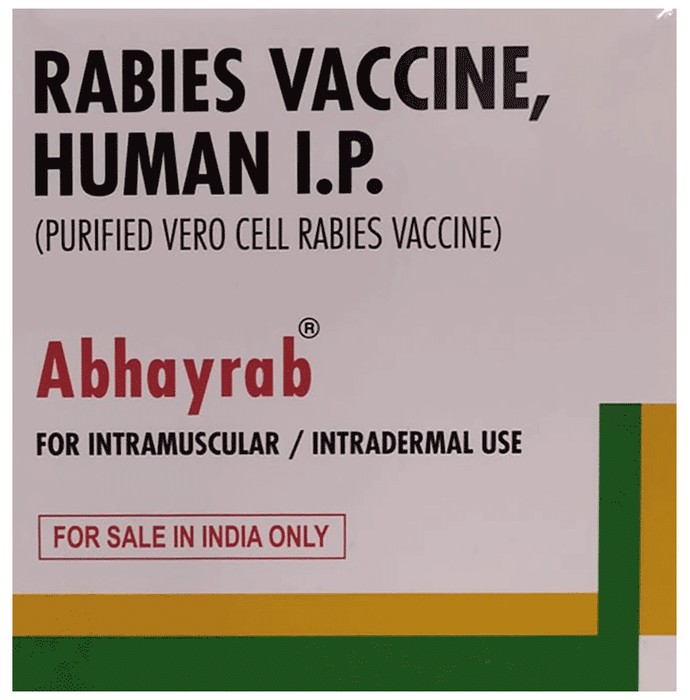
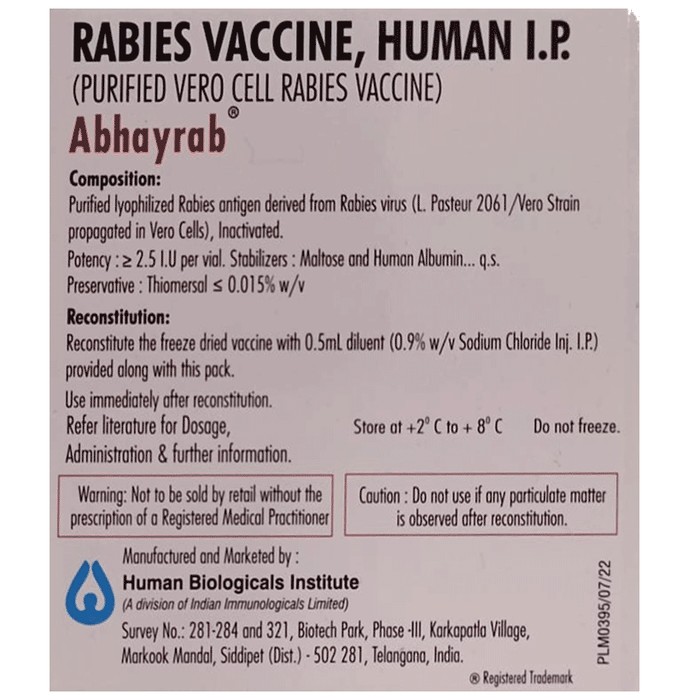
Rabies vaccine, Human (2.5IU)
Overview Abhayrab Vaccine
Veterinarians and others with high rabies exposure risk receive the Abhayrab vaccine. It's also administered following animal bites from potentially rabid animals. When given promptly and correctly, the vaccine boasts 100% efficacy. A doctor or nurse injects Abhayrab after thorough wound cleansing (15 minutes with soap and water) of all bite wounds, ideally immediately. Early treatment significantly improves outcomes. Post-exposure prophylaxis typically includes both immunoglobulin and the vaccine, except for individuals with prior complete vaccination. Completing the vaccination course is crucial to prevent this deadly disease. Common, usually short-lived side effects include pain, joint pain, redness, and swelling at the injection site. Rest may provide relief. Report persistent or concerning side effects to your doctor. Before vaccination, disclose any prior vaccine allergies and all medications you're currently taking, as interactions with other drugs are possible.
Uses of Abhayrab Vaccine
Avoiding Rabies
Major Benefits of Abhayrab Vaccine:
Administering this medication will be handled by your physician or their qualified staff. Self-medication is strongly discouraged.
Common Side effects of Abhayrab Vaccine:
- Pain
- Joint pain
- Injection site redness
- Injection site swelling
- Swelling of lymph nodes
How to use Abhayrab Vaccine:
This medication will be administered by your physician or their designated nurse; self-medication is strongly discouraged.
How Abhayrab Vaccine works:
Abhayrab Vaccine uses an inactive virus to stimulate the body's immune response. This process generates protective antibodies, specialized proteins that combat viral infections.
SAFETY ADVICE
 AlcoholCONSULT YOUR DOCTOR
Alcohol consumption alongside Abhayrab Vaccine is of uncertain safety. Seek medical advice before combining them.
 PregnancySAFE IF PRESCRIBED
The Abhayrab Vaccine is typically deemed safe for pregnant individuals. Preclinical trials in animals revealed minimal or no negative consequences for fetal development; nevertheless, data from human trials remain scarce.
 Breast feedingSAFE IF PRESCRIBED
The Abhayrab vaccine is likely safe for breastfeeding mothers. Available human data indicate minimal risk to the infant.
 DrivingCONSULT YOUR DOCTOR
The effect of Abhayrab Vaccine on driving ability is unknown. Refrain from driving if you develop symptoms impairing concentration or reaction time.
 KidneyCONSULT YOUR DOCTOR
Data regarding Abhayrab Vaccine use in individuals with renal impairment is scarce. Physician consultation is advised.
 LiverCONSULT YOUR DOCTOR
Data regarding Abhayrab Vaccine use in individuals with hepatic impairment is scarce. Seek medical advice from your physician.
What if you forget to take Abhayrab Vaccine :
Should you inadvertently skip a scheduled Abhayrab Vaccine dose, seek advice from your physician.
Facts to Know About Abhayrab Vaccine
| Label | Value |
|---|---|
| Chemical Type | Immunizations |
| Developing Habits | No. |
| Type of Treatment | Immunizations |
| Behavioral Class | Inactivated vaccine |
 3,018 People bought this recently