


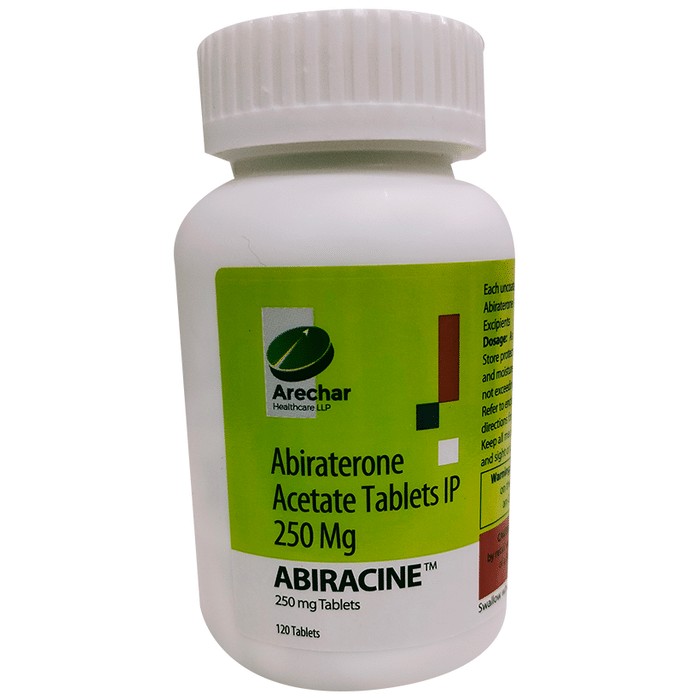
Abiracine 250mg Tablet

Marketer
Arechar Healthcare
Salt Composition
Abiraterone Acetate (250mg)
Overview Abiracine 250mg Tablet
Prostacept 250mg tablets are indicated for prostate cancer management. Additional applications may be determined by your physician. It's often administered as part of a multi-drug chemotherapy regimen. Prostacept 250mg should not be ingested on an empty stomach; concomitant food intake may induce adverse reactions. Dosage and frequency are physician-determined, varying based on treatment goals and potentially adjusted over time. Strict adherence to prescribed instructions is crucial; deviations may result in severe adverse events. Therapeutic benefits may not be immediately apparent, often requiring weeks or months; discontinue only under physician guidance. Common side effects include nausea, hypokalemia, edema, leukopenia, and asthenia. Report any concerning symptoms promptly; mitigation strategies may be available. Less frequent but potentially serious side effects signifying hepatic dysfunction include jaundice, anorexia, dyspnea, dark urine, and nausea. Liver function, blood pressure, and potassium levels will likely be monitored. Prior to commencing treatment, disclose any pre-existing hypertension, cardiac, hepatic, or renal conditions, or concurrent antibiotic use. Numerous drug interactions are possible; inform your physician of all medications. This medication is contraindicated during pregnancy and lactation due to potential fetal harm. Reliable contraception for both partners is essential throughout treatment. Regular blood glucose monitoring may be required.
Uses of Abiracine 250mg Tablet
Malignancy of the prostate gland
Major Benefits of Abiracine 250mg Tablet:
Follow your doctor's instructions precisely regarding dosage and treatment length for this medication. The 250mg Abiracine Tablet should be swallowed whole; do not chew, crush, or break it. Administer on an empty stomach.
Common Side effects of Abiracine 250mg Tablet:
- Edema (swelling)
- Vomiting
- Decreased potassium level in blood
- Fatigue
- Anemia (low number of red blood cells)
- Urinary tract infection
- Diarrhea
- High blood pressure
- Cough
- Joint swelling
How to use Abiracine 250mg Tablet:
Follow your doctor's instructions precisely regarding the dosage and treatment length for this medication. Ingest the 250mg Abiracine tablet whole; avoid chewing, crushing, or breaking it. Administer this medication on an empty stomach.
How Abiracine 250mg Tablet works:
Abiracine 250mg tablets are used in cancer treatment. Their mechanism of action involves suppressing androgen synthesis in males. This effect is achieved through the inhibition of CYP17, a key enzyme in androgen production, thereby hindering prostate cancer progression.
SAFETY ADVICE
 AlcoholCONSULT YOUR DOCTOR
Abiracine 250mg Tablet and alcohol consumption: The safety of combining these is undetermined. Seek medical advice before mixing them.
 PregnancyUNSAFE
Use of Abiracene 250mg tablets is strongly contraindicated during pregnancy. Pregnant women should consult their physician; animal and human studies indicate substantial risks to fetal development.
 Breast feedingUNSAFE
Lactation and the use of 250mg Abiracined tablets are incompatible. Evidence indicates potential infant toxicity from this medication.
 DrivingSAFE
Driving ability is typically unaffected by taking a 250mg Abiracene tablet.
 KidneyCAUTION
Patients with severe kidney impairment should use Abiracine 250mg tablets cautiously, as dose modification may be necessary. Physician consultation is advised.
 LiverCAUTION
Patients with hepatic impairment should use Abiracine 250mg tablets cautiously, potentially requiring a modified dosage. Physician consultation is advised.
What if you forget to take Abiracine 250mg Tablet :
Omit any missed Abiracine 250mg Tablet dose and resume your usual regimen. Avoid taking a double dose.
Facts to Know About Abiracine 250mg Tablet
| Label | Value |
|---|---|
| Type of Compound | Androgen-derived steroid |
| Potential for Dependence | None. |
| Treatment Category | Cancer-fighting medications |
 3,018 People bought this recently