



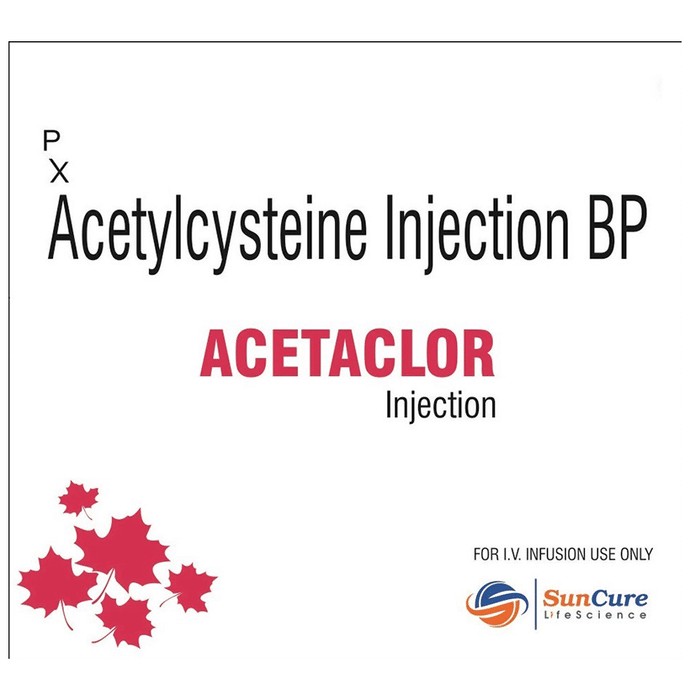
Acetaclor Injection

Marketer
Suncure Lifescience Pvt Ltd
Salt Composition
Acetylcysteine (20% w/v)
Overview Acetaclor Injection
Acetaclor Injection serves as a counteracting agent for paracetamol poisoning. Administered intravenously under medical supervision, it's indicated for treating paracetamol overdose. Its primary function is to safeguard the liver and mitigate potential damage. Optimal efficacy requires injection within eight hours of the overdose; administration is possible up to 24 hours post-ingestion, though effectiveness diminishes thereafter. Dosage is determined by your physician based on individual needs and symptom severity. Strict adherence to your doctor's instructions is vital. Common adverse reactions may include skin rash, hives, flushing, and pruritus. Report any concerning side effects immediately. Prior to treatment, disclose any pre-existing conditions, particularly asthma, as close observation may be necessary. Complete disclosure of all other medications currently in use is crucial, as interactions can impact Acetaclor's effectiveness or mechanism. Furthermore, inform your doctor if you are pregnant, considering pregnancy, or breastfeeding.
Primary Ingredients of Acetaclor Injection
No text was provided to rewrite.
Uses of Acetaclor Injection
Managing an overdose of acetaminophen
Major Benefits of Acetaclor Injection:
The medication will be administered by your physician or their qualified staff; self-medication is strictly prohibited.
Common Side effects of Acetaclor Injection:
- Rash
- Red spots or bumps
- Flushing (sense of warmth in the face, ears, neck and trunk)
- Itching
How to use Acetaclor Injection:
This medication will be administered by your physician or their designated nurse; self-medication is strictly prohibited.
How Acetaclor Injection works:
Paracetamol overdose is countered by Acetaclor Injection, which acts by boosting glutathione, an antioxidant that detoxes paracetamol's harmful byproducts.
SAFETY ADVICE
 AlcoholSAFE
Acetaclor Injection can be used concurrently with alcohol without adverse reactions.
 PregnancySAFE IF PRESCRIBED
The use of Acetaclor Injection during pregnancy is typically deemed safe. Preclinical trials in animals revealed minimal or no harmful consequences for fetal development; nevertheless, clinical data in pregnant women are scarce.
 Breast feedingSAFE IF PRESCRIBED
Administering Acetaclor Injection while breastfeeding is likely safe. Available human data indicates minimal risk to the infant.
 DrivingSAFE
Acetaclor Injection typically does not impair driving ability.
 KidneySAFE IF PRESCRIBED
The use of Acetaclor Injection in patients with kidney impairment appears to pose minimal risk. Preliminary findings indicate dose modification may be unnecessary; however, physician consultation is advised.
 LiverSAFE IF PRESCRIBED
Acetaclor Injection appears safe for use in individuals with hepatic impairment. Existing evidence indicates dose modification may be unnecessary; however, physician consultation is recommended.
What if you forget to take Acetaclor Injection :
Should you forget a dose of Acetaclor Injection, administer it at your earliest convenience. Nevertheless, if your next scheduled dose is imminent, omit the missed dose and resume your usual dosing regimen. Avoid taking a double dose.
Facts to Know About Acetaclor Injection
| Label | Value |
|---|---|
| Chemical Classification | N-Acyl Amino Acids |
| Developing Habits | No. |
| Treatment Category | ALTERNATIVES |
| Actions | Mucolytic Acetylcysteine |
 3,018 People bought this recently