


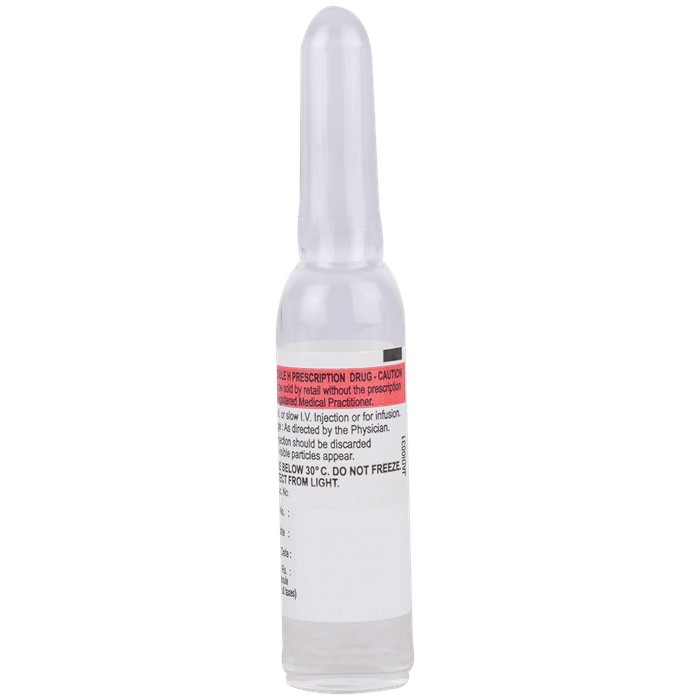
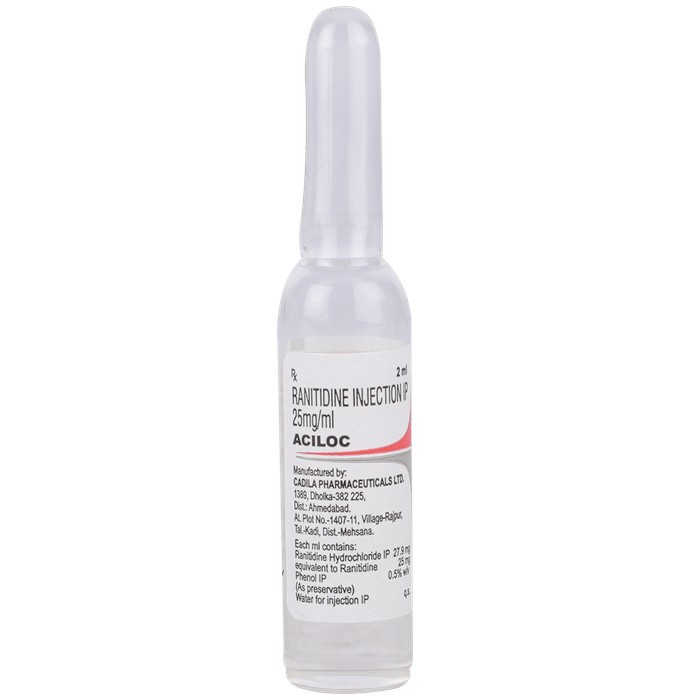
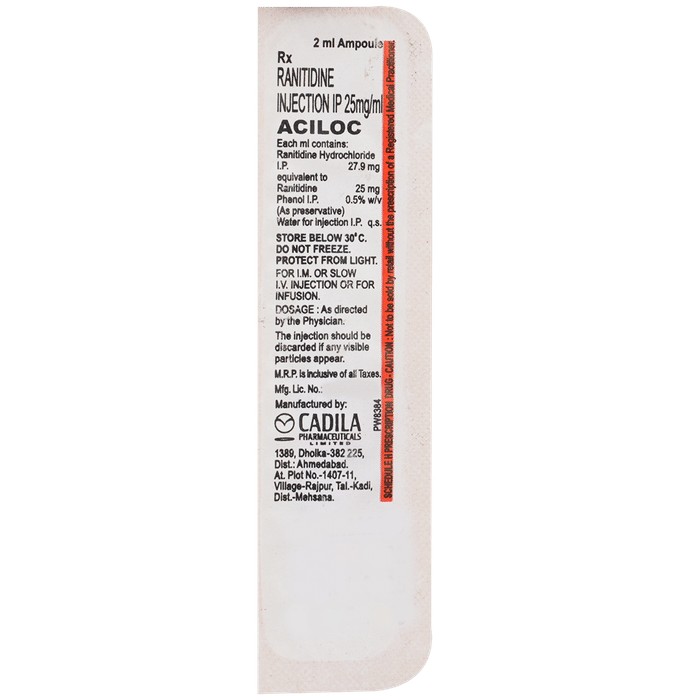
Aciloc Injection

Marketer
Cadila Pharmaceuticals Ltd
Salt Composition
Ranitidine (25mg)
Overview Aciloc Injection
Gastric acid-reducing injections, such as Aciloc, are used in hospitals to manage conditions causing excessive stomach acid production. This medication also treats ulcers unresponsive to other treatments. Administered by healthcare professionals only, the dosage varies depending on the condition. Strict adherence to your doctor's instructions is crucial. Relief from indigestion and heartburn should occur within hours; use may be short-term for symptomatic relief or longer-term for ulcer prevention. Consistent use is key for preventing future issues. Dietary modifications, such as smaller, more frequent meals and avoiding rich or spicy foods, can complement treatment. While generally well-tolerated, potential side effects—headache, constipation, drowsiness, or diarrhea—are usually mild and transient. Report persistent or bothersome side effects to your physician. Prior to treatment, disclose any liver or kidney conditions, and list all other medications, as interactions are possible. Generally safe during pregnancy and breastfeeding under medical supervision, alcohol consumption should be avoided due to its potential to exacerbate symptoms.
Primary Ingredients of Aciloc Injection
No text provided to rephrase.
Uses of Aciloc Injection
Managing gastroesophageal reflux and peptic ulcers.
Major Benefits of Aciloc Injection:
This medication will be administered by your healthcare provider. Self-medication is strongly discouraged.
Common Side effects of Aciloc Injection:
- Headache
- Diarrhea
- Gastrointestinal disturbance
How to use Aciloc Injection:
This medication will be administered by your healthcare provider. Self-medication is strongly discouraged.
How Aciloc Injection works:
Aciloc Injection, a histamine H2-receptor antagonist, diminishes gastric acid production, thus providing relief from heartburn and indigestion stemming from excess stomach acid.
SAFETY ADVICE
 AlcoholUNSAFE
Aciloc Injection should not be taken with alcohol.
 PregnancyCONSULT YOUR DOCTOR
Aciloc Injection's safety during pregnancy is uncertain. While human data is scarce, animal research indicates potential harm to the fetus. Prescribing decisions will consider the potential advantages against possible risks. Physician consultation is advised.
 Breast feedingCONSULT YOUR DOCTOR
Use of Aciloc Injection while breastfeeding is likely inadvisable. Preliminary human evidence indicates potential transfer to breast milk, posing a possible risk to the infant.
 DrivingSAFE
Driving ability is typically unaffected by Aciloc Injection.
 KidneyCAUTION
Individuals with impaired kidney function should use Aciloc Injection with care. The prescribed dosage of Aciloc Injection might require modification. Physician consultation is advised.
 LiverCAUTION
Patients with liver impairment should use Aciloc Injection cautiously; dosage modification may be necessary. Physician consultation is advised.
What if you forget to take Aciloc Injection :
Should you forget a dose of Aciloc Injection, administer it at your earliest convenience. Nevertheless, if your next scheduled dose is imminent, omit the missed dose and resume your usual dosing regimen. Avoid taking a double dose.
Facts to Know About Aciloc Injection
| Label | Value |
|---|---|
| Chemical Type | Aralkyl Amine Derivative |
| Developing Habits | No. |
| Treatment Category | Gastrointestinal system |
 3,018 People bought this recently