


Aidsemide Tablet

Marketer
Workcell Solutions Private Limited
Salt Composition
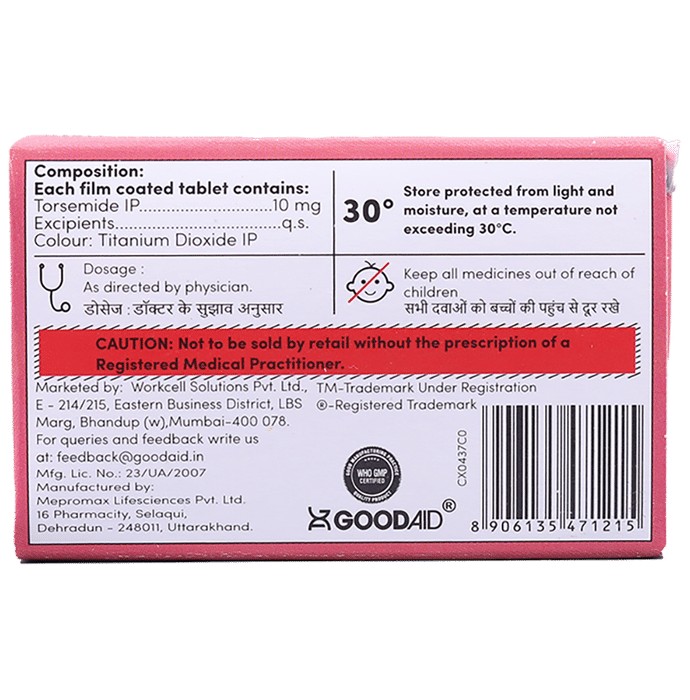
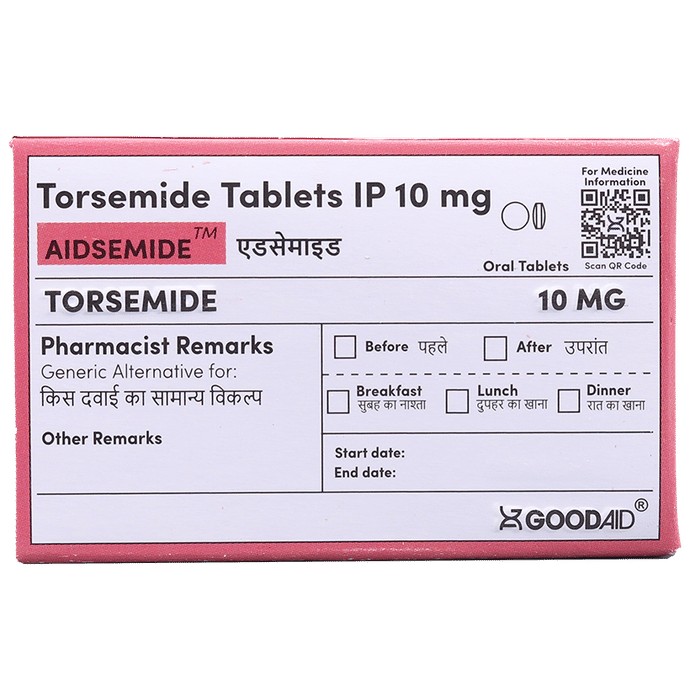
Torasemide (10mg)
Overview Aidsemide Tablet
Aquapure tablets are classified as diuretics, often called water pills. They alleviate swelling (edema) resulting from fluid retention in patients with heart, liver, or kidney conditions. This medication also manages hypertension. Aquapure facilitates the excretion of excess water and sodium via urine. Dosage, whether as a standalone treatment or in conjunction with other medications, should adhere to your physician's instructions. It can be administered with or without food, consistently at the same time daily. To minimize nighttime urination, avoid taking it within four hours of sleep. Continued use is crucial, even if symptoms improve; premature discontinuation may exacerbate your condition. Adopting a healthier lifestyle, including stress reduction, reduced sodium intake, and smoking cessation, may enhance the drug's effectiveness. Common, generally transient, side effects include headache, lightheadedness, dehydration, hypotension, and gastrointestinal discomfort. Persistent or bothersome side effects warrant medical attention. Individuals with liver impairment should inform their doctor before commencing treatment. Pregnant or lactating women require medical consultation prior to use. Regular monitoring of kidney function and electrolytes is essential. As Aquapure can lower potassium levels, your doctor might recommend potassium-rich foods (bananas, coconut water, etc.) or supplements.
Primary Ingredients of Aidsemide Tablet
No information provided. Please provide the text you wish to be rephrased.
Uses of Aidsemide Tablet
Managing elevated blood pressure and fluid retention.
Major Benefits of Aidsemide Tablet:
Consume this medication precisely as your physician directs, adhering to the prescribed dosage and treatment period. Ingest the tablet whole; avoid chewing, crushing, or fracturing it. Aidsemide Tablets can be taken with or without food, though consistent timing is recommended.
Common Side effects of Aidsemide Tablet:
- Headache
- Dizziness
- Dehydration
- Constipation
- Decreased blood pressure
- Upset stomach
How to use Aidsemide Tablet:
Administer this medication precisely as your physician directs, adhering to both the prescribed dosage and treatment duration. Ingest the tablet whole; avoid chewing, crushing, or fracturing it. Aidsemide Tablets can be consumed with or without food, although consistent timing is recommended.
How Aidsemide Tablet works:
Aquapell tablets function as a diuretic, eliminating excess fluid and specific electrolytes through enhanced urinary output.
SAFETY ADVICE
 AlcoholCONSULT YOUR DOCTOR
Alcohol consumption alongside Aidsemide Tablet presents an unknown safety profile. Physician consultation is advised.
 PregnancySAFE IF PRESCRIBED
Use of Aidsemide Tablet during pregnancy is typically deemed safe. Preclinical trials in animals revealed minimal or no negative consequences for fetal development; nevertheless, clinical data from human studies are scarce.
 Breast feedingSAFE IF PRESCRIBED
Lactation and Aidsemide Tablet use appear compatible. Available human data indicates minimal infant risk associated with the medication.
 DrivingUNSAFE
Taking Aidsemide Tablets might cause drowsiness, blurred vision, or dizziness. Driving is inadvisable if these effects are experienced.
 KidneySAFE IF PRESCRIBED
Aidsemide tablets are generally safe for individuals with kidney conditions; dosage modification isn't usually necessary. Nevertheless, disclose any kidney disease to your physician, as Aidsemide use is contraindicated if urination is impaired or if the kidney impairment stems from other medications.
 LiverCAUTION
Patients with hepatic impairment should use Aidsemide Tablets cautiously; dosage modification may be necessary. Physician consultation is advised.
What if you forget to take Aidsemide Tablet :
Should you forget a dose of Aidsemide Tablet, ingest it at your earliest convenience. Nevertheless, if your next scheduled dose is imminent, omit the missed dose and resume your usual dosing pattern. Avoid taking a double dose.
Facts to Know About Aidsemide Tablet
| Label | Value |
|---|---|
| Chemical Classification | Sulfamoyl compounds |
| Developing Habits | No. |
| Treatment Category | Heart |
| Action class | Loop Diuretics (Na+-K+-2Cl- Cotransporter Inhibitors) |
 3,018 People bought this recently