


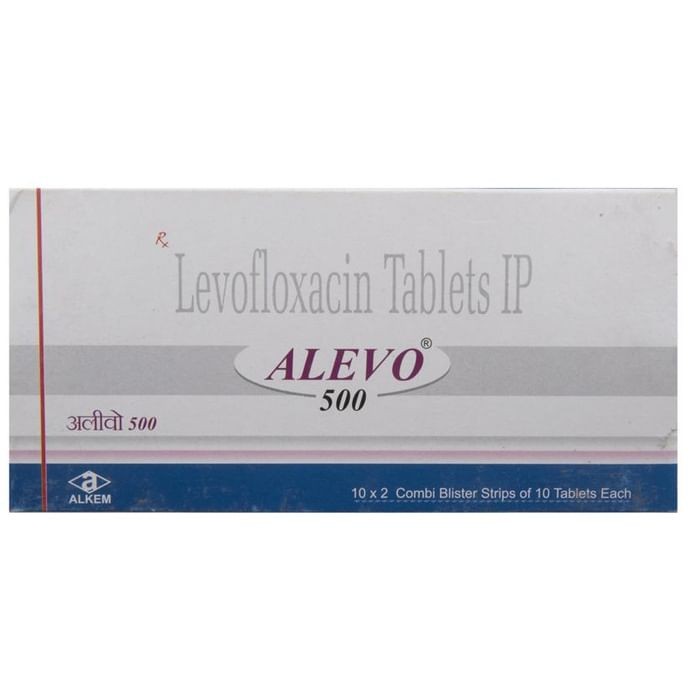
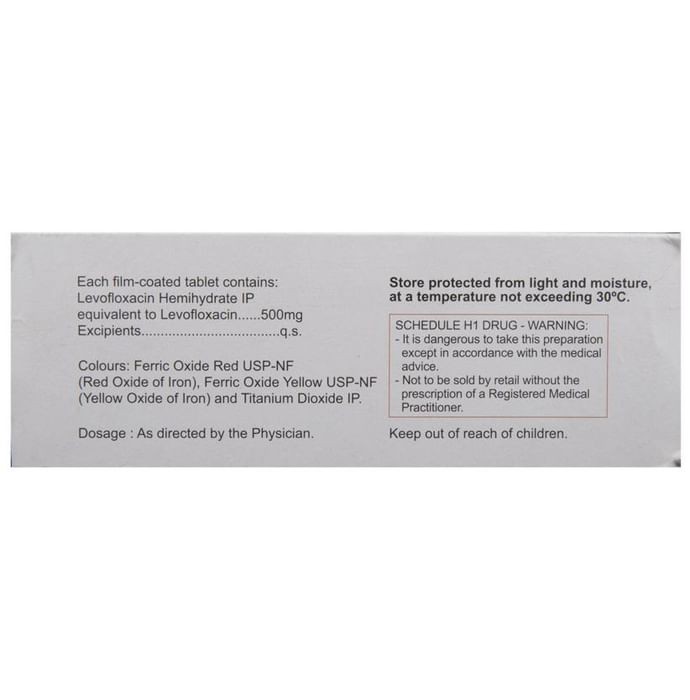

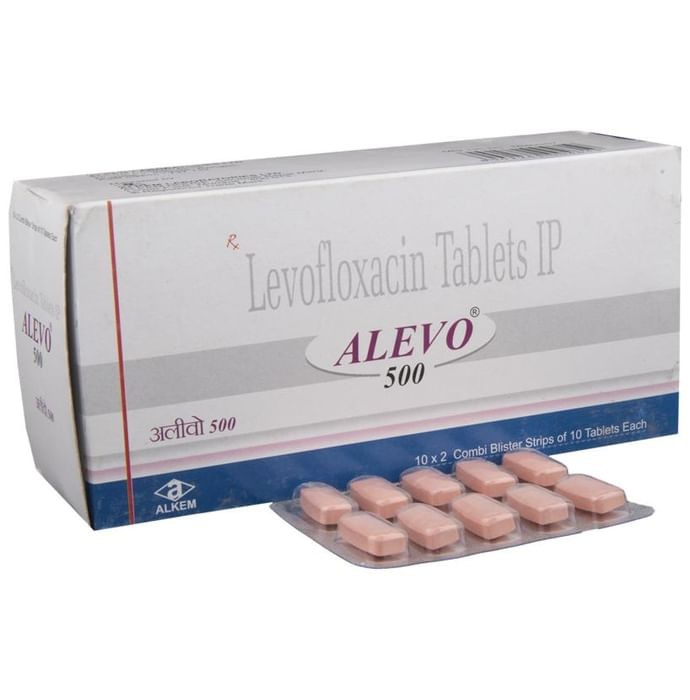
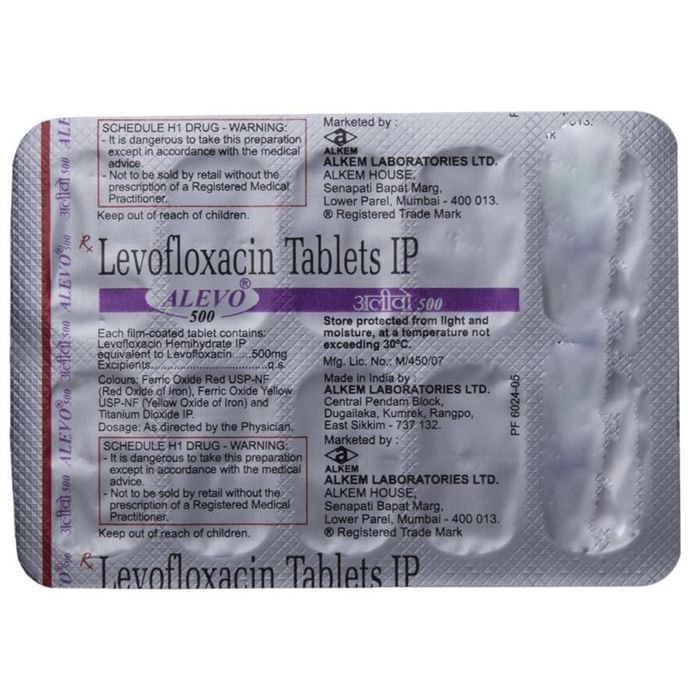
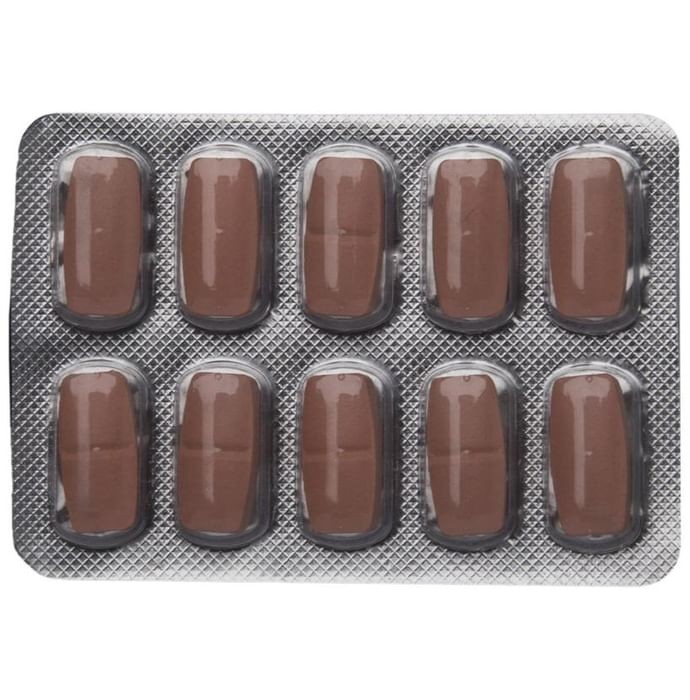
Alevo 500 Tablet

Marketer
Alkem Laboratories Ltd
Salt Composition
Levofloxacin (500mg)
Overview Alevo 500 Tablet
Cefixime 500mg tablets are prescribed to combat bacterial infections. This antibiotic treats infections affecting the urinary tract, nose, throat, skin, and lungs (including pneumonia). Its mechanism involves halting the proliferation of disease-causing bacteria. Always follow your physician's instructions regarding dosage and treatment duration. This medication can be taken with or without food, ideally at the same time each day. Consistent dosing is crucial; complete the prescribed course even if symptoms improve. Never double a dose; simply resume the regular schedule if a dose is missed. Side effects, including headache, dizziness, nausea, and constipation, are possible, though generally transient. Consult your doctor if these persist or are troublesome. Diarrhea may also occur, typically resolving upon completion of treatment. Report persistent diarrhea or bloody stools immediately. Individuals with known allergies to any component should avoid this medication. Patients with kidney impairment require careful monitoring while using this antibiotic.
Uses of Alevo 500 Tablet
Managing Bacterial Infections
Major Benefits of Alevo 500 Tablet:
Follow your doctor's instructions precisely regarding dosage and treatment length for this medication. Ingest the Alevo 500 Tablet whole; avoid chewing, crushing, or breaking it. It can be taken with or without food, but consistency in timing is recommended. Consumption of Alevo 500 Tablet should exclude dairy products like milk, cheese, yogurt, butter, Indian cheese (paneer), and ice cream.
Common Side effects of Alevo 500 Tablet:
- Headache
- Dizziness
- Nausea
- Constipation
- Diarrhea
How to use Alevo 500 Tablet:
Follow your doctor's instructions precisely regarding dosage and treatment length for this medication. Swallow the Alevo 500 Tablet whole; do not chew, crush, or break it. It can be taken with or without food, but consistency in timing is recommended. Consuming dairy products (milk, cheese, yogurt, butter, paneer, ice cream) concurrently with Alevo 500 Tablet should be avoided.
How Alevo 500 Tablet works:
Alevo 500mg tablets contain an antibiotic that inhibits the bacterial enzyme DNA-gyrase. This inhibition blocks bacterial cell replication and repair, resulting in bacterial cell death.
SAFETY ADVICE
 AlcoholSAFE
Alcohol consumption alongside Alevo 500 Tablet presents no known adverse reactions.
 PregnancyCONSULT YOUR DOCTOR
Using Alevo 500 Tablet during pregnancy poses a confirmed risk to the fetus. While its use is generally contraindicated, a physician might exceptionally prescribe it in life-threatening emergencies where potential benefits outweigh the known hazards. Always seek medical advice.
 Breast feedingCONSULT YOUR DOCTOR
The use of Alevo 500 Tablet while breastfeeding is likely inadvisable. Preliminary human studies indicate potential transfer of the medication into breast milk, posing a possible risk to the infant.
 DrivingUNSAFE
Taking Alevo 500 Tablet may cause drowsiness, blurred vision, and dizziness, potentially impairing alertness. Driving should be avoided if these effects are experienced.
 KidneyCAUTION
Patients with kidney impairment should use Alevo 500 Tablets cautiously; dosage modification may be necessary. Physician consultation is advised.
 LiverCONSULT YOUR DOCTOR
Insufficient data exists regarding Alevo 500 Tablet's use in individuals with hepatic impairment. Seek medical advice. Discontinue use and contact your physician immediately if you experience jaundice symptoms during treatment.
What if you forget to take Alevo 500 Tablet :
Should you forget to take your Alevo 500 Tablet, administer it at your earliest convenience. Nevertheless, if your next scheduled dose is imminent, omit the missed dose and resume your usual dosing regimen. Avoid taking a double dose.
Facts to Know About Alevo 500 Tablet
| Label | Value |
|---|---|
| Type of Compound | Quinolone antibiotic |
| Addictive | None. |
| Medication Classification | Eye medication |
| Mechanism of Action | Fluoroquinolone antibiotics |
 3,018 People bought this recently