


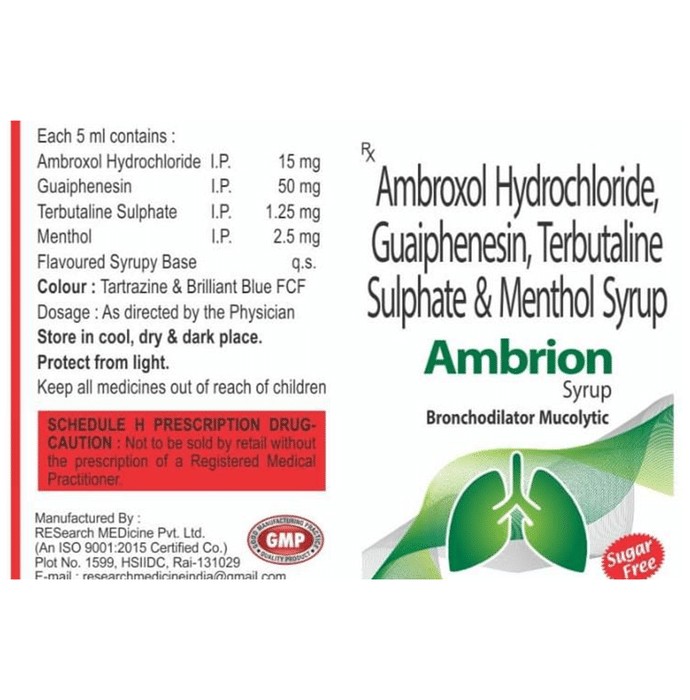
Ambrion Syrup

Marketer
Medshine Pharmaceutical
Salt Composition
Ambroxol (15mg) + Guaifenesin (50mg) + Menthol (2.5mg) + Terbutaline (1.25mg)
Overview Ambrion Syrup
Combiflu Syrup is a multifaceted cough remedy that liquefies nasal and bronchial mucus, facilitating expectoration. It also soothes throat inflammation and offers a cooling effect. Combiflu Syrup is administered with or without food, following the physician's prescribed dosage and regimen. Your individualized dose depends on your health status and response to treatment. Continue using this medication as directed by your doctor; premature discontinuation might lead to symptom recurrence and condition exacerbation. Inform your doctor of all other medications you are using, as interactions may occur. Common side effects include queasiness, loose stools, emesis, abdominal discomfort, cephalalgia, skin rash, trembling, and tachycardia. Most are transient and self-limiting. Report any concerning side effects immediately to your doctor. Drowsiness is possible; avoid operating machinery or engaging in activities requiring alertness until the medication's effects are known. Alcohol consumption should be avoided due to potential exacerbation of drowsiness. Self-medication is strongly discouraged; never share your prescription. Adequate hydration is recommended during treatment. Consult your physician prior to use if pregnant, planning pregnancy, or breastfeeding.
Uses of Ambrion Syrup
Respiratory irritation
Major Benefits of Ambrion Syrup:
Administer this medication precisely as your physician directs, adhering to both the prescribed dosage and duration. Always consult the product label for complete instructions prior to consumption. Use a measuring device for accurate dosing and take orally. Ensure thorough shaking before each use. Ambrion Syrup can be ingested with or without food; however, consistent daily timing is recommended.
Common Side effects of Ambrion Syrup:
- Nausea
- Diarrhea
- Vomiting
- Dizziness
- Headache
- Rash
- Tremors
- Increased heart rate
- Upper abdominal pain
- Urticaria
- Itching
- Sweating
- Changes in serum aminotransferase levels
- Bloating
- Indigestion
How to use Ambrion Syrup:
Follow your doctor's instructions precisely regarding dosage and treatment length for this medication. Always read the product label carefully before administration. Use a measuring cup for accurate dosing and take orally. Ensure thorough shaking prior to each use. Ambrion Syrup can be ingested with or without food; however, consistent timing is recommended for optimal results.
How Ambrion Syrup works:
Ambroxol, guaifenesin, menthol, and terbutaline are the four active components of the cough syrup, Ambrion.
SAFETY ADVICE
 AlcoholCONSULT YOUR DOCTOR
Alcohol consumption alongside Ambrion Syrup presents an unknown safety profile. Physician consultation is advised.
 PregnancyCONSULT YOUR DOCTOR
Use of Ambrion Syrup during pregnancy may pose risks. While human research is scarce, animal studies indicate potential harm to a fetus. A physician will assess the advantages against possible risks prior to prescription. Seek medical advice.
 Breast feedingCONSULT YOUR DOCTOR
Data on Ambrion Syrup's compatibility with breastfeeding is currently lacking. Seek your physician's advice.
 DrivingCONSULT YOUR DOCTOR
Ambrion Syrup's effect on driving ability is undetermined. Refrain from driving if you exhibit symptoms impairing concentration or reaction time.
 KidneySAFE IF PRESCRIBED
Ambrion Syrup's use in patients with kidney disease appears to pose minimal risk. Available evidence indicates dose modification may be unnecessary, but physician consultation is recommended.
 LiverSAFE IF PRESCRIBED
Ambrion Syrup appears to pose minimal risk for individuals with hepatic impairment. Current evidence indicates dose modification may be unnecessary; however, physician consultation is recommended.
What if you forget to take Ambrion Syrup :
NA
Facts to Know About Ambrion Syrup
| Label | Value |
|---|---|
| Developing Habits | No. |
| Type of Therapy | Breathing |
 3,018 People bought this recently