


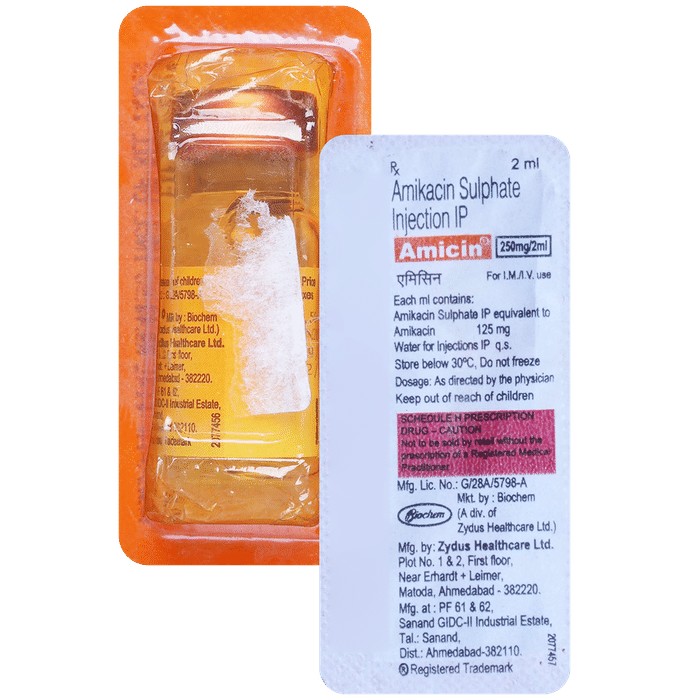
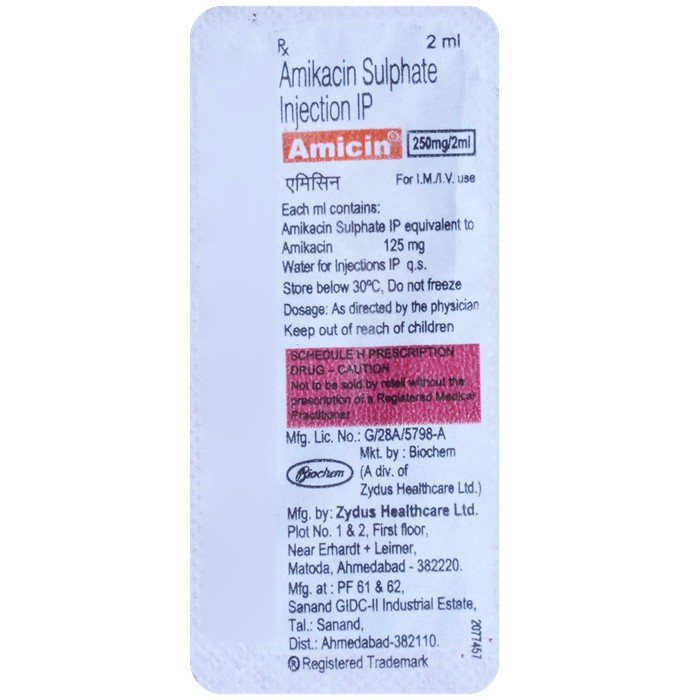

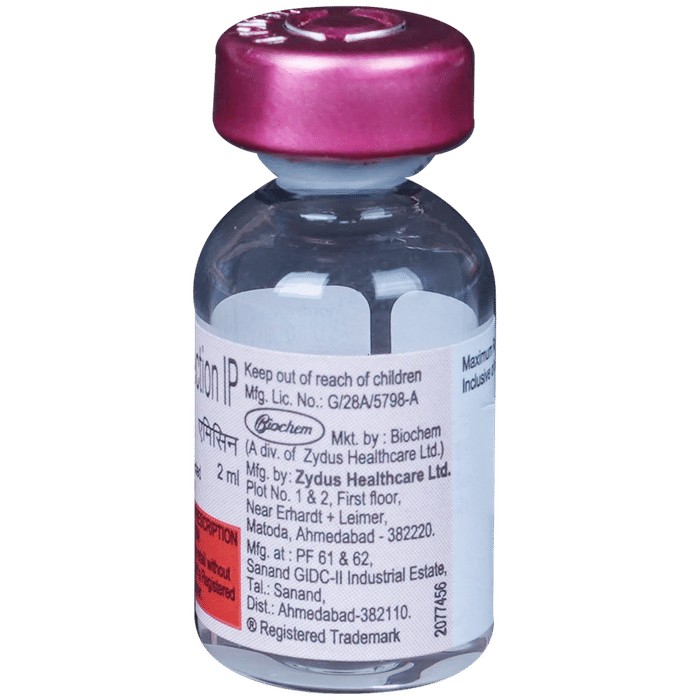
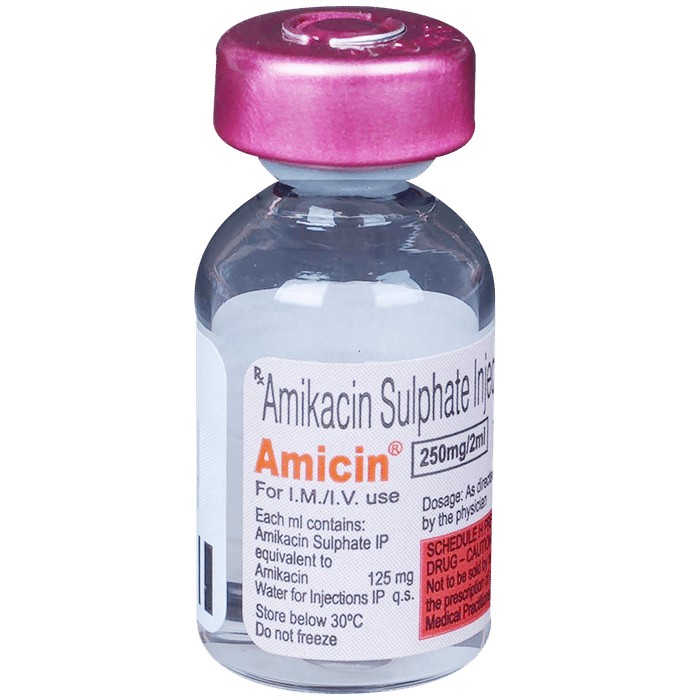
Amicin 250mg Injection

Marketer
Zydus Healthcare Limited
Salt Composition
Amikacin (250mg)
Overview Amicin 250mg Injection
Aminoglycoside injection (250mg) combats a broad spectrum of bacterial infections, encompassing urinary, skeletal, pulmonary (pneumonia), neurological, and hematological infections, among others. Prophylactic use is common in hospitalized individuals. Its mechanism involves bacterial growth inhibition. Administered intravenously (drip) or intramuscularly by a healthcare professional only, this medication requires strict adherence to the prescribed dosage regimen. Complete the entire course, even with symptom improvement; premature cessation risks relapse. Minor adverse effects may include injection site inflammation and elevated blood urea nitrogen. Persistent side effects or treatment ineffectiveness warrant medical consultation. High doses may rarely cause vertigo, nephrotoxicity, and ototoxicity. Regular monitoring (renal function, hearing, urinalysis) is often necessary. Pregnancy contraindicates its use; disclose pregnancy, pregnancy plans, or breastfeeding to your physician.
Primary Ingredients of Amicin 250mg Injection
No information provided. Please provide the text you wish me to rephrase.
Uses of Amicin 250mg Injection
Infections caused by bacteria
Major Benefits of Amicin 250mg Injection:
This medication will be administered by your healthcare provider; self-medication is strictly prohibited.
Common Side effects of Amicin 250mg Injection:
- Increased blood urea
- Injection site reactions (pain, swelling, redness)
How to use Amicin 250mg Injection:
This medication will be administered by your healthcare provider. Self-medication is strictly prohibited.
How Amicin 250mg Injection works:
Amicin 250mg Injection is a bacterial growth inhibitor, an antibiotic that functions by blocking the production of proteins crucial for bacterial survival.
SAFETY ADVICE
 AlcoholSAFE
Amicin 250mg Injection does not interact negatively with alcohol consumption.
 PregnancyCONSULT YOUR DOCTOR
Administering Amicin 250mg Injection during pregnancy carries established risks to fetal development and is therefore contraindicated. In exceptional, life-threatening circumstances, a physician might deem its use justified if the potential benefits outweigh the known hazards. Physician consultation is essential.
 Breast feedingSAFE IF PRESCRIBED
Administration of Amicin 250mg Injection is considered safe while breastfeeding. Research in humans indicates negligible transfer of the medication into breast milk, posing no known risk to the infant.
 DrivingUNSAFE
The administration of Amicin 250mg Injection might reduce attentiveness, impair visual acuity, and induce drowsiness or dizziness. Refrain from operating a vehicle should these effects manifest.
 KidneyCAUTION
Administering Amicin 250mg Injection requires careful consideration in individuals with impaired renal function. Dosage modification for Amicin 250mg Injection might be necessary. Physician consultation is advised.
 LiverSAFE IF PRESCRIBED
The use of Amicin 250mg Injection in individuals with hepatic impairment is likely safe. Current evidence indicates dose modification may not be necessary; however, physician consultation is recommended.
What if you forget to take Amicin 250mg Injection :
Omit a scheduled Amicin 250mg Injection? Seek medical advice immediately.
Facts to Know About Amicin 250mg Injection
| Label | Value |
|---|---|
| Chemical Type | Aminoglycoside antibiotics |
| Developing Habits | No. |
| Type of Therapy | Antimicrobials |
| Actions | Aminoglycoside antibiotics |
 3,018 People bought this recently