


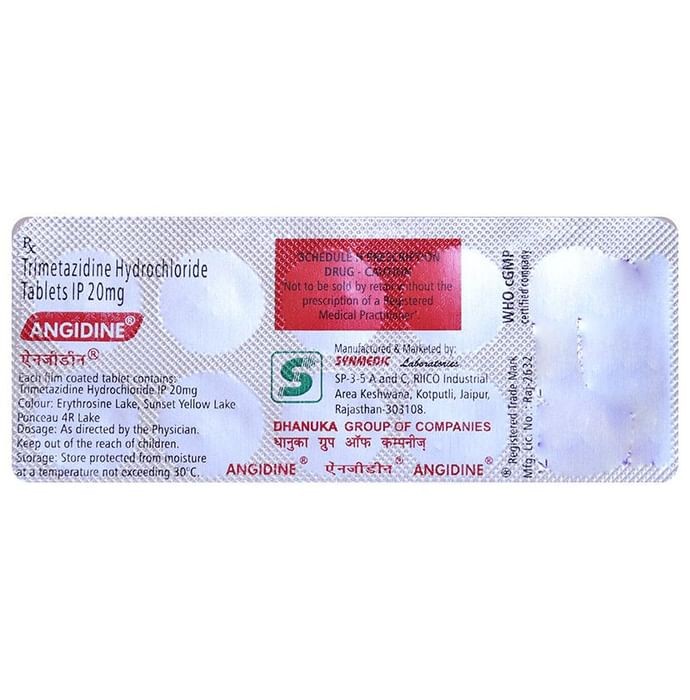
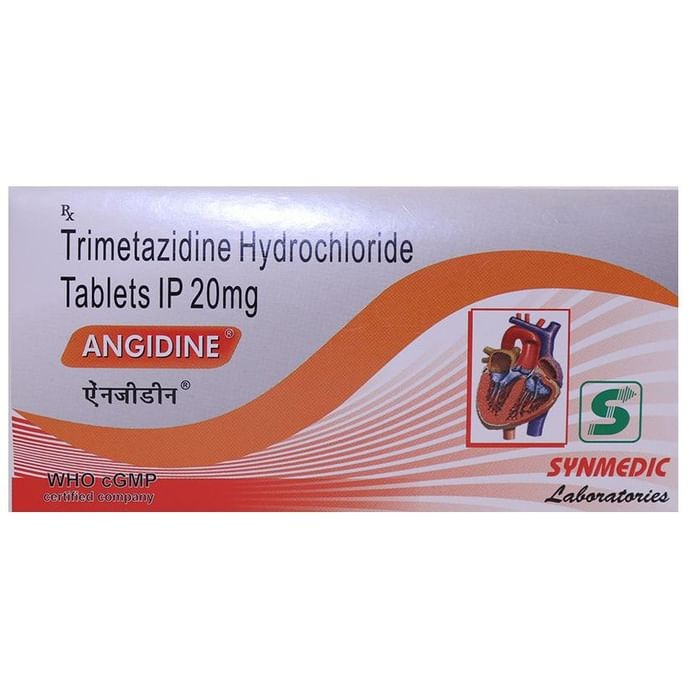
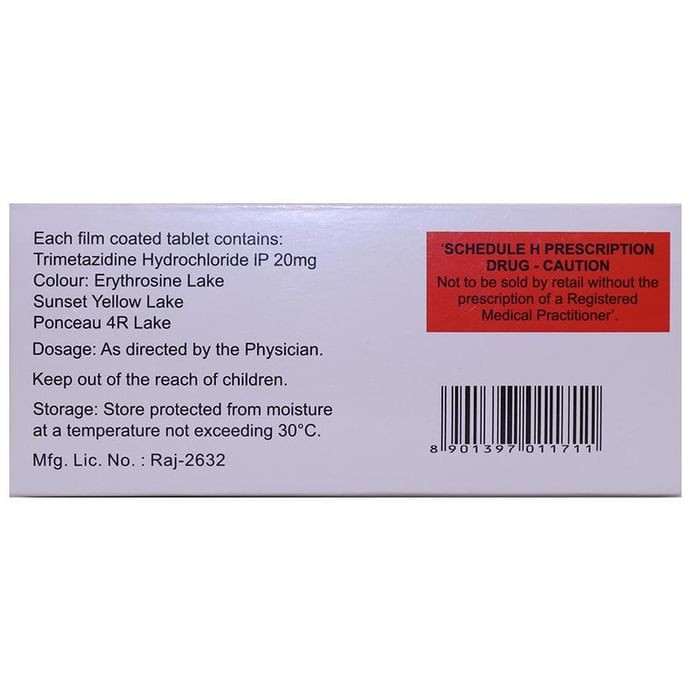
Angidine Tablet

Marketer
Synmedic Laboratories
Salt Composition
Trimetazidine (20mg)
Overview Angidine Tablet
Cardiogard tablets are prescribed for angina pectoris, a type of chest pain stemming from heart conditions. This medication acts as a preventative measure against future angina episodes, but it's not effective in halting an attack already underway. It may be used independently or alongside other cardiac medications. Consistent daily use, as directed by your physician, is crucial. Timing relative to meals is flexible, but maintaining a regular schedule is vital. Dosage frequency might adjust based on treatment efficacy, as determined by your doctor. Continuous use, even during symptom-free periods, maximizes protective benefits; discontinuation risks angina recurrence. Supporting heart health further involves lifestyle modifications: smoking cessation, moderate alcohol consumption, balanced nutrition, regular physical activity, and stress management. Potential side effects, including dizziness, headache, gastrointestinal upset (pain, diarrhea, indigestion, nausea, vomiting), skin reactions (rash, itching, hives), and fatigue, should be reported if persistent or troublesome. This medication may not be appropriate for everyone; patients with liver or kidney conditions, pregnant or breastfeeding individuals, and those on other medications should fully disclose their medical history to their doctor before starting Cardiogard.
Primary Ingredients of Angidine Tablet
There is no text provided to rephrase.
Uses of Angidine Tablet
Managing chest pain associated with angina pectoris
Major Benefits of Angidine Tablet:
Consume this medication precisely as prescribed by your physician, adhering to both the dosage and treatment length. Ingest the tablet whole; avoid chewing, crushing, or fracturing it. It's recommended to take Angidine with a meal.
Common Side effects of Angidine Tablet:
- Dizziness
- Headache
- Nausea
- Vomiting
- Weakness
- Rash
- Abdominal pain
- Indigestion
- Itching
- Diarrhea
- Hives
How to use Angidine Tablet:
Consume this medication according to your physician's prescribed dosage and schedule. Ingest the tablet whole; avoid chewing, crushing, or fracturing it. It's recommended to take Angidine with food.
How Angidine Tablet works:
CardioGuard tablets offer anti-anginal benefits. They reduce the heart's oxygen demand by metabolically favoring glucose over fats, thereby enhancing cardiac efficiency.
SAFETY ADVICE
 AlcoholUNSAFE
Concurrent use of Angidine tablets and alcohol may lead to significant sleepiness.
 PregnancyCONSULT YOUR DOCTOR
Data on Angidine Tablet use in pregnancy is lacking. Seek medical advice from your physician.
 Breast feedingCONSULT YOUR DOCTOR
Data on Angidine Tablet use while breastfeeding is lacking. Seek medical advice from your physician.
 DrivingUNSAFE
Taking Angidine Tablets may cause drowsiness, blurred vision, and dizziness, reducing alertness. Driving should be avoided if these effects are experienced.
 KidneyCAUTION
Patients with impaired kidney function should exercise caution when using Angidine Tablets, potentially requiring dosage modification. Consult a physician before use. Angidine Tablets are contraindicated in individuals with severely compromised kidney function.
 LiverCONSULT YOUR DOCTOR
Data regarding Angidine Tablet use in individuals with hepatic impairment is scarce. Physician consultation is advised.
What if you forget to take Angidine Tablet :
Should you forget a dose of Angidine Tablet, administer it at your earliest convenience. Nevertheless, if your next scheduled dose is imminent, omit the missed dose and resume your usual dosing regimen. Avoid taking a double dose.
Facts to Know About Angidine Tablet
| Label | Value |
|---|---|
| Chemical Type | Benzylamines |
| Developing Habits | No. |
| Treatment Category | Heart |
| Active Class | Fatty acid regulator and sodium channel inhibitor |
 3,018 People bought this recently