


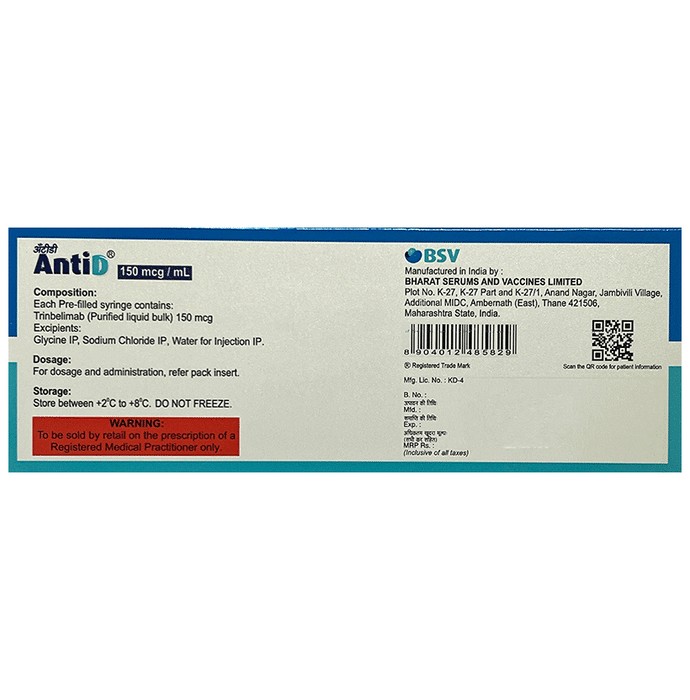
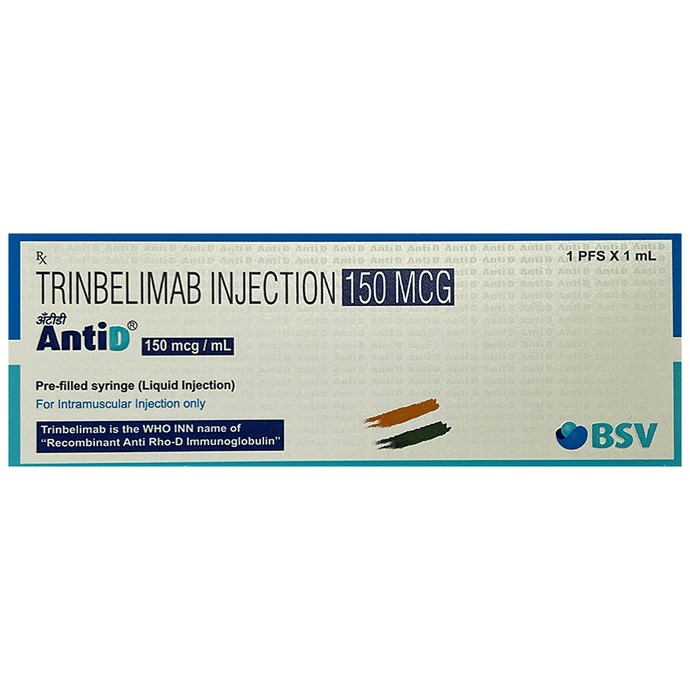
AntiD 150mcg/ml Injection

Marketer
Bharat Serums & Vaccines Ltd
Salt Composition
Anti Rh D Immunoglobulin (150mcg/ml)
Overview AntiD 150mcg/ml Injection
Rh-negative individuals may receive Anti-D 150mcg/ml Injection to prevent antibody formation following Rh-positive blood exposure, crucial during pregnancy or transfusion. This injection, administered intramuscularly (usually in the upper arm), provides Rh prophylaxis against pregnancy complications and incompatible transfusions involving Rh-positive red blood cells. It's also used to treat immune thrombocytopenic purpura, characterized by low platelet counts. Your healthcare provider will administer this injection; self-injection is strongly discouraged. Routine administration is recommended at 28 weeks gestation and within 72 hours postpartum if the infant is Rh D-positive. While generally well-tolerated, report any post-injection symptoms to your physician; preventative measures may be available. Prior to receiving the injection, inform your doctor of any blood clotting disorders or recent/upcoming vaccinations.
Uses of AntiD 150mcg/ml Injection
Infectious Disease Prophylaxis
Major Benefits of AntiD 150mcg/ml Injection:
Administering this medication will be handled by your healthcare provider. Self-medication is strictly prohibited.
Common Side effects of AntiD 150mcg/ml Injection:
- No common side effects seen
How to use AntiD 150mcg/ml Injection:
This medication will be administered by your healthcare provider. Self-medication is strictly prohibited.
How AntiD 150mcg/ml Injection works:
Rh(D) immune globulin, a type of immunoglobulin medication, neutralizes fetal Rh-positive red blood cells that may cross into the Rh-negative mother's bloodstream. This action prevents sensitization during delivery, miscarriage, or any pregnancy complication causing placental bleeding.
SAFETY ADVICE
 AlcoholCONSULT YOUR DOCTOR
Alcohol consumption alongside AntiD 150mcg/ml Injection may pose unknown risks. Seek medical advice before combining them.
 PregnancyCONSULT YOUR DOCTOR
The use of AntiD 150mcg/ml Injection during pregnancy may pose risks. While human data is scarce, animal research indicates potential harm to a fetus. A physician will assess the advantages against possible dangers prior to prescribing. Seek medical advice.
 Breast feedingSAFE IF PRESCRIBED
Administration of AntiD 150mcg/ml Injection during lactation appears to pose minimal risk. Available human data indicates negligible infant hazard.
 DrivingSAFE
Administering AntiD 150mcg/ml Injection typically does not impair driving capabilities.
 KidneyCONSULT YOUR DOCTOR
Insufficient data exists regarding the administration of AntiD 150mcg/ml Injection to individuals with renal impairment. Physician consultation is advised.
 LiverCONSULT YOUR DOCTOR
Insufficient data exists regarding the administration of AntiD 150mcg/ml Injection to individuals with hepatic impairment. Physician consultation is recommended.
What if you forget to take AntiD 150mcg/ml Injection :
Should you forget a dose of AntiD 150mcg/ml Injection, seek medical advice.
Facts to Know About AntiD 150mcg/ml Injection
| Label | Value |
|---|---|
| Type of Compound | Immunizations |
| Potential for Dependence | None. |
| Type of Treatment | Immunizations |
 3,018 People bought this recently