


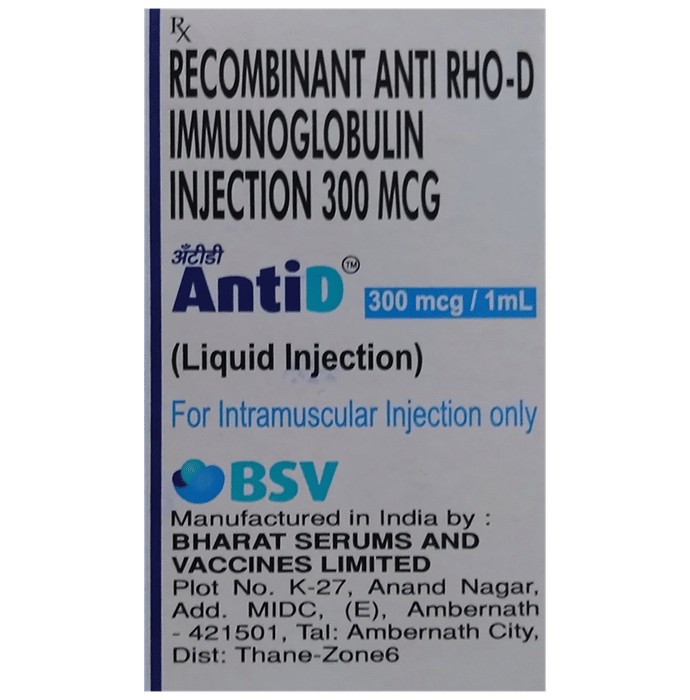
AntiD 300mcg/ml Injection

Marketer
Bharat Serums & Vaccines Ltd
Salt Composition
Anti Rh D Immunoglobulin (300mcg/ml)
Overview AntiD 300mcg/ml Injection
Rh immunoglobulin (Anti-D 300mcg/ml) injection is used to prevent the development of antibodies that can cause harmful reactions. This is crucial following Rh-positive blood transfusions in Rh-negative individuals and during pregnancies where the mother is Rh-negative and the fetus Rh-positive. The injection provides Rh prophylaxis for pregnancy-associated risks. It's also approved for treating incompatible transfusions involving Rh-negative patients receiving Rh-positive red blood cells. Additionally, it may be administered for immune thrombocytopenic purpura, characterized by low platelet counts and increased bruising. Administration is strictly by a healthcare professional; self-injection is strongly discouraged. The intramuscular injection, typically given in the upper arm, is usually scheduled at 28 weeks gestation and within 72 hours postpartum if the infant is Rh D positive. Generally well-tolerated with minimal adverse effects, any symptoms following injection should be reported immediately to your physician. Preventive or mitigating strategies may be available. Prior to administration, inform your doctor about any blood clotting disorders and recent or planned vaccinations.
Uses of AntiD 300mcg/ml Injection
Infectious Disease Prophylaxis
Major Benefits of AntiD 300mcg/ml Injection:
This medication will be administered by your healthcare provider. Self-medication is strictly prohibited.
Common Side effects of AntiD 300mcg/ml Injection:
- No common side effects seen
How to use AntiD 300mcg/ml Injection:
This medication will be administered by your healthcare provider. Self-medication is strictly prohibited.
How AntiD 300mcg/ml Injection works:
Rh(D) immune globulin, a type of immunoglobulin medication, neutralizes fetal Rh-positive red blood cells that may cross into the Rh-negative mother's bloodstream. This action prevents sensitization during delivery, miscarriage, or other pregnancy complications causing placental bleeding.
SAFETY ADVICE
 AlcoholCONSULT YOUR DOCTOR
Alcohol consumption alongside AntiD 300mcg/ml Injection may pose safety risks; seek medical advice before combining them.
 PregnancyCONSULT YOUR DOCTOR
The use of AntiD 300mcg/ml Injection during pregnancy may pose risks. While human data is scarce, animal research indicates potential harm to the fetus. A physician will assess the advantages against possible dangers prior to prescribing. Physician consultation is recommended.
 Breast feedingSAFE IF PRESCRIBED
Administration of AntiD 300mcg/ml Injection during lactation is likely safe. Available human data indicates minimal risk to the infant.
 DrivingSAFE
Driving ability is typically unaffected by AntiD 300mcg/ml Injection.
 KidneyCONSULT YOUR DOCTOR
Insufficient data exists regarding the administration of AntiD 300mcg/ml Injection to individuals with renal impairment. Physician consultation is advised.
 LiverCONSULT YOUR DOCTOR
Data regarding the administration of AntiD 300mcg/ml Injection to individuals with hepatic impairment is scarce. Physician consultation is advised.
What if you forget to take AntiD 300mcg/ml Injection :
Should you forget a dose of AntiD 300mcg/ml Injection, seek your physician's advice.
Facts to Know About AntiD 300mcg/ml Injection
| Label | Value |
|---|---|
| Pharmaceutical Category | Immunizations |
| Potential for Dependence | None. |
| Type of Treatment | IMMUNIZATIONS |
 3,018 People bought this recently