


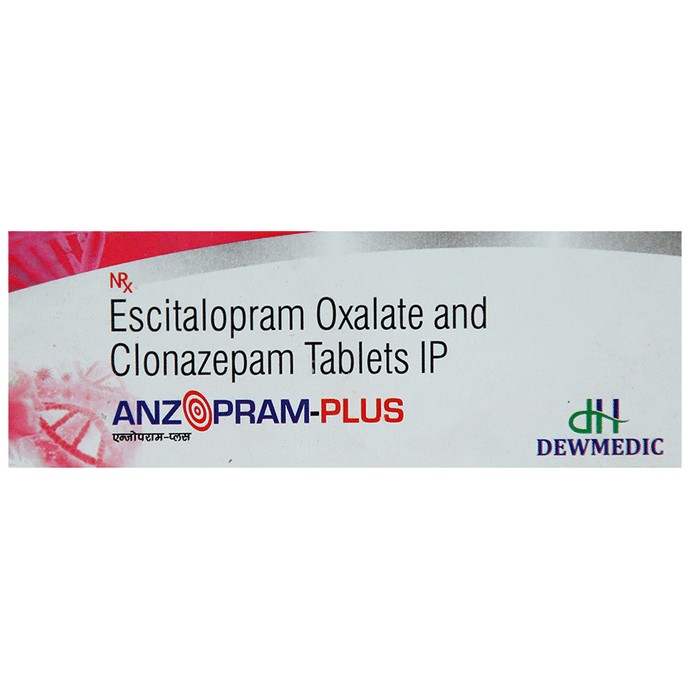
Anzopram-Plus Tablet

Marketer
Dewmedic Healthcare Pvt Ltd
Salt Composition
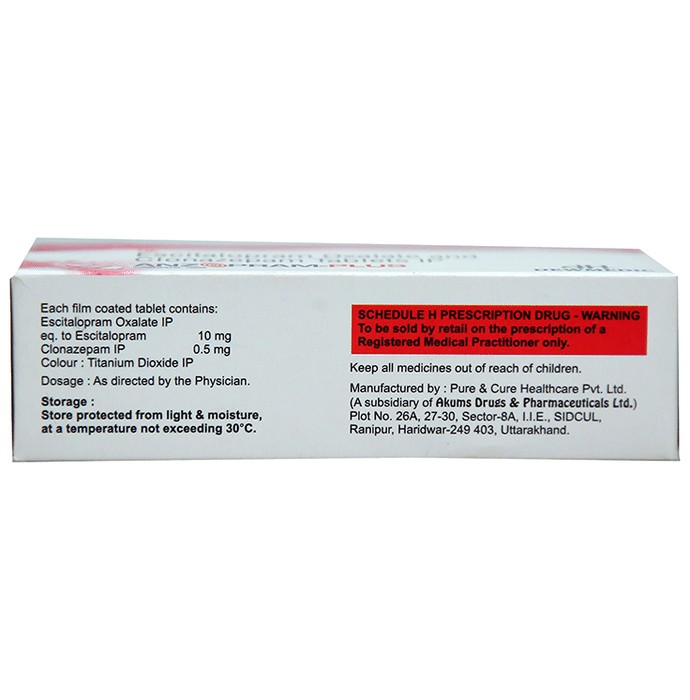
Clonazepam (0.5mg) + Escitalopram Oxalate (10mg)
Overview Anzopram-Plus Tablet
Combipram is a prescription medication for anxiety. This combined formulation reduces excessive neuronal activity in the brain, promoting calmness. It also elevates levels of a key neurotransmitter, improving mood. Combipram can be taken with or without food, but consistent daily timing ensures stable blood levels. Always follow your doctor's prescribed dosage and duration, as it can be habit-forming. If you miss a dose, take it immediately upon recall. Complete the entire course of treatment, even if symptoms improve. Abrupt cessation should be avoided due to potential withdrawal. Common side effects include reduced libido, delayed ejaculation, nausea, memory problems, depression, and disorientation. Dizziness and drowsiness are also possible; avoid driving or tasks requiring alertness until the effects are known. Weight fluctuations (gain or loss) may occur; a balanced diet and regular exercise can help manage weight changes. Report any unusual mood shifts to your doctor immediately, as suicidal thoughts may arise. Patients with liver conditions should exercise caution. Inform your doctor of all other medications you are taking, as interactions can affect Combipram's efficacy. Disclose pregnancy, pregnancy plans, or breastfeeding to your physician.
Uses of Anzopram-Plus Tablet
Managing Anxiety: Therapeutic Approaches
Major Benefits of Anzopram-Plus Tablet:
Follow your doctor's instructions precisely regarding dosage and treatment length for this medication. Ingest the tablet whole; avoid crushing, chewing, or breaking it. Anzopram-Plus Tablets can be consumed with or without food, although consistent timing is recommended.
Common Side effects of Anzopram-Plus Tablet:
- Delayed ejaculation
- Confusion
- Vomiting
- Memory impairment
- Drowsiness
- Tiredness
- Anorgasmia (decreased orgasm)
- Low sexual desire
- Nausea
- Diarrhea
- Uncoordinated body movements
How to use Anzopram-Plus Tablet:
Follow your doctor's instructions precisely regarding dosage and treatment length for this medication. Swallow the Anzopram-Plus Tablet whole; avoid chewing, crushing, or breaking it. This medication can be administered with or without food, however, consistent timing is recommended.
How Anzopram-Plus Tablet works:
The combined medication Anzopram-Plus Tablet contains two active pharmaceutical ingredients.
SAFETY ADVICE
 AlcoholUNSAFE
Concurrent use of Anzopram-Plus Tablet and alcohol is inadvisable.
 PregnancyCONSULT YOUR DOCTOR
Using Anzopram-Plus tablets during pregnancy is considered unsafe due to established risks to the fetus. Exceptions may exist in life-threatening circumstances where a physician deems the potential benefits outweigh the hazards. Always seek medical advice.
 Breast feedingCONSULT YOUR DOCTOR
The use of Anzopram-Plus tablets while breastfeeding is likely inadvisable. Preliminary human evidence indicates potential transfer of the medication into breast milk, posing a possible risk to the infant.
 DrivingUNSAFE
Driving ability may be impaired by the side effects of Anzopram-Plus Tablets.
 KidneySAFE IF PRESCRIBED
Anzopram-Plus Tablets appear to be safe for individuals with kidney disease. Preliminary findings indicate dose modification may not be necessary. However, physician consultation is recommended. In patients with advanced kidney failure, Anzopram-Plus Tablets may induce pronounced drowsiness.
 LiverCAUTION
Patients with hepatic impairment should use Anzopram-Plus Tablets judiciously; dosage modification may be necessary. Physician consultation is advised.
What if you forget to take Anzopram-Plus Tablet :
Should you forget to take your Anzopram-Plus Tablet, administer it at your earliest convenience. Nevertheless, if your next scheduled dose is imminent, omit the missed dose and resume your usual dosage regimen. Avoid taking a double dose.
Facts to Know About Anzopram-Plus Tablet
| Label | Value |
|---|---|
| Developing Habits | Affirmative. |
| Type of Therapy | Neuroscience |
 3,018 People bought this recently