


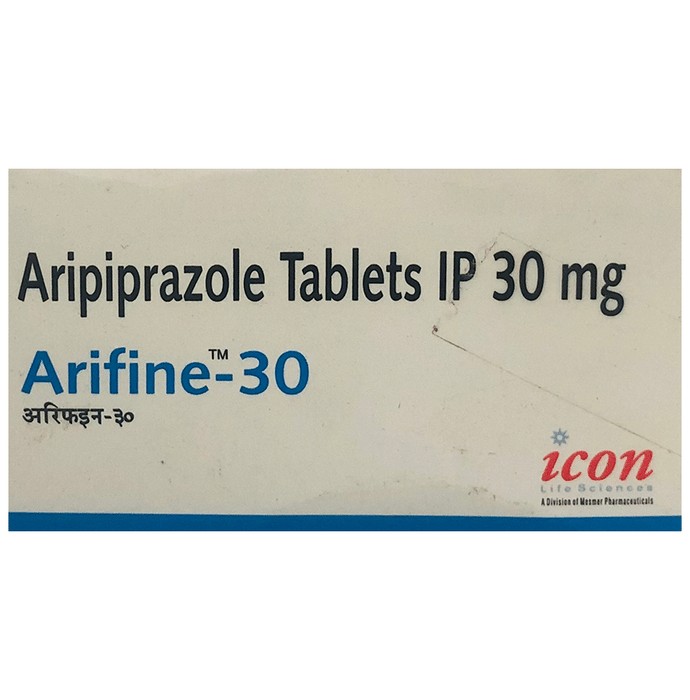
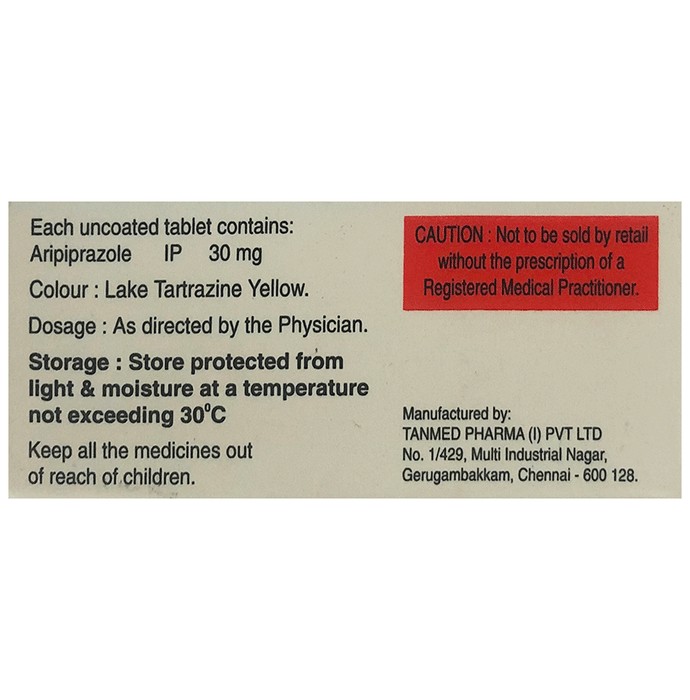
Arifine 30mg Tablet

Marketer
Icon Life Sciences
Salt Composition
Aripiprazole (30mg)
Overview Arifine 30mg Tablet
Aripiprazole 30mg tablets are prescribed for managing psychotic disorders. This medication effectively treats schizophrenia (a condition marked by distorted thinking, hallucinations, and delusional beliefs) and manic episodes. It's also utilized in the treatment of depressive disorders and bipolar affective disorder. Administer orally, with or without food, ideally at the same time each morning to ensure consistent blood levels. Follow your physician's prescribed dosage and duration meticulously. If a dose is missed, take it as soon as possible, but avoid doubling up on doses. Complete the entire course of treatment, even if symptoms improve. Abrupt cessation should be avoided; consult your doctor before discontinuing. Potential side effects include nausea, vomiting, blurred vision, and dry mouth. Postural hypotension (a sudden drop in blood pressure upon standing) is possible initially; rise slowly from sitting or lying positions. Drowsiness and dizziness may occur; refrain from driving or operating machinery until the effects are known. Elevated blood sugar and cholesterol levels are possible; a healthy lifestyle, including diet and exercise, may mitigate this. Report any unusual mood changes, worsening depression, or suicidal ideation to your doctor immediately.
Primary Ingredients of Arifine 30mg Tablet
The provided text is "undefined," therefore no rewriting is possible.
Uses of Arifine 30mg Tablet
Bipolar disorder/Schizophrenia spectrum
Major Benefits of Arifine 30mg Tablet:
Consume this medication precisely as prescribed by your physician, adhering to both the dosage and treatment duration. Ingest the tablet whole; avoid chewing, crushing, or fracturing it. Arifine 30mg Tablets can be administered with or without food; however, consistent timing is recommended.
Common Side effects of Arifine 30mg Tablet:
- Akathisia (inability to stay still)
- Anxiety
- Blurred vision
- Constipation
- Dizziness
- Fatigue
- Headache
- Increased saliva production
- Indigestion
- Insomnia (difficulty in sleeping)
- Nausea
- Parkinsonism
- Restlessness
- Sleepiness
- Tremors
- Vomiting
- Diabetes
How to use Arifine 30mg Tablet:
Consume this medication precisely as your physician directs, adhering to both the prescribed dosage and treatment period. Ingest the tablet whole; avoid chewing, crushing, or fracturing it. Arifine 30mg Tablets can be administered with or without food; however, consistent timing is recommended.
How Arifine 30mg Tablet works:
Arifine 30mg tablets are atypical antipsychotics that modulate the activity of specific neurotransmitters influencing cognitive processes within the brain.
SAFETY ADVICE
 AlcoholUNSAFE
Arifine 30mg Tablet should not be taken with alcohol due to safety concerns.
 PregnancyCONSULT YOUR DOCTOR
The use of Arifine 30mg Tablet during pregnancy may pose risks. While human data is scarce, animal research indicates potential harm to a developing fetus. A physician will assess the advantages against possible risks prior to prescribing. Seek medical advice.
 Breast feedingCONSULT YOUR DOCTOR
Use of the medication Arifine 30mg Tablet while breastfeeding is likely inadvisable. Available human data indicates potential transfer of the drug into breast milk, posing a possible risk to the infant.
 DrivingUNSAFE
Taking a 30mg Arifine tablet could reduce alertness, impair vision, and cause drowsiness or dizziness. Driving should be avoided if these effects are experienced.
 KidneySAFE IF PRESCRIBED
Patients with kidney impairment can safely use Arifine 30mg tablets without any required dosage modification.
 LiverSAFE IF PRESCRIBED
The use of Arifine 30mg tablets in individuals with liver conditions is likely safe. Existing evidence indicates dose modification may not be necessary, however, physician consultation is recommended.
What if you forget to take Arifine 30mg Tablet :
NA
Facts to Know About Arifine 30mg Tablet
| Label | Value |
|---|---|
| Chemical Category | Dihydrocarbostyril Derivative |
| Developing Habits | No. |
| Treatment Category | Neuroscience and Central Nervous System |
 3,018 People bought this recently