


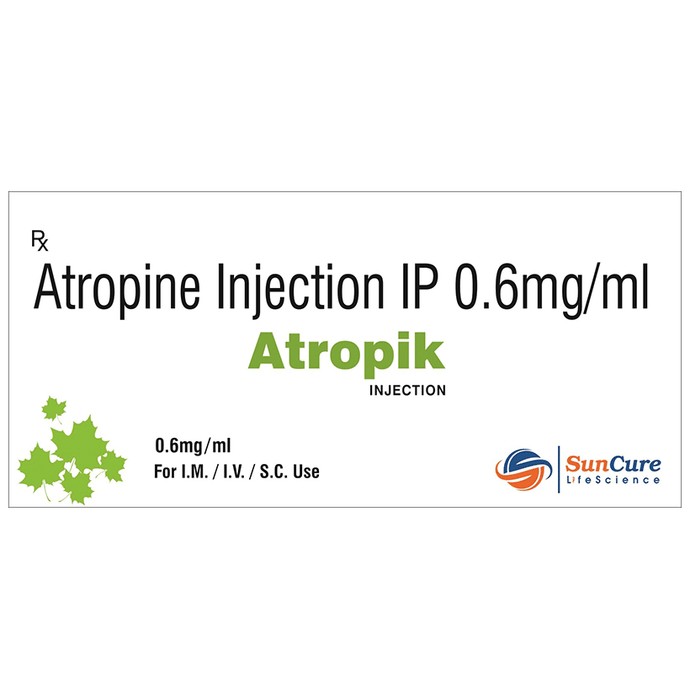
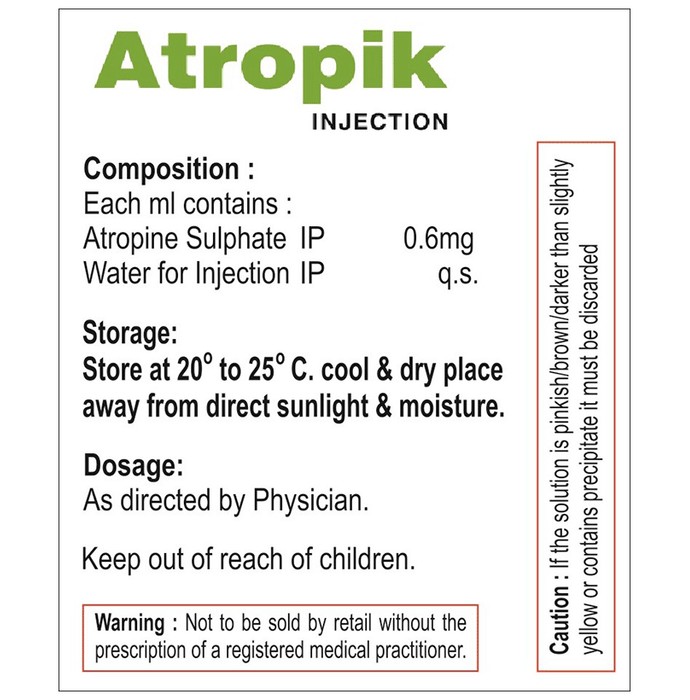
Atropik Injection

Marketer
Suncure Lifescience Pvt Ltd
Salt Composition
Atropine (0.6mg)
Overview Atropik Injection
Bradycardia (slow heart rhythm) is treated with Atropik Injection, which helps reinstate a normal heartbeat during cardiac arrest. Administered pre-operatively, it reduces salivary secretions before general anesthesia. Furthermore, it serves as a counteragent to certain insecticide poisonings. Atropik Injection can be combined with other drugs to counteract muscle relaxant effects during surgical procedures. Dosage is determined and administered by a physician or nurse. Inform your doctor of all other medications you're using, as interactions are possible. Common side effects include blurred vision and tachycardia (rapid heart rate), along with potential dry mouth; address this by frequent rinsing, oral hygiene, and increased fluid intake. Consult your doctor before use if pregnant, breastfeeding, or with severe heart conditions or urinary retention.
Uses of Atropik Injection
Slow heart rate
Major Benefits of Atropik Injection:
This medication will be administered by your healthcare provider; self-medication is strictly prohibited.
Common Side effects of Atropik Injection:
- Injection site pain
How to use Atropik Injection:
This medication will be administered by your healthcare provider. Self-medication is strictly prohibited.
How Atropik Injection works:
Atropik Injection, an anticholinergic agent, inhibits the action of the neurotransmitter acetylcholine. This mechanism reduces glandular secretions (such as saliva and sweat), elevates bradycardia, and suppresses intestinal motility. Furthermore, it serves as a counteragent in specific poisonings and mitigates the effects of some muscle relaxants.
SAFETY ADVICE
 AlcoholUNSAFE
Concurrent use of Atropik Injection and alcohol may induce significant somnolence.
 PregnancyCONSULT YOUR DOCTOR
Administering Atropik Injection during pregnancy is contraindicated due to established risks to fetal development. Nevertheless, in exceptional life-threatening circumstances, a physician might prescribe it if the potential benefits outweigh the inherent dangers. Physician consultation is essential.
 Breast feedingSAFE IF PRESCRIBED
Atropine injection poses minimal risk during lactation. Research in humans indicates negligible transfer to breast milk, posing no apparent harm to infants. Note that milk production might reduce.
 DrivingUNSAFE
Administration of Atropik Injection can induce drowsiness, blurred vision, and dizziness, potentially impairing alertness. Driving is inadvisable should these effects manifest.
 KidneyCAUTION
Patients with kidney impairment should use Atropik Injection judiciously, potentially requiring dose modification. Physician consultation is advised.
 LiverCAUTION
Caution is advised when administering Atropik Injection to individuals with hepatic impairment; dosage modification may be necessary. Physician consultation is recommended.
What if you forget to take Atropik Injection :
Should you forget a dose of Atropik Injection, administer it promptly. Nevertheless, if your next scheduled dose is imminent, omit the missed dose and resume your usual dosing regimen. Avoid taking a double dose.
Facts to Know About Atropik Injection
| Label | Value |
|---|---|
| Chemical Classification | Naturally Occurring Alkaloids |
| Developing Habits | No. |
| Treatment Category | Ophthalmology |
 3,018 People bought this recently