


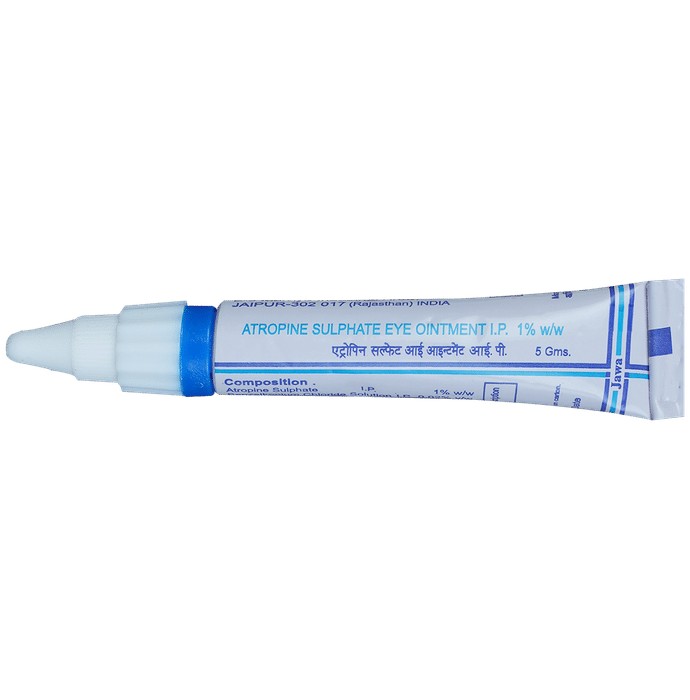
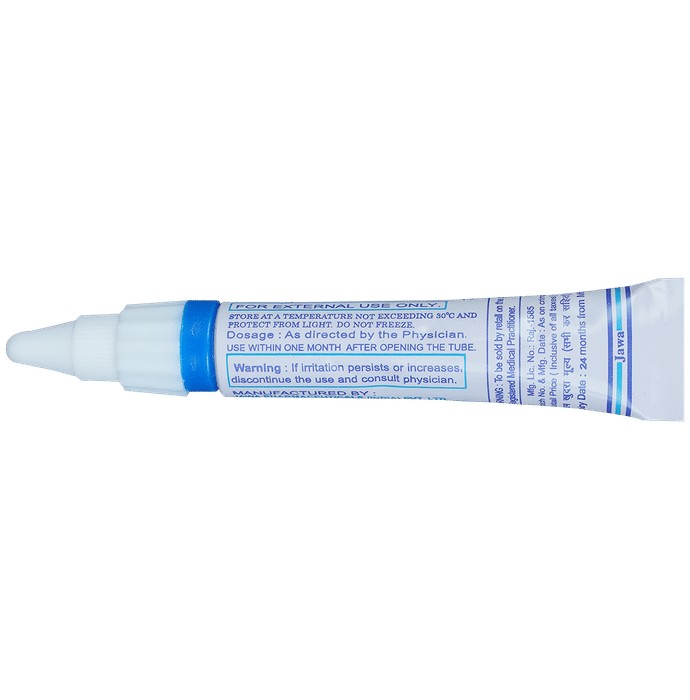
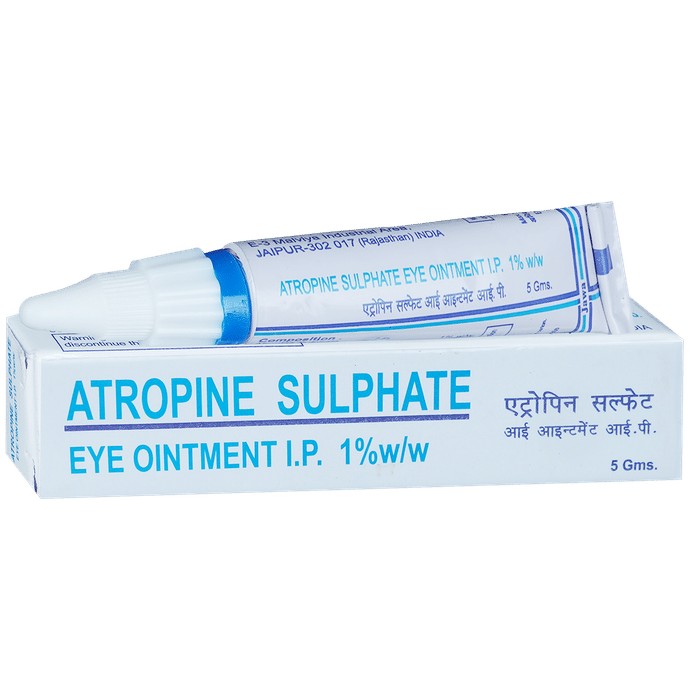
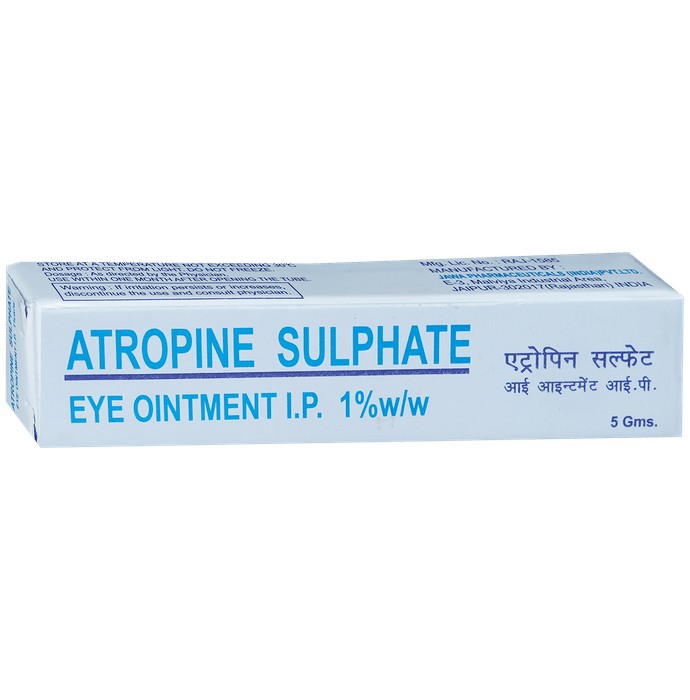
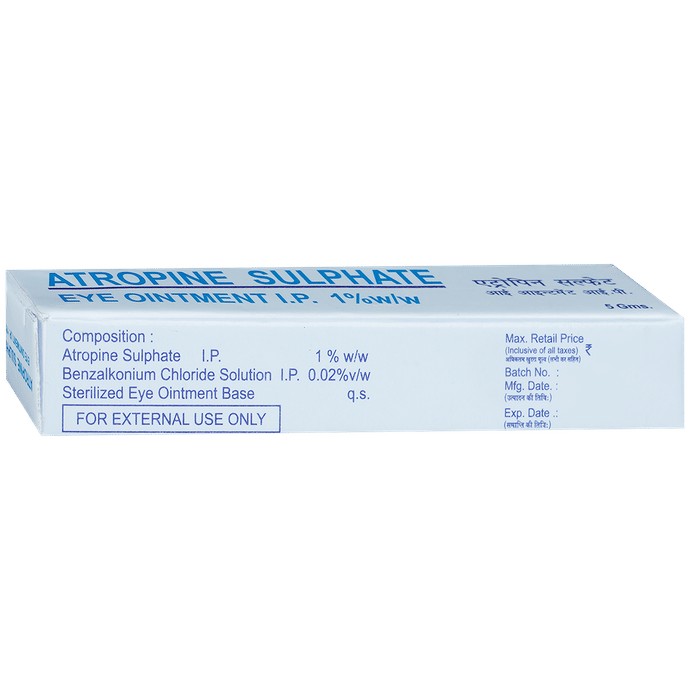
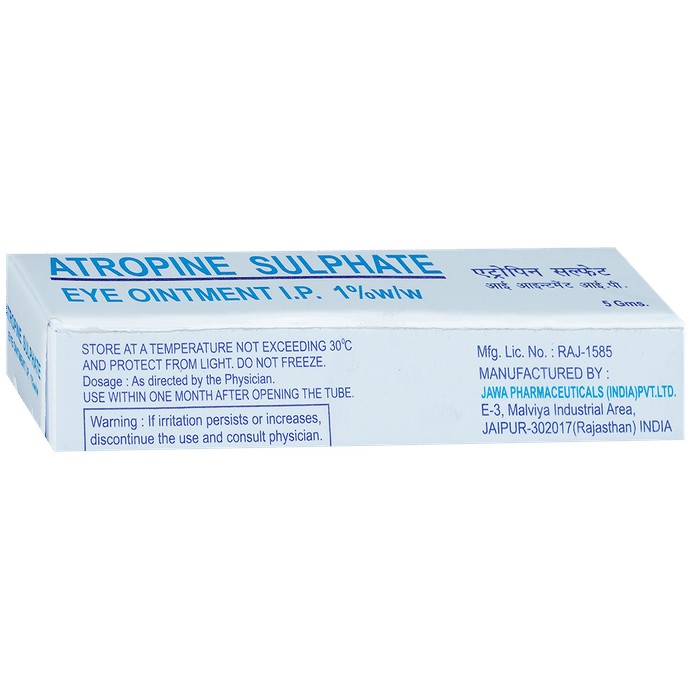
Atropine Eye Ointment

Marketer
Jawa Pharmaceuticals Pvt Ltd
Salt Composition
Atropine (1% w/w)
Overview Atropine Eye Ointment
Atropine ophthalmic ointment treats nearsightedness and eye inflammation (uveitis, iritis). It's also employed to achieve cycloplegia for eye exams and diagnosing conditions like blurred vision or strabismus in children. This ointment is for external use only; apply as prescribed by your physician. Always read the instructions prior to use. Wash hands thoroughly before and after application to minimize infection risk. Avoid rubbing eyes after application to prevent irritation or redness. Complete the full prescribed course of treatment. Minor, transient side effects such as blurred vision, light sensitivity, dry eyes, stinging, and elevated blood pressure may occur, typically subsiding after several applications. However, persistent or bothersome side effects should be reported immediately to your doctor. Before use, inform your doctor of any prior allergic reactions to this product's ingredients, and any existing medical conditions including heart disease, hematologic disorders, respiratory compromise, lung disease, gastrointestinal issues, skin problems, hepatic impairment, or renal dysfunction. Pregnant or breastfeeding individuals should seek medical advice before use.
Uses of Atropine Eye Ointment
Uveitis and Myopia Management: Cycloplegic Therapy
Major Benefits of Atropine Eye Ointment:
Apply this medication externally only. Administer as directed by your physician, following the prescribed dosage and timeframe. Consult the product label for application instructions prior to use. Keep the applicator tip near the eye, avoiding contact. Carefully dispense the medication into the lower conjunctival sac.
Common Side effects of Atropine Eye Ointment:
- Stinging sensation
- High blood pressure
- Decreased lacrimation
- Blurred vision
- Photophobia
How to use Atropine Eye Ointment:
Apply this medication externally only. Follow your physician's instructions precisely regarding dosage and treatment length. Consult the product label for application details prior to use. Keep the applicator near the eye, avoiding contact. Carefully dispense the medication into the lower eyelid sac.
How Atropine Eye Ointment works:
Atropine ophthalmic ointment, an anticholinergic agent, facilitates eye examinations by mydriasis (pupil dilation) and cycloplegia (muscle relaxation). Its anti-inflammatory properties help manage conditions like uveitis and iritis. The medication achieves this by inducing temporary paralysis of the ciliary muscle, thus relaxing the eye's accommodative mechanisms and addressing myopia.
SAFETY ADVICE
 AlcoholNone
No drug interactions identified.
 PregnancyCONSULT YOUR DOCTOR
The use of atropine eye ointment during pregnancy may pose risks. While human research is scant, animal studies indicate potential harm to the unborn child. A physician will assess the advantages against possible dangers prior to prescribing. Seek medical advice.
 Breast feedingCONSULT YOUR DOCTOR
The use of atropine eye ointment while breastfeeding is likely inadvisable. Available human data indicates potential transfer of the medication into breast milk, posing a possible risk to the infant. Nursing output might also be reduced.
 DrivingUNSAFE
Using Atropine Eye Ointment might cause drowsiness, blurred vision, or dizziness. Refrain from driving if you experience these effects.
 KidneyNone
No drug interaction identified.
 LiverNone
No known drug interactions.
What if you forget to take Atropine Eye Ointment :
Omit Atropine Eye Ointment doses only if the next dose is imminent; otherwise, administer the missed dose promptly, then resume your usual application regimen.
Facts to Know About Atropine Eye Ointment
| Label | Value |
|---|---|
| Chemical Category | Naturally Occurring Alkaloids |
| Developing Habits | No. |
| Treatment Category | Ophthalmology |
 3,018 People bought this recently