Search Icon

AUM Pharmacy

Hi there!

Hello, Login
All Categories
VisaVisaVisa
slide-0

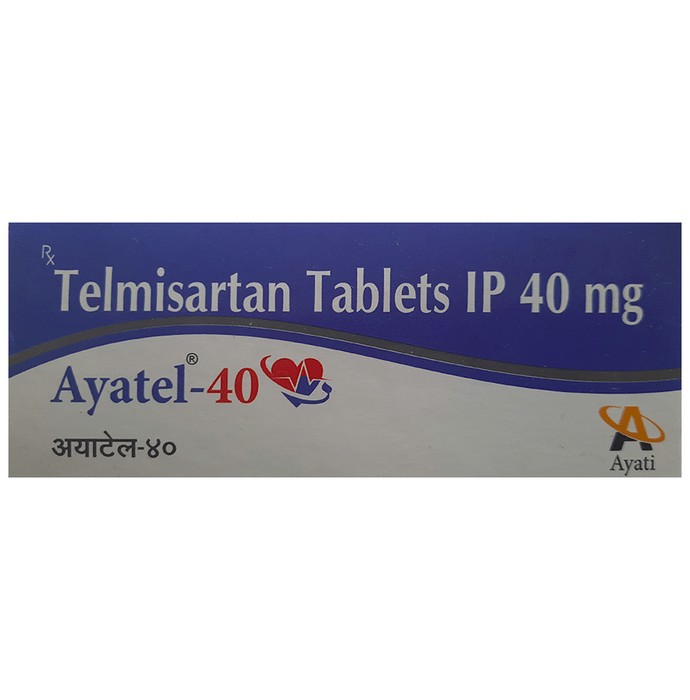
Ayatel 40 Tablet

Prescription Icon
Prescription Required

Marketer

Ayati Pharma Pvt Ltd

Salt Composition

Telmisartan (40mg)

Overview Ayatel 40 Tablet

Cardiopress 40mg tablets effectively manage hypertension and congestive heart failure. Reducing blood pressure minimizes the risk of future cardiovascular events such as strokes and myocardial infarctions. This medication also protects renal function in diabetic patients. Cardiopress 40mg may be administered alone or as part of a combination therapy, with or without food, at any time of day. For optimal results, maintain a consistent daily dosing schedule. Continuous use is crucial, even with controlled blood pressure or asymptomatic status, as discontinuation may worsen the condition. This widely prescribed medication boasts a strong safety profile for long-term use. Lifestyle modifications, including regular physical activity, weight management, smoking cessation, moderate alcohol consumption, and a reduced-sodium diet (as advised by your physician), complement this treatment. While generally well-tolerated, hypotension (low blood pressure) is a potential side effect. Report any adverse effects to your doctor, who may adjust dosage or prescribe an alternative. Prior to commencing treatment, disclose any kidney or liver conditions to your physician. Pregnant or lactating individuals should seek medical counsel before use. Regular monitoring of renal function, blood pressure, and serum potassium levels may be undertaken by your doctor during treatment.

Uses of Ayatel 40 Tablet

Managing high blood pressure | Cardiac insufficiency treatment | Pyrexia | Cardiovascular event prophylaxis

Major Benefits of Ayatel 40 Tablet:

Follow your doctor's instructions precisely regarding dosage and treatment length for this medication. Ingest the Ayatel 40 Tablet whole; avoid chewing, crushing, or breaking it. While it can be taken with or without food, consistency in timing is recommended.

Common Side effects of Ayatel 40 Tablet:

  • Diarrhea
  • Upper respiratory tract infection
  • Back pain
  • Sinus inflammation
  • Skin ulcer
  • Intermittent claudication

How to use Ayatel 40 Tablet:

Consume this medication precisely as your physician directs, adhering to both the prescribed dosage and duration. Ingest the tablet whole; avoid chewing, crushing, or fracturing it. Ayatel 40 Tablets can be taken with or without food, though consistent timing is recommended.

How Ayatel 40 Tablet works:

Ayatel 40mg tablets contain an angiotensin receptor blocker (ARB) that reduces blood vessel constriction. By inhibiting the effects of a vasoconstricting substance, this medication lowers blood pressure, improving blood flow throughout the body and easing the heart's workload.

SAFETY ADVICE

AlcoholAlcoholUNSAFE

Combining Ayatel 40 Tablet with alcohol is not advisable due to safety concerns.

PregnancyPregnancyCONSULT YOUR DOCTOR

Using Ayatel 40 Tablet during pregnancy poses a confirmed risk to the fetus. Therefore, it's contraindicated. In exceptional, life-threatening circumstances, a physician might prescribe it if the potential benefits outweigh the known hazards. Always seek medical advice.

Breast feedingBreast feedingCONSULT YOUR DOCTOR

Data on Ayatel 40 Tablet use while breastfeeding is absent. Seek your physician's advice.

DrivingDrivingUNSAFE

Taking Ayatel 40 Tablets might reduce alertness, impair vision, and cause drowsiness or dizziness. Refrain from driving if you experience these effects.

KidneyKidneyCAUTION

Patients with severe kidney impairment should use Ayatel 40 Tablet cautiously, potentially requiring dosage modification. Consult your physician regarding appropriate use. Disclosure of pre-existing kidney disease is crucial. During treatment, routine monitoring of blood pressure, creatinine, and potassium levels may be recommended.

LiverLiverCAUTION

Patients with liver impairment should use Ayatel 40 Tablet cautiously, potentially requiring dosage modification under medical supervision. Ayatel 40 Tablet is contraindicated in individuals with severe hepatic dysfunction.

What if you forget to take Ayatel 40 Tablet :

Omit any missed Ayatel 40 Tablet dose and resume your regular medication regimen. Avoid taking a double dose.

Facts to Know About Ayatel 40 Tablet

LabelValue
Pharmaceutical Classification Benzimiidazole-based compound
Potential for Dependence None.
Type of Treatment HEART

FAQs on Ayatel 40 Tablet

Taking Ayatel 40 Tablet once daily, either morning or evening, is the usual recommendation. Consistent daily timing aids in remembering to take the medication.
Noticeable improvement might appear within days; however, optimal results typically become apparent four to eight weeks after commencing treatment.
Discontinue Ayatel 40 Tablet only after consulting your physician, regardless of apparent blood pressure control. Abrupt cessation may elevate blood pressure, posing significant health risks. Ayatel 40 Tablet manages, not cures, hypertension; therefore, lifelong use may be necessary. Address any questions or worries with your doctor.
Ayatel 40 Tablet should only be used under the guidance of a physician. To monitor kidney health, your doctor might recommend routine blood tests (potassium and creatinine levels). Since this medication can potentially impair kidney function, immediately inform your doctor if you experience edema in your extremities (feet, ankles, or hands) or sudden, unexplained weight increase.
Rest assured, Ayatel 40 Tablet is not associated with weight increase. Animal research indicates it may even reduce body fat.
Ayatel 40 Tablets can reduce blood sugar in people with diabetes. Consequently, consistent blood sugar monitoring is crucial. Diabetic patients should consult their physician; their insulin or other diabetes medication dosage might require modification.
Ayatel 40 Tablet may elevate blood potassium, a condition known as hyperkalemia. Your physician might recommend routine blood tests to check your potassium levels during treatment with this medication.
Ayatel 40 Tablets do not induce diuresis and are not classified as a diuretic. Their mechanism of action involves vasodilation achieved by antagonizing angiotensin II, a compound that elevates blood pressure via vasoconstriction.
Concurrent use of ibuprofen and Ayatel 40 Tablet necessitates close monitoring of blood pressure and kidney function. Ayatel 40 Tablet can exacerbate ibuprofen's adverse effects, potentially leading to fluid retention, particularly in patients using Ayatel 40 Tablet for congestive heart failure. Ibuprofen might also reduce the antihypertensive efficacy of Ayatel 40 Tablet.
Taking Ayatel 40 Tablet once daily, either morning or evening, is the usual recommendation. Maintaining a consistent daily intake time aids in medication adherence.
Noticeable effects might appear within days, although optimal results typically become apparent after four to eight weeks of therapy.
Never discontinue Ayatel 40 Tablet without your physician's advice, regardless of seemingly controlled blood pressure. Abrupt cessation can elevate blood pressure, posing a significant health risk. Ayatel 40 Tablet manages, not cures, hypertension; therefore, continuous use may be necessary. Discuss any worries with your doctor.
Ayatel 40 Tablet may elevate blood potassium, a condition known as hyperkalemia. Your physician might recommend routine blood tests to monitor your potassium levels during treatment with this medication.
Ayatel 40 Tablet should only be used under the direction of your physician. To track kidney health, your doctor might order routine blood tests (potassium and creatinine levels). Since this medication can negatively impact kidney function, immediately inform your doctor if you experience edema in your extremities (feet, ankles, or hands) or sudden, unexplained weight increase.
Concerns about weight gain with Ayatel 40 Tablet are unfounded. Animal research indicates Ayatel 40 Tablet may actually reduce body fat.
For individuals with diabetes, Ayatel 40 Tablets can reduce blood sugar. Consequently, consistent monitoring of blood glucose is vital. Diabetic patients should consult their physician as adjustments to insulin or other diabetes medications might be necessary.
Concurrent use of ibuprofen and Ayatel 40 Tablet necessitates close monitoring of blood pressure and kidney function. Ayatel 40 Tablet can intensify ibuprofen's adverse effects, potentially leading to fluid retention, particularly in patients using Ayatel 40 Tablet for congestive heart failure. Ibuprofen might also reduce the hypotensive efficacy of Ayatel 40 Tablet.
Ayatel 40 Tablet does not induce increased urination; it is not a diuretic. Its mechanism of action involves vasodilation through the inhibition of angiotensin II, a compound that elevates blood pressure via vasoconstriction.
It is typically advised to take one Ayatel 40 Tablet daily, either upon waking or before bed. Maintaining a consistent daily intake time aids in medication adherence.
Noticeable effects may appear within days; however, optimal results typically become apparent within four to eight weeks of commencing treatment.
Never discontinue Ayatel 40 Tablet without first discussing it with your physician, regardless of whether your blood pressure is currently stable. Abrupt cessation can elevate your blood pressure, posing a significant risk. Ayatel 40 Tablet manages, not cures, hypertension; therefore, lifelong use may be necessary. Consult your doctor with any questions or worries.
Ayatel 40 Tablet may elevate blood potassium, a condition known as hyperkalemia. Your physician might recommend routine potassium level checks during treatment with this medication.
Ayatel 40 Tablet should only be used as directed by your physician. To monitor kidney health, your doctor might recommend routine blood tests (potassium and creatinine). Since this medication can potentially impair kidney function, immediately consult your doctor if you experience edema in your extremities or unexplained weight increase.
Concerns about weight gain with Ayatel 40 Tablet are unfounded. Animal research indicates Ayatel 40 Tablet may actually reduce body fat.
For individuals with diabetes, Ayatel 40 Tablet can reduce blood sugar. Consequently, consistent blood glucose monitoring is crucial. Diabetic patients should consult their physician as their insulin or other diabetes medication dosage might require modification.
Concurrent use of ibuprofen and Ayatel 40 Tablet necessitates close monitoring of blood pressure and kidney function. Ayatel 40 Tablet can intensify ibuprofen's adverse effects, potentially leading to fluid retention, particularly in patients using Ayatel 40 Tablet for congestive heart failure. Ibuprofen might also reduce the hypotensive efficacy of Ayatel 40 Tablet.
Ayatel 40 Tablets do not induce increased urination and are not a diuretic. Their mechanism of action involves vasodilation achieved by inhibiting angiotensin II, a compound that elevates blood pressure through vasoconstriction.
Ayatel 40 Tablet
48
MRP 59
18% off
