


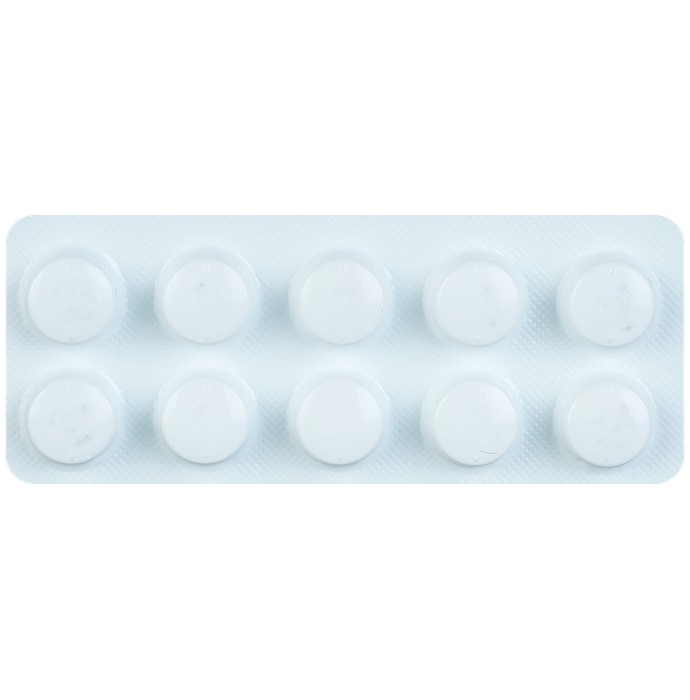
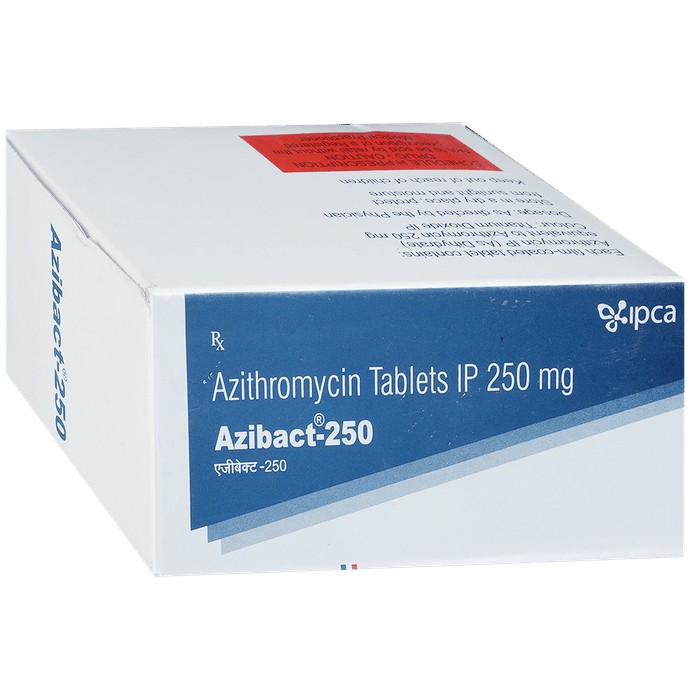
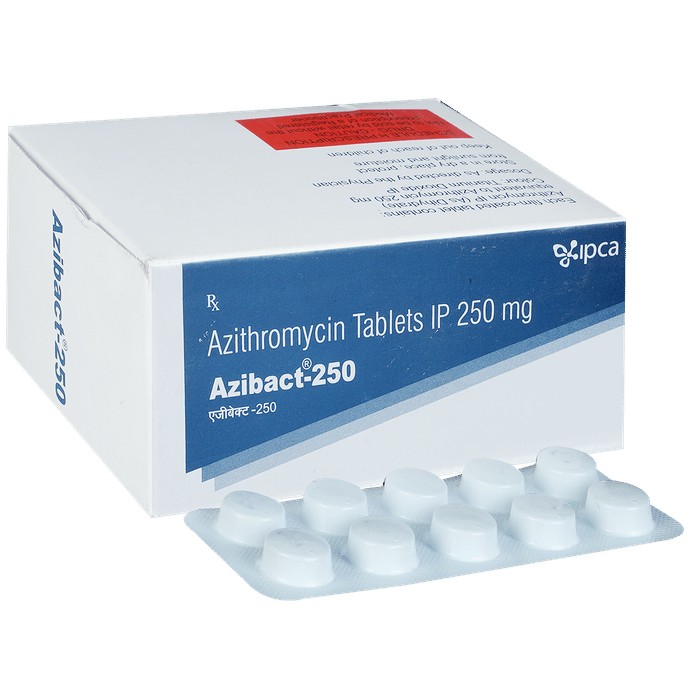
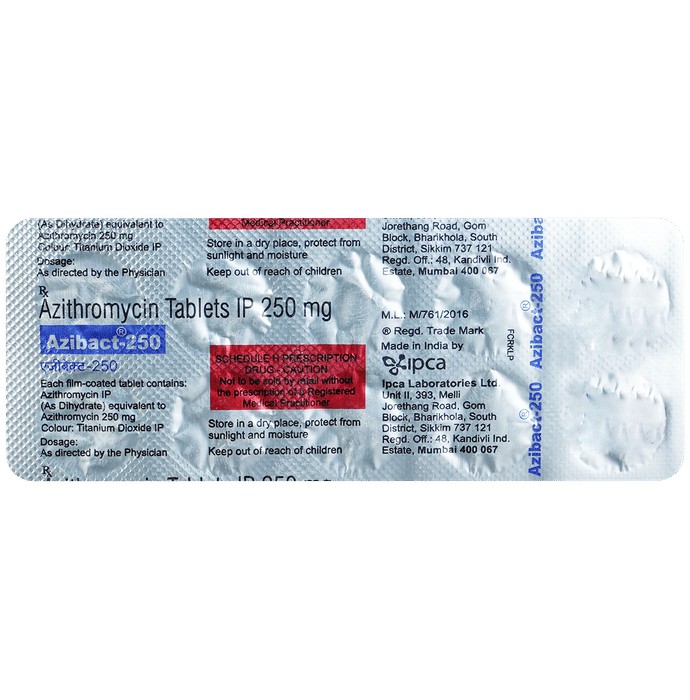
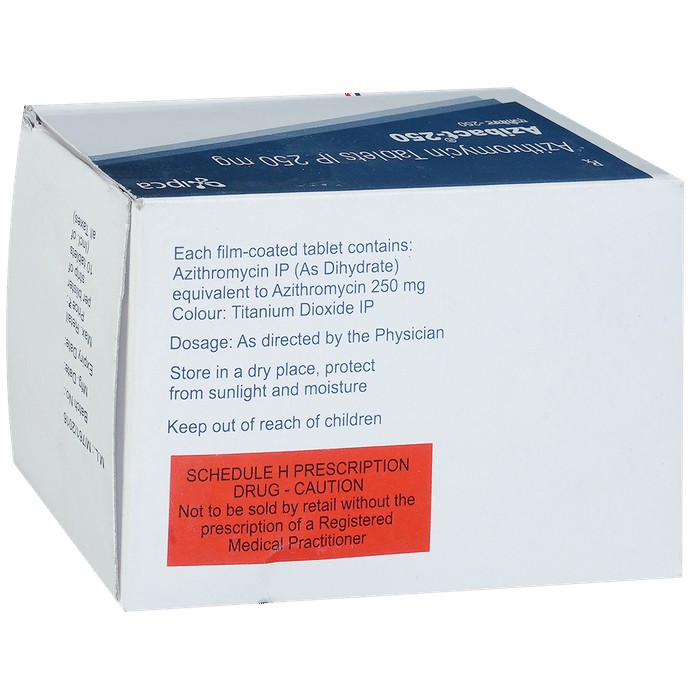
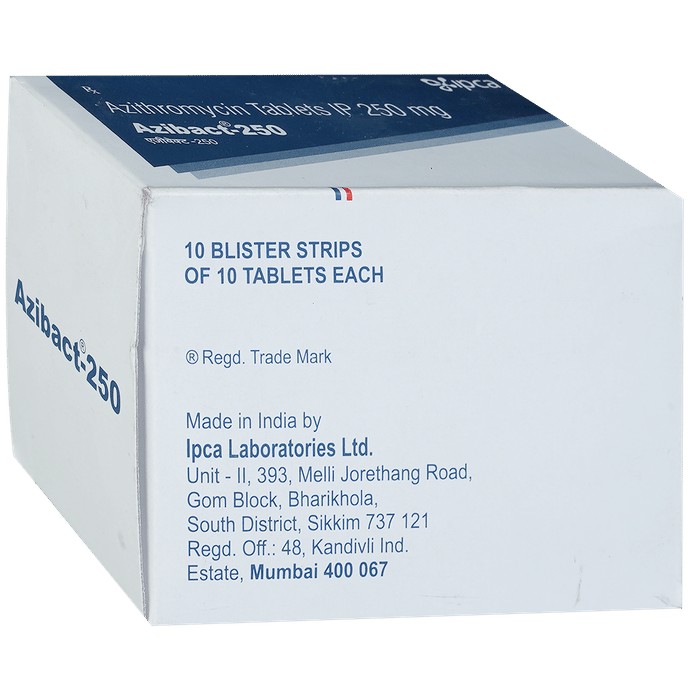
Azibact 250 Tablet

Marketer
Ipca Laboratories Ltd
Salt Composition
Azithromycin (250mg)
Overview Azibact 250 Tablet
Azithromycin 250mg tablets combat bacterial infections affecting the respiratory system, ears, nose, throat, lungs, skin, and eyes in both adults and children. This antibiotic is also effective against typhoid and certain sexually transmitted infections such as gonorrhea. Administer orally, ideally an hour before or two hours after meals, taking the medication at consistent intervals as directed by your physician. Complete the entire prescribed course, even with symptom improvement; premature discontinuation may cause infection recurrence or exacerbation. Common side effects, typically resolving upon treatment completion, include nausea, vomiting, abdominal pain, headache, and diarrhea. Persistent or concerning side effects warrant immediate medical consultation. Prior to use, disclose any history of azithromycin-induced cholestatic jaundice or liver impairment, allergies, or heart conditions. Pregnant or lactating individuals should seek medical advice before commencing treatment.
Primary Ingredients of Azibact 250 Tablet
The provided text is "undefined," therefore no rephrasing is possible.
Uses of Azibact 250 Tablet
Combating Bacterial Infections
Major Benefits of Azibact 250 Tablet:
Follow your doctor's instructions precisely regarding dosage and treatment length for this medication. Ingest the Azibact 250 Tablet whole; avoid chewing, crushing, or breaking it. This medication can be taken with or without food, although consistent timing is recommended.
Common Side effects of Azibact 250 Tablet:
- Diarrhea
- Headache
- Nausea
- Abdominal pain
How to use Azibact 250 Tablet:
Follow your doctor's instructions precisely regarding the dosage and treatment length for this medication. Ingest the Azibact 250 Tablet whole; avoid chewing, crushing, or breaking it. This medication can be administered with or without food, although consistent timing is recommended.
How Azibact 250 Tablet works:
Azibact 250mg tablets contain an antibiotic that inhibits bacterial protein synthesis. This mechanism disrupts crucial bacterial processes, halting bacterial growth and consequently preventing infection progression.
SAFETY ADVICE
 AlcoholUNSAFE
Concurrent alcohol consumption and Azibact 250 Tablet use is inadvisable.
 PregnancySAFE IF PRESCRIBED
Pregnancy use of Azibact 250 Tablet is generally deemed safe. Preclinical trials in animals revealed minimal or absent harm to the fetus; human data, however, remain scarce.
 Breast feedingSAFE IF PRESCRIBED
Azibact 250 Tablets are considered safe for use while breastfeeding. Research in humans indicates minimal drug transfer to breast milk, posing no known risk to the infant. However, infant diarrhea or rash remains a remote possibility.
 DrivingSAFE
Driving ability is typically unaffected by Azibact 250 Tablet.
 KidneyCAUTION
Patients with severe kidney impairment should use Azibact 250 Tablets cautiously; dosage modification may be necessary. Physician consultation is advised.
 LiverCAUTION
Individuals with hepatic impairment should exercise caution when using Azibact 250 mg tablets; dosage modification may be necessary. Physician consultation is advised.
What if you forget to take Azibact 250 Tablet :
Should you forget to take your Azibact 250 Tablet, administer it immediately. However, if your next scheduled dose is imminent, omit the missed dose and resume your usual dosing regimen. Never take a double dose.
Facts to Know About Azibact 250 Tablet
| Label | Value |
|---|---|
| Chemical Classification | Macrolide antibiotics |
| Developing Habits | No. |
| Treatment Category | Antimicrobial Agents |
 3,018 People bought this recently