


Azicilin-CV Oral Suspension

Marketer
Azius Pharma Private Limited
Salt Composition
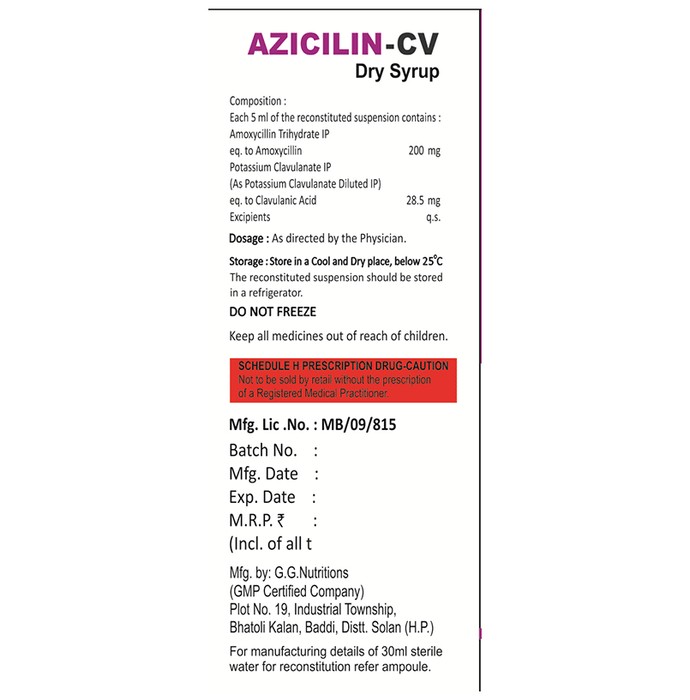
Amoxycillin (200mg) + Clavulanic Acid (28.5mg)
Overview Azicilin-CV Oral Suspension
Azicilin-CV Oral Suspension is an antibiotic combating bacterial infections in various areas, including the ears, nose, throat, chest, lungs, teeth, skin, and urinary tract. Its effectiveness extends to bacteria resistant to other treatments, making it suitable for managing tuberculosis resistant to alternative therapies. This suspension can be administered to children with or without food; however, co-administration with food enhances absorption and minimizes stomach discomfort. The prescribed dosage, typically two to three times daily, is determined by the infection's severity, type, and the child's age and weight. Adherence to the prescribed dosage schedule is crucial. If vomiting occurs within 30 minutes of administration, allow the child to settle before repeating the dose; avoid doubling the dose if it's near the next scheduled time. Potential side effects, such as vomiting, diarrhea, nausea, abdominal pain, and allergic reactions, usually subside. However, persistent or troublesome side effects warrant immediate consultation with your child's physician. Complete disclosure of your child's medical history, encompassing prior allergies, heart conditions, blood disorders, birth defects, respiratory issues, lung abnormalities, digestive problems, skin conditions, liver impairment, and kidney dysfunction, is essential for accurate dose adjustment and comprehensive treatment planning.
Primary Ingredients of Azicilin-CV Oral Suspension
The provided text is "undefined," which has no meaning to rephrase. There is no text to rewrite.
Uses of Azicilin-CV Oral Suspension
Combating Drug-Resistant Tuberculosis and Bacterial Infections
Major Benefits of Azicilin-CV Oral Suspension:
Administer this medication precisely as your physician directs, adhering to both the prescribed dosage and treatment length. Always consult the product label for complete instructions prior to consumption. Use a measuring device for accurate dispensing and ingest orally. Ensure thorough shaking before each use. Azicilin-CV Oral Suspension should be taken with food.
Common Side effects of Azicilin-CV Oral Suspension:
- Abdominal pain
- Allergy
- Vomiting
- Nausea
- Diarrhea
- Mucocutaneous candidiasis
How to use Azicilin-CV Oral Suspension:
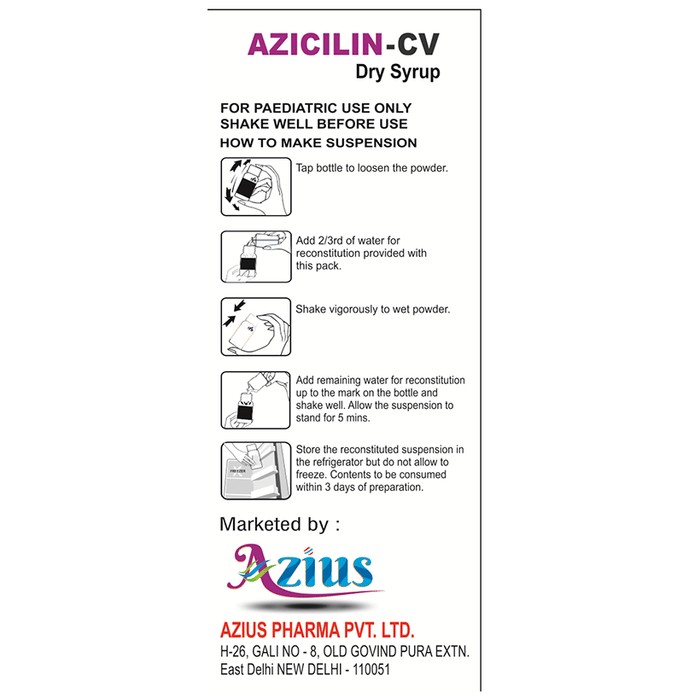
Always follow your doctor's instructions regarding dosage and treatment length for this medication. Review the product label for complete directions prior to administration. Use a measuring device to accurately dispense the oral suspension and ingest it. Ensure the suspension is thoroughly shaken before each use. Azicilin-CV Oral Suspension should be taken with food.
How Azicilin-CV Oral Suspension works:
Azicilin-CV Oral Suspension is an antibiotic medication containing amoxycillin and clavulanic acid. Amoxycillin's mechanism involves disrupting bacterial cell wall synthesis, a crucial process for bacterial viability. Clavulanic acid, conversely, counteracts beta-lactamase, an enzyme produced by resistant bacteria that typically deactivates amoxycillin. This synergistic action renders the Azicilin-CV combination highly effective against a wide range of bacterial infections.
SAFETY ADVICE
 KidneyCAUTION
Patients with kidney disease require careful monitoring when using Azicilin-CV Oral Suspension; dosage modification may be necessary. Neonates and infants also necessitate a lower dose owing to immature kidney function. Physician consultation is advised.
 LiverCAUTION
Patients with liver impairment should use Azicilin-CV Oral Suspension cautiously, potentially requiring a modified dosage. Physician consultation is advised. Liver function should be regularly assessed during treatment.
What if you forget to take Azicilin-CV Oral Suspension :
Remember to administer the omitted dose immediately upon recollection, unless your physician instructs differently. However, if the next scheduled dose is imminent, omit the missed dose. Avoid doubling the dose to compensate, and adhere strictly to the prescribed medication schedule.
Facts to Know About Azicilin-CV Oral Suspension
| Label | Value |
|---|---|
| Developing Habits | No. |
| Treatment Category | Antimicrobial Agents |
 3,018 People bought this recently