


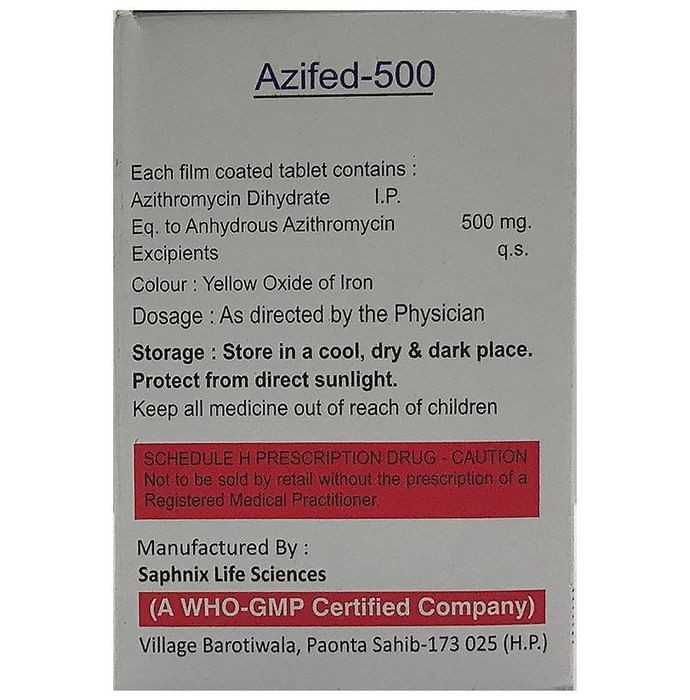
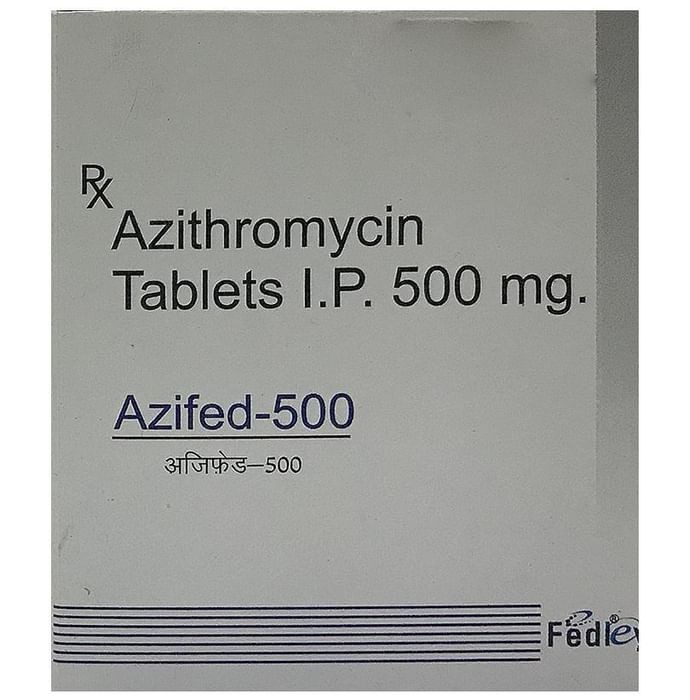
Azifed 500 Tablet

Marketer
Fedley Healthcare Private Limited
Salt Composition
Azithromycin (500mg)
Overview Azifed 500 Tablet
Cefazolin 500mg tablets combat bacterial infections affecting the respiratory system, ears, nose, throat, lungs, skin, and eyes in both adults and children. This medication is also efficacious against typhoid and certain sexually transmitted infections such as gonorrhea. Oral administration is recommended, ideally an hour prior to or two hours following a meal. Consistent, evenly spaced dosing, as directed by your physician, is crucial. Complete the prescribed course, regardless of symptom improvement; premature cessation may result in infection recurrence or exacerbation. Common, usually transient side effects include nausea, vomiting, abdominal discomfort, headache, and diarrhea. Persistent or concerning side effects warrant immediate medical attention. Prior history of azithromycin-induced cholestatic jaundice or hepatic impairment necessitates avoidance of this medication. Pre-existing allergies or cardiac conditions must be disclosed to your doctor before commencing treatment. Pregnant or lactating individuals should seek medical counsel before use.
Uses of Azifed 500 Tablet
Managing bacterial infections
Major Benefits of Azifed 500 Tablet:
Consume this medication precisely as your physician directs, adhering to the prescribed dosage and timeframe. Ingest the tablet whole; avoid chewing, crushing, or fracturing it. Azifed 500 Tablets can be taken with or without food, although consistent timing is recommended.
Common Side effects of Azifed 500 Tablet:
- Diarrhea
- Headache
- Nausea
- Abdominal pain
How to use Azifed 500 Tablet:
Follow your doctor's instructions precisely regarding dosage and treatment length for this medication. Ingest the Azifed 500 Tablet whole; do not break, crush, or chew it. Consumption with or without food is acceptable, but consistent timing is recommended.
How Azifed 500 Tablet works:
Azifed 500mg tablets are a bacterial infection treatment. Their mechanism of action involves disrupting the production of vital bacterial proteins, thereby inhibiting bacterial growth and halting infection progression.
SAFETY ADVICE
 AlcoholUNSAFE
Alcohol and Azifed 500 Tablets should not be consumed together.
 PregnancySAFE IF PRESCRIBED
Use of Azifed 500 Tablet during pregnancy is typically deemed safe. Preclinical trials in animals revealed minimal or absent harm to offspring; nevertheless, data from human trials are scarce.
 Breast feedingSAFE IF PRESCRIBED
Azifed 500 Tablet is considered safe for breastfeeding mothers. Research in humans indicates minimal drug transfer to breast milk, posing no apparent risk to the infant. However, infant diarrhea or rash remains a potential, albeit infrequent, side effect.
 DrivingSAFE
Driving ability is typically unaffected by Azifed 500 Tablet.
 KidneyCAUTION
Patients with severe kidney impairment should use Azifed 500 Tablets cautiously, potentially requiring a modified dosage. Physician consultation is recommended.
 LiverCAUTION
Patients with hepatic impairment should exercise caution when using Azifed 500mg tablets; dosage modification may be necessary. Physician consultation is advised.
What if you forget to take Azifed 500 Tablet :
Should you forget to take your Azifed 500 Tablet, administer it immediately. Nevertheless, if your next scheduled dose is imminent, omit the missed dose and resume your usual dosing regimen. Avoid taking a double dose.
Facts to Know About Azifed 500 Tablet
| Label | Value |
|---|---|
| Chemical Category | Macrolide antibiotics |
| Developing Habits | No. |
| Type of Therapy | Antimicrobial Agents |
 3,018 People bought this recently