


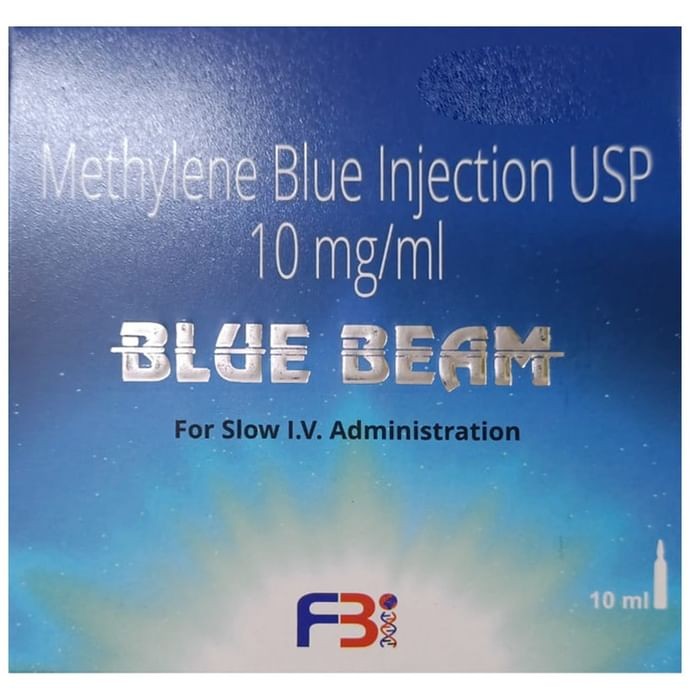
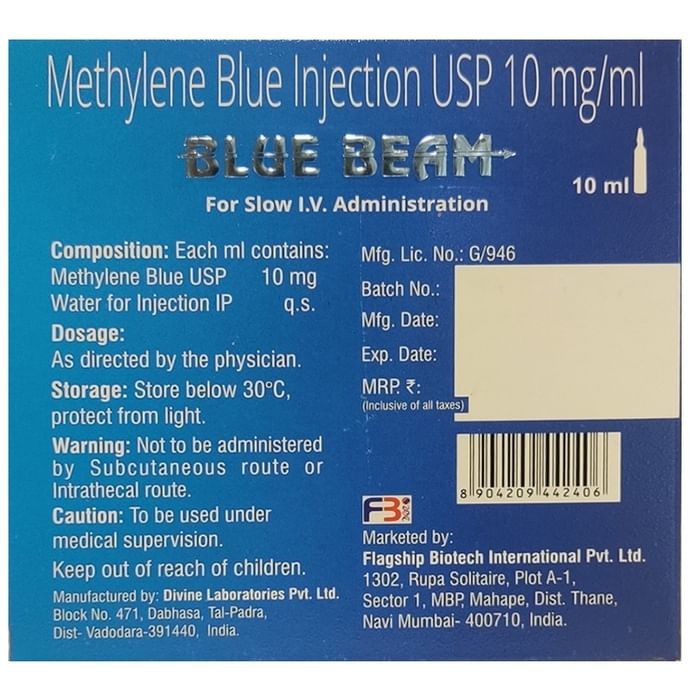
Blue Beam Injection

Marketer
Flagship Biotech International
Salt Composition
Methylene Blue (10mg/ml)
Overview Blue Beam Injection
AzureRay Injection treats methemoglobinemia, a blood disorder characterized by excessive methemoglobin. This medication converts methemoglobin back to normal hemoglobin, alleviating the condition. Administered intravenously by a healthcare professional, AzureRay Injection requires a complete dosage regimen for optimal efficacy. Discontinuing treatment prematurely without physician consultation is strongly discouraged. Report any treatment inefficacy to your doctor, who can explore alternative therapies. Potential side effects include limb pain, discolored urine, altered taste perception, flushing, vertigo, diaphoresis, nausea, skin discoloration, and cephalalgia. Cognitive impairment, including confusion and visual disturbances, may occur; avoid tasks requiring concentration until the drug's effects are known. Prior to commencing treatment, disclose any existing medical conditions, particularly hematological disorders like anemia, or prior allergic responses to this medication. Comprehensive medication history should also be provided. Pregnant or lactating individuals should seek medical advice before using AzureRay Injection due to potential fetal or neonatal harm.
Uses of Blue Beam Injection
Hemoglobin M disease
Major Benefits of Blue Beam Injection:
This medication will be administered by your healthcare provider. Self-medication is strictly prohibited.
Common Side effects of Blue Beam Injection:
- Pain in extremities
- Chromaturia (abnormal coloration of urine)
- Taste change
- Feeling hot
- Dizziness
- Sweating
- Skin discoloration
- Headache
How to use Blue Beam Injection:
This medication will be administered by your healthcare provider; self-medication is strictly prohibited.
How Blue Beam Injection works:
In methemoglobinemia, methylene blue functions as a reducing agent, converting methemoglobin back to its oxygen-carrying form, hemoglobin. Within red blood cells, this occurs through the enzyme NADPH reductase, using NADPH as a cofactor to transform methylene blue into leucomethylene blue. This reduced form then further facilitates the methemoglobin-to-hemoglobin conversion, thus restoring the blood's oxygen transport capability and providing therapeutic benefit.
SAFETY ADVICE
 AlcoholCONSULT YOUR DOCTOR
Alcohol consumption alongside Blue Beam Injection lacks established safety data. Physician consultation is advised.
 PregnancyCONSULT YOUR DOCTOR
Administering Blue Beam Injection during pregnancy may pose risks. While human data is scarce, animal research indicates potential harm to the fetus. A physician will assess the advantages against possible dangers prior to prescribing. Physician consultation is advised.
 Breast feedingCONSULT YOUR DOCTOR
Data on Blue Beam Injection use while breastfeeding is unavailable. Seek your physician's advice.
 DrivingUNSAFE
Administering Blue Beam Injection may induce drowsiness, blurred vision, or dizziness. Driving is inadvisable if these effects manifest. This medication may also lead to disorientation, lightheadedness, and potential visual impairments. Refrain from operating a vehicle until the medication's impact is fully understood.
 KidneyCAUTION
Administering Blue Beam Injection to patients with kidney impairment requires careful consideration. Dosage modification for Blue Beam Injection might be necessary. Physician consultation is advised.
 LiverCAUTION
Administering Blue Beam Injection requires careful consideration in individuals with hepatic impairment. Dosage modification for Blue Beam Injection might be necessary. Physician consultation is advised.
What if you forget to take Blue Beam Injection :
Should you forget a scheduled Blue Beam Injection, seek your physician's advice.
Facts to Know About Blue Beam Injection
| Label | Value |
|---|---|
| Chemical Category | Benzothiazine derivatives |
| Developing Habits | No. |
| Type of Treatment | ALTERNATIVES |
 3,018 People bought this recently