


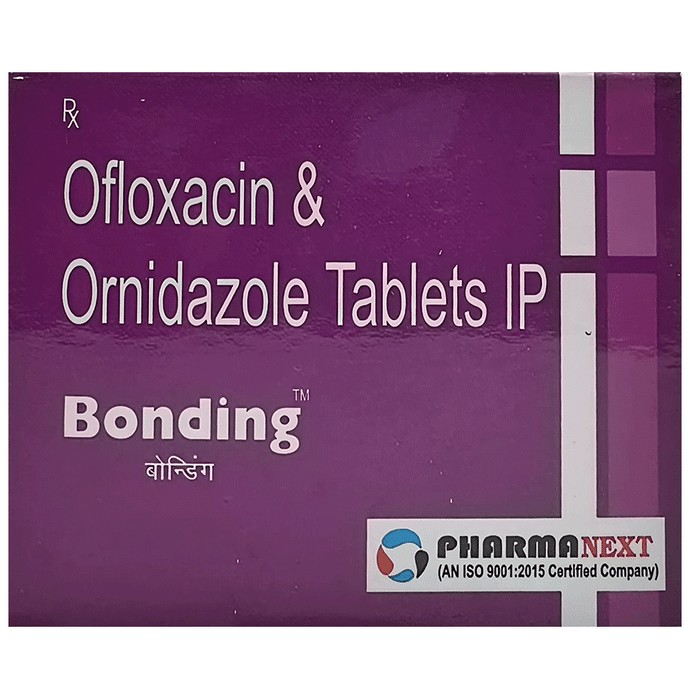
Bonding Tablet

Marketer
Pharmanext Healthcare Pvt Ltd
Salt Composition
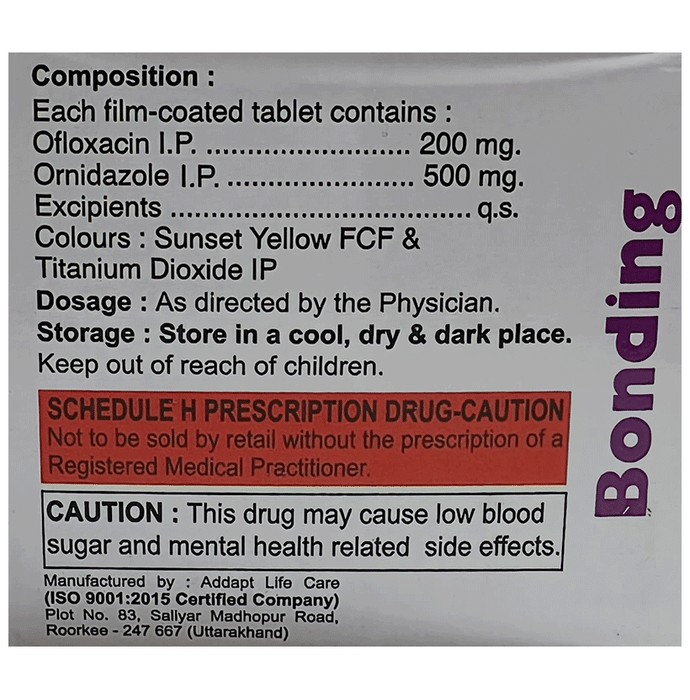
Ofloxacin (200mg) + Ornidazole (500mg)
Overview Bonding Tablet
Duo-Antibiotic combines two antibiotics to combat bacterial and parasitic infections. It effectively targets a broad spectrum of bacterial infections affecting the teeth, lungs, gastrointestinal tract, urinary system, and genitals. For optimal absorption, take Duo-Antibiotic with food at the same time each day. Never exceed the prescribed dosage; overdosing can be harmful. If you miss a dose, take it as soon as possible. Complete the entire course of treatment, even if symptoms improve, for full recovery. Potential side effects include nausea, vomiting, abdominal pain, appetite loss, dizziness, and headache. Maintain a healthy diet and adequate hydration to mitigate these effects. Report worsening side effects to your doctor immediately. Seek immediate medical attention for allergic reactions (rash, itching, swelling, difficulty breathing, etc.). Inform your physician of any pre-existing liver or kidney conditions, current medications, and pregnancy or breastfeeding status before starting treatment. Avoid alcohol consumption due to increased dizziness risk. While it typically doesn't impair driving ability, refrain from driving if drowsiness or dizziness occurs. Individuals with known allergies to the medication's components should avoid use. Adequate rest during treatment enhances effectiveness.
Primary Ingredients of Bonding Tablet
No text provided to rephrase.
Uses of Bonding Tablet
Combating bacterial and parasitic infestations
Major Benefits of Bonding Tablet:
Follow your physician's instructions precisely regarding dosage and treatment length for this medication. Ingest the tablet whole; avoid chewing, crushing, or breaking it. Administer Bonding Tablet with food.
Common Side effects of Bonding Tablet:
- Nausea
- Dizziness
- Headache
- Insomnia (difficulty in sleeping)
- Vomiting
- Itching
- Vaginal inflammation
- Diarrhea
How to use Bonding Tablet:
Follow your doctor's instructions precisely regarding dosage and treatment length for this medication. Ingest the tablet whole; do not chew, crush, or divide it. Consume Bonding Tablet with a meal.
How Bonding Tablet works:
Ofloxacin and Ornidazole, the active components of Bonding Tablet, combat infection through distinct mechanisms. Ofloxacin halts bacterial reproduction and repair, leading to bacterial death. Simultaneously, Ornidazole eradicates parasitic and anaerobic bacteria by disrupting their DNA. This dual action ensures comprehensive treatment of your infection.
SAFETY ADVICE
 AlcoholUNSAFE
Avoid alcohol while taking Bonding Tablet.
 PregnancyCONSULT YOUR DOCTOR
The use of Bonding Tablet during pregnancy may pose risks. While human data is scarce, animal research indicates potential harm to the unborn child. A physician will assess the advantages against possible dangers prior to prescribing. Seek medical advice.
 Breast feedingCONSULT YOUR DOCTOR
Data on Bonding Tablet use while breastfeeding is absent. Seek medical advice from your physician.
 DrivingUNSAFE
Taking Bonding Tablet might impair your driving ability due to potential adverse reactions.
 KidneySAFE IF PRESCRIBED
Use of Bonding Tablet in patients with kidney disease appears to pose minimal risk. Preliminary findings indicate that dosage modification may be unnecessary. However, physician consultation is recommended.
 LiverCAUTION
Patients with liver impairment should use Bonding Tablet judiciously. Dosage modification for Bonding Tablet may be necessary. Physician consultation is advised.
What if you forget to take Bonding Tablet :
Should you forget a Bonding Tablet dose, take it immediately. If, however, your next dose is imminent, omit the missed one and resume your usual dosing regimen. Never take a double dose.
Facts to Know About Bonding Tablet
| Label | Value |
|---|---|
| Developing Habits | No. |
| Treatment Category | Gastrointestinal system |
 3,018 People bought this recently