


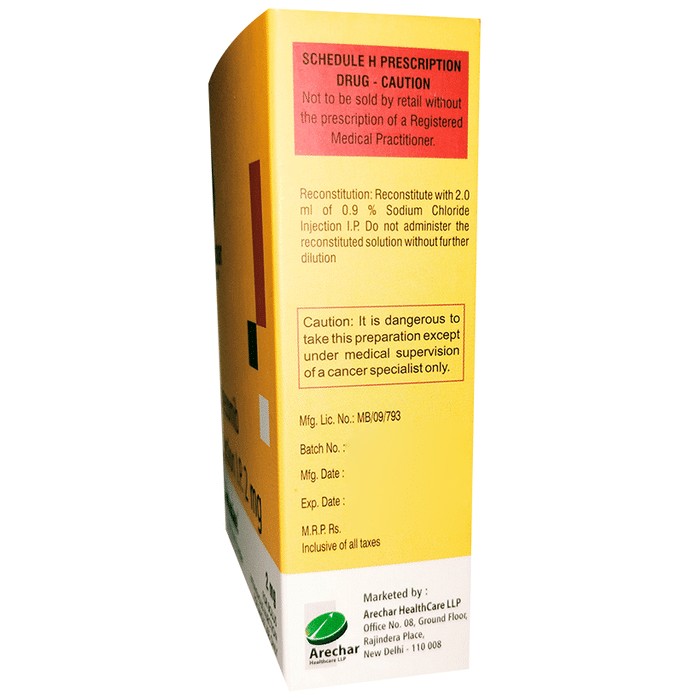
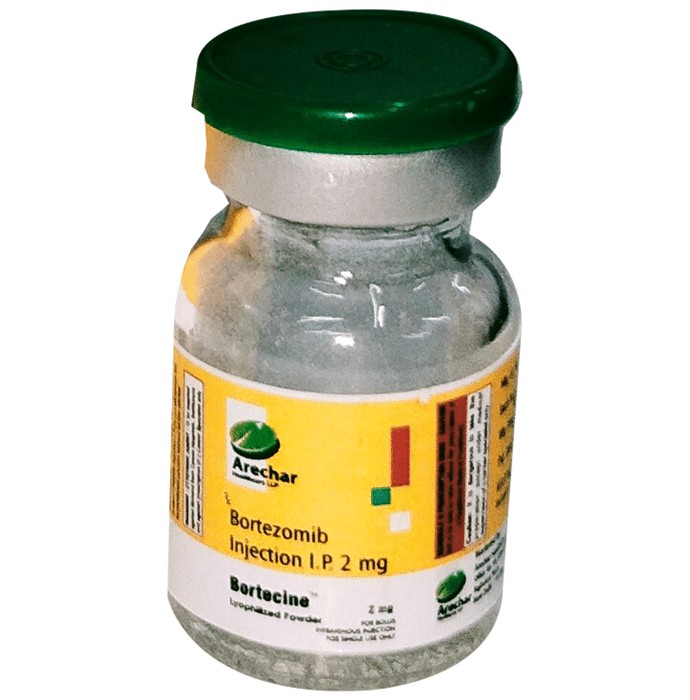
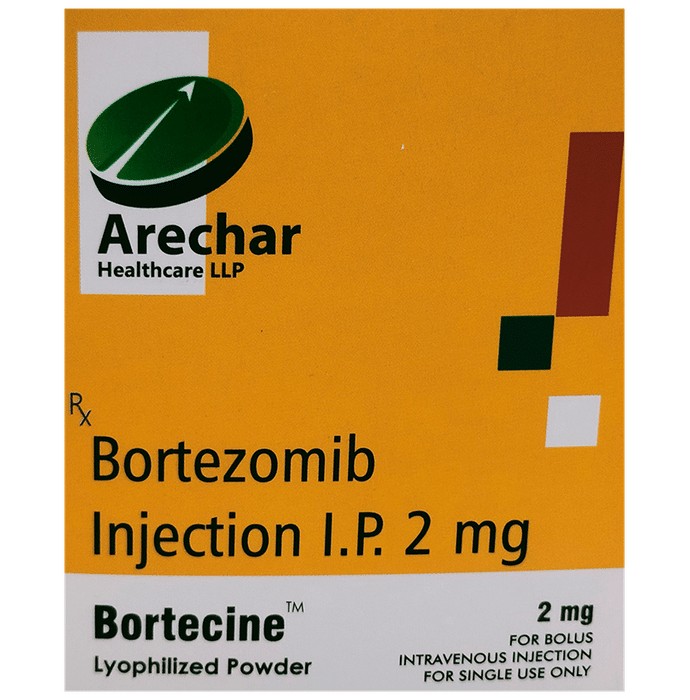
Bortecine Injection

Marketer
Arechar Healthcare
Salt Composition
Bortezomib (2mg)
Overview Bortecine Injection
Myeloma and mantle cell lymphoma are treated with Bortezomib Injection, a medication that inhibits or reduces the proliferation of cancerous cells. Administered intravenously by a healthcare professional, the dosage and frequency are determined by your physician based on your condition and may be adjusted. Strict adherence to your doctor's instructions is vital; incorrect usage or overdose can lead to severe adverse reactions. Therapeutic benefits might not be apparent for weeks or months; discontinue use only under medical supervision. Common side effects include fatigue, nausea, vomiting, and decreased appetite. Increased fluid intake is often recommended. Due to potential drowsiness and dizziness, operating machinery or driving is discouraged. Bortezomib can lower blood cell counts (red and white), increasing infection risk. Regular blood tests to monitor blood cell levels, along with heart, liver function, and uric acid are necessary. Pre-existing liver, kidney, heart disease, or bleeding disorders should be disclosed to your physician prior to treatment initiation. Report any cognitive changes, such as memory impairment or difficulty concentrating, immediately. Inform your healthcare provider of all other medications you are taking, as interactions are possible. Bortezomib is contraindicated during pregnancy and breastfeeding; reliable contraception is essential for both partners during treatment.
Uses of Bortecine Injection
Myeloma and mantle cell lymphoma
Major Benefits of Bortecine Injection:
This medication will be administered by your healthcare provider. Self-medication is strictly prohibited.
Common Side effects of Bortecine Injection:
- Low blood platelets
- Fatigue
- Peripheral neuropathy (tingling and numbness of feet and hand)
- Psychiatric disturbances
- Nausea
- Vomiting
- Loss of appetite
- Fever
- Anemia (low number of red blood cells)
- Diarrhea
- Decreased appetite
- Decreased white blood cell count (neutrophils)
- Constipation
How to use Bortecine Injection:
This medication will be administered by your physician or their qualified assistant. Self-medication is strictly prohibited.
How Bortecine Injection works:
Bortezomib injection is a cancer treatment that inhibits the cellular degradation of proteins. This accumulation of proteins within cancerous cells ultimately triggers their demise.
SAFETY ADVICE
 AlcoholUNSAFE
Concurrent use of Bortecine Injection and alcohol may lead to significant sedation.
 PregnancyCONSULT YOUR DOCTOR
Administering Bortecine Injection during pregnancy poses a confirmed risk to the fetus and is therefore contraindicated. In exceptional circumstances involving life-threatening conditions, a physician might deem its use necessary if the potential advantages outweigh the known hazards. Patient consultation with their doctor is essential.
 Breast feedingUNSAFE
Administering Bortecine Injection while breastfeeding is contraindicated. Evidence indicates potential infant toxicity from this medication.
 DrivingUNSAFE
Administering Bortecine Injection may induce adverse reactions impacting driving capabilities. These reactions can include fatigue, lightheadedness, syncope, or visual disturbances, potentially compromising safe driving.
 KidneyCAUTION
Patients with severe kidney impairment should use Bortecine Injection cautiously, as dose modification may be necessary. Physician consultation is advised.
 LiverCAUTION
Patients with hepatic impairment should receive Bortecine Injection with careful monitoring. Dosage modification may be necessary. Physician consultation is advised.
What if you forget to take Bortecine Injection :
Omit Bortecine Injection doses only after contacting your physician.
Facts to Know About Bortecine Injection
| Label | Value |
|---|---|
| Chemical Type | Phenylalanine-based Compounds |
| Developing Habits | No. |
| Treatment Category | Cancer Medications |
 3,018 People bought this recently