


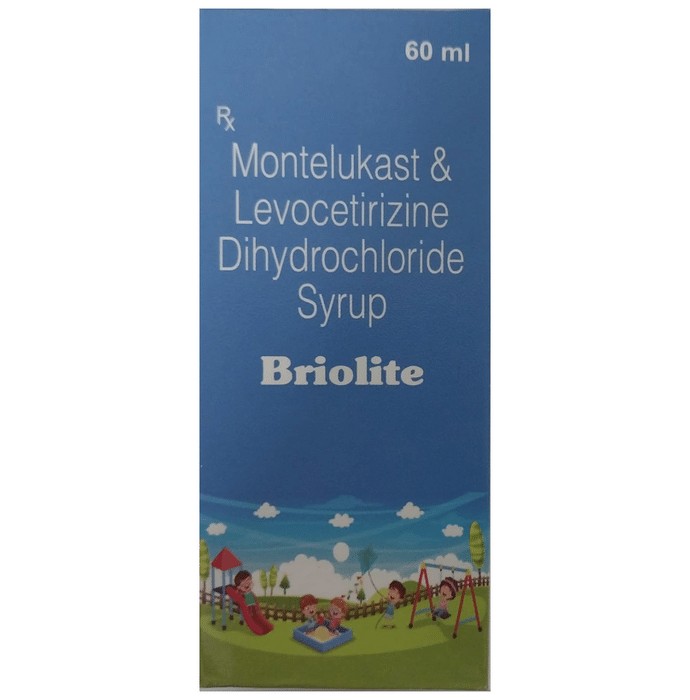
Briolite Syrup

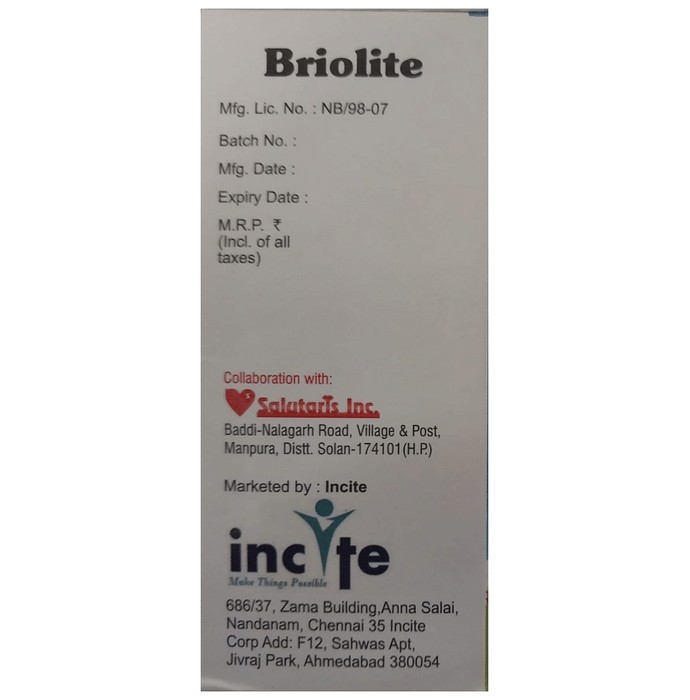
Marketer
Incite
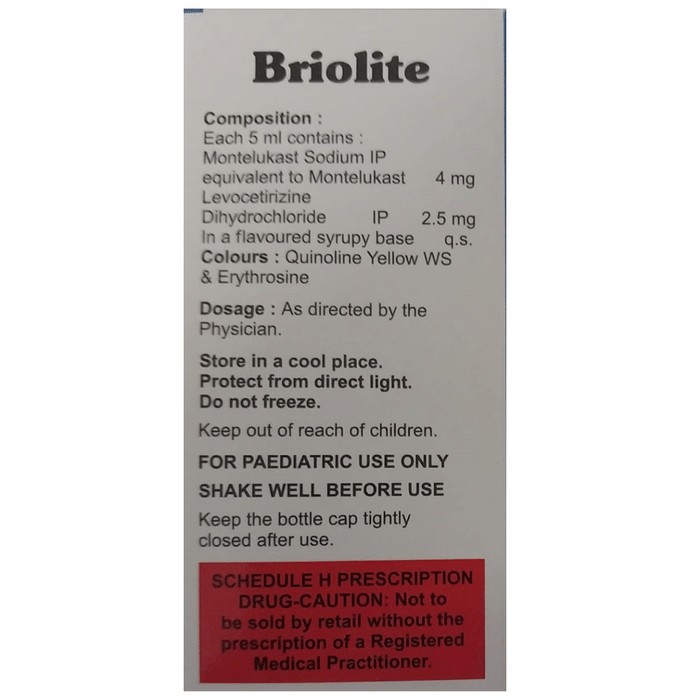
Salt Composition
Levocetirizine (2.5mg/5ml) + Montelukast (4mg/5ml)
Overview Briolite Syrup
Pediatric allergy symptoms, including nasal discharge, sneezing fits, itching, swelling, nasal congestion, and tearing eyes, are often managed with Briolite Syrup. This syrup can also aid in asthma and dermatological allergy treatment. Administer the prescribed dosage of Briolite Syrup to your child at a consistent time, either before or after meals. For asthma, evening administration or two hours prior to exercise is recommended. For allergies, morning or evening dosing is appropriate, timed to coincide with symptom onset; if both asthma and allergy are present, evening dosing is preferred. If vomiting occurs within 30 minutes of administration, repeat the dose; however, omit if the next dose is imminent. Symptom improvement may be noticed after several doses, but the full prescribed course must be completed for optimal results. Premature discontinuation may exacerbate your child's condition. Minor, transient side effects such as vomiting, diarrhea, nausea, dizziness, dry mouth, rash, and headache may occur, usually resolving as the child's body adjusts. Persistent or bothersome side effects warrant immediate consultation with your pediatrician. Inform your child's physician of all current medications and provide a complete medical history, including previous allergies, heart conditions, hematological disorders, vascular problems, congenital defects, airway obstructions, pulmonary anomalies, skin conditions, hepatic impairment, and renal dysfunction. This information is vital for appropriate dosage adjustments and comprehensive treatment planning.
Primary Ingredients of Briolite Syrup
No text was provided to rewrite.
Uses of Briolite Syrup
Managing allergic dermatitis | Alleviating allergic rhinitis symptoms | Treating seasonal allergic rhinitis
Major Benefits of Briolite Syrup:
Administer this medication precisely as your physician directs, adhering to both prescribed dosage and duration. Always consult the product label for detailed instructions prior to ingestion. Use a measuring device for accurate dispensing and consume orally. Ensure thorough shaking before each use. Briolite Syrup can be ingested with or without food; however, consistent timing is recommended for optimal results.
Common Side effects of Briolite Syrup:
- Nausea
- Diarrhea
- Dryness in mouth
- Fatigue
- Headache
- Skin rash
- Sleepiness
- Vomiting
- Rash
- Fever
- Increased liver enzymes
How to use Briolite Syrup:
Administer this medication precisely as your physician directs, adhering to both prescribed dosage and duration. Consult the product label for complete instructions prior to use. Employ a measuring cup for accurate oral administration. Ensure thorough shaking before each dose. Briolite Syrup can be ingested with or without food; however, consistent daily timing is recommended.
How Briolite Syrup works:
Briolite Syrup combines Levocetirizine and Montelukast to alleviate allergic sneezing and rhinorrhea. Levocetirizine, an antihistamine, inhibits histamine—a mediator of allergic symptoms like nasal discharge, lacrimation, and sneezing. Montelukast, a leukotriene receptor antagonist, counteracts leukotrienes, another inflammatory mediator. This dual action diminishes airway and nasal inflammation, thereby improving symptom control.
SAFETY ADVICE
 KidneyCAUTION
Patients with kidney impairment should use Briolite Syrup cautiously, potentially requiring dosage modification. A physician's consultation is advised. Briolite Syrup is contraindicated in those with severe kidney disease.
 LiverSAFE IF PRESCRIBED
Briolite Syrup poses no known risk to patients with liver conditions; no dosage alteration is necessary. The syrup is generally well-tolerated by children. Nevertheless, pediatric use should be overseen by a physician if the child has significant hepatic impairment.
What if you forget to take Briolite Syrup :
Remain calm. If your pediatrician hasn't directed otherwise, administer the forgotten dose immediately upon recollection. However, omit the missed dose if the next scheduled dose is imminent. Avoid doubling the dose to compensate; instead, continue with the regular dosage plan.
Facts to Know About Briolite Syrup
| Label | Value |
|---|---|
| Developing Habits | No. |
| Type of Therapy | Breathing |
 3,018 People bought this recently