


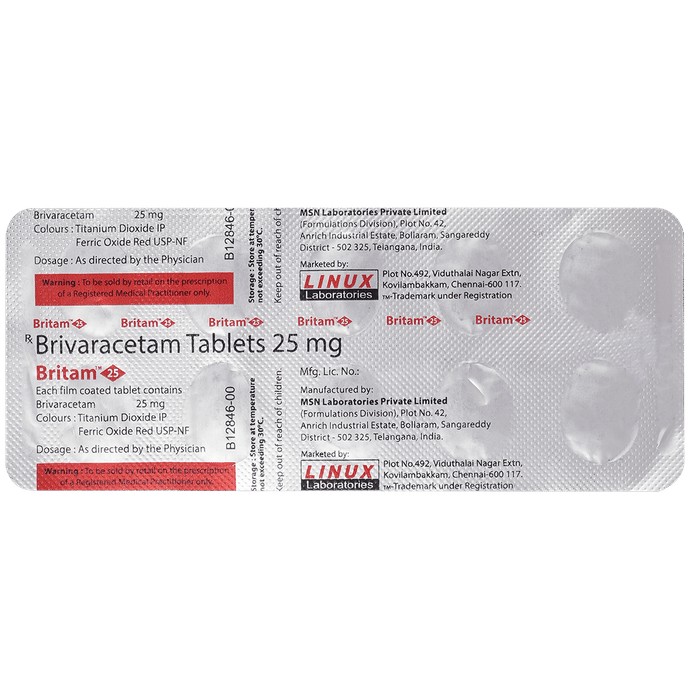

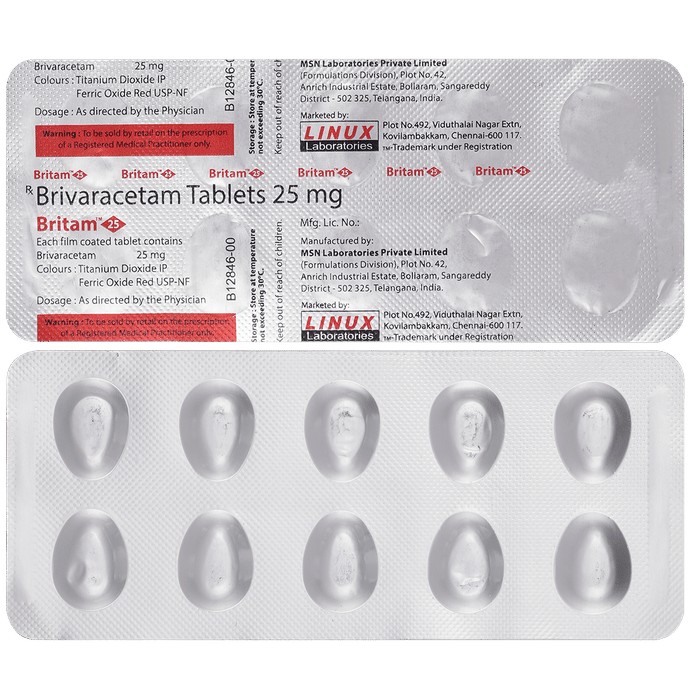
Britam 25mg Tablet

Marketer
Linux Laboratories
Salt Composition
Brivaracetam (25mg)
Overview Britam 25mg Tablet
Epileptic seizures are managed with the anticonvulsant medication, Britam 25mg Tablet. This medication, administered alone or in conjunction with other drugs, effectively controls seizures while continuously taken. Britam 25mg Tablet regulates abnormal brain electrical activity. Consistent daily dosing, regardless of food intake, maximizes its effectiveness; dosage and frequency are determined individually by your physician to optimize seizure control and may be adjusted incrementally. Long-term use is generally recommended; continued use, as prescribed, is crucial even during symptom-free periods, as discontinuation or missed doses can exacerbate seizures. Never cease treatment without your doctor's instruction; abrupt cessation may provoke more severe seizures. Common side effects, such as dizziness, headache, nausea, vomiting, and behavioral changes (including aggression, irritability, and agitation), frequently diminish after the initial weeks of treatment. While most side effects are minor, some require medical attention. Suicidal ideation has been reported in a small percentage of patients; consult your doctor immediately if your mood deteriorates. Prior to commencing treatment, inform your doctor about any pre-existing liver or kidney disease, depression, suicidal thoughts, pregnancy, or pregnancy plans. Nursing mothers should also seek medical advice before use.
Primary Ingredients of Britam 25mg Tablet
No information provided. Please provide the text you want me to rewrite.
Uses of Britam 25mg Tablet
Convulsive disorders
Major Benefits of Britam 25mg Tablet:
Follow your doctor's instructions precisely regarding the dosage and treatment length for this medication. The tablet should be swallowed whole; do not crush, chew, or break it. Britam 25mg Tablets can be administered with or without food, however, consistent timing is recommended.
Common Side effects of Britam 25mg Tablet:
- Behavioral changes
- Agitation
- Aggressive behavior
- Dizziness
- Sedation
- Drowsiness
- Neuropsychiatric symptoms
How to use Britam 25mg Tablet:
Administer this medication precisely as your physician directs, adhering to both the prescribed dosage and treatment length. Ingest the tablet whole; avoid chewing, crushing, or fracturing it. Britam 25mg Tablets can be consumed with or without food, though consistent timing is recommended.
How Britam 25mg Tablet works:
Britam 25mg tablets are prescribed to control epileptic seizures. Their mechanism involves binding to SV2A receptors on neuronal membranes. This binding action reduces excessive neuronal firing in the brain, thus hindering the propagation of seizure-inducing electrical impulses.
SAFETY ADVICE
 AlcoholUNSAFE
Avoid alcohol while taking Britam 25mg tablets.
 PregnancyCONSULT YOUR DOCTOR
Using Britam 25mg tablets during pregnancy may pose risks. While human research is scarce, animal studies indicate potential harm to the unborn child. A physician will assess the advantages against possible risks prior to prescription. Seek medical advice.
 Breast feedingCONSULT YOUR DOCTOR
Data on the safety of Britam 25mg Tablet while breastfeeding is lacking. Seek medical advice from your physician.
 DrivingUNSAFE
Taking a Britam 25mg Tablet might reduce alertness, impair vision, and cause drowsiness or dizziness. Refrain from driving if you experience these effects.
 KidneySAFE IF PRESCRIBED
The use of Britam 25mg Tablets is considered safe for individuals with kidney disease, and no dosage modification is advised. However, its use is not recommended for patients with end-stage renal disease given the absence of supporting clinical trial data.
 LiverCAUTION
Individuals with hepatic impairment should exercise caution when using Britam 25mg tablets. Dosage modification may be necessary. A physician's guidance is recommended.
What if you forget to take Britam 25mg Tablet :
NA
Facts to Know About Britam 25mg Tablet
| Label | Value |
|---|---|
| Chemical Category | Levetiracetam Analog |
| Developing Habits | No. |
| Treatment Category | Neuroscience of the Central Nervous System |
| Behavioral Class | AED, a protein ligand, within synaptic vesicle 2 |
 3,018 People bought this recently