


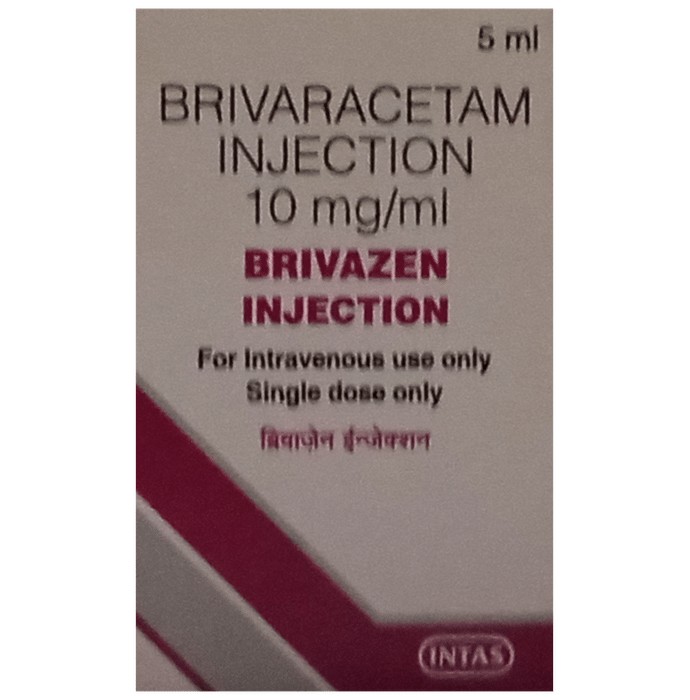
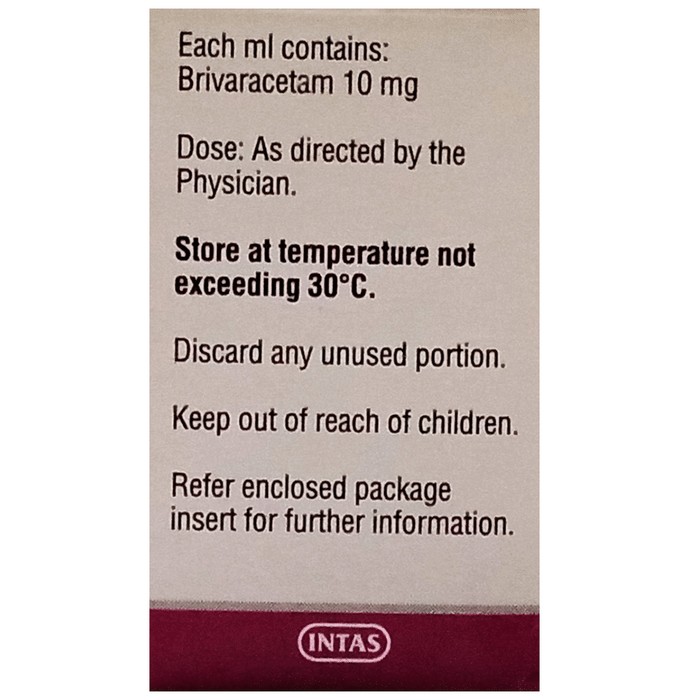
Brivazen Injection

Marketer
Intas Pharmaceuticals Ltd
Salt Composition
Brivaracetam (10mg/ml)
Overview Brivazen Injection
Epileptic seizures are managed with Brivazen Injection, an anticonvulsant. Suitable for adults, it can be a monotherapy or used in combination with other medications for both adults and children. Continuous use is crucial for sustained seizure prevention. Brivazen Injection works by reducing aberrant brain electrical activity. Administer with or without food, but maintain consistent daily timing for optimal efficacy. Dosage is individualized based on your response and condition, determined by your physician. Long-term therapy is typically recommended; continue as directed, even if feeling well, as discontinuation or missed doses may exacerbate seizures. Gradual withdrawal, potentially spanning several months, is advised. Avoid switching brands without consulting your doctor, and maintain an adequate supply. While serious adverse reactions are uncommon, prevalent side effects include somnolence, anorexia, abdominal discomfort, and diarrhea. Behavioral changes (aggression), depression, insomnia, vertigo, balance issues, rash, and further gastrointestinal upset may also occur. These are more frequent initially, often subsiding with continued use. Though most don't necessitate medical intervention, some can be severe; report any symptoms to your doctor for potential management strategies. Suicidal ideation has been reported in a small percentage of patients; contact your physician immediately if your mood deteriorates. Prior to commencing treatment, disclose kidney issues, depression, suicidal thoughts, and pregnancy (or pregnancy plans) to your physician. Breastfeeding is contraindicated. Alcohol increases seizure risk and intensifies side effects like drowsiness and dizziness; abstain during treatment. Impaired driving or operating machinery is possible due to somnolence and dizziness. Regular kidney function monitoring is often necessary during treatment.
Uses of Brivazen Injection
Convulsive disorders
Major Benefits of Brivazen Injection:
This medication will be administered by your physician or their designated nurse; self-medication is strictly prohibited.
Common Side effects of Brivazen Injection:
- Dizziness
- Sedation
- Drowsiness
- Neuropsychiatric symptoms
How to use Brivazen Injection:
This medication will be administered by your physician or their designated nurse; self-medication is strictly prohibited.
How Brivazen Injection works:
Brivazen Injection, an anticonvulsant, targets specific neuronal receptors (SV2A) to modulate aberrant neural activity. By binding to these sites, it inhibits the propagation of seizure-inducing electrical impulses within the brain.
SAFETY ADVICE
 AlcoholUNSAFE
Avoid alcohol consumption while using Brivazen Injection.
 PregnancyCONSULT YOUR DOCTOR
The use of Brivazen Injection during pregnancy may pose risks. While human data is scarce, animal research indicates potential harm to the fetus. A physician will assess the advantages against potential hazards prior to prescribing. Seek medical advice.
 Breast feedingCONSULT YOUR DOCTOR
Data on the compatibility of Brivazen Injection with breastfeeding are lacking. Seek medical advice from your physician.
 DrivingUNSAFE
Brivazen Injection can cause drowsiness, blurred vision, and dizziness, reducing alertness. Driving is inadvisable if these effects are experienced.
 KidneySAFE IF PRESCRIBED
Brivazen Injection poses no safety concerns for patients with kidney impairment; dosage modification is unnecessary. However, Brivaracetam should be avoided in individuals with end-stage renal disease due to a lack of supporting clinical trial data.
 LiverCAUTION
For individuals with hepatic impairment, Brivazen Injection requires careful administration. Dosage modification of Brivazen Injection may be necessary. Physician consultation is advised.
What if you forget to take Brivazen Injection :
NA
Facts to Know About Brivazen Injection
| Label | Value |
|---|---|
| Chemical Category | Levetiracetam Analog |
| Developing Habits | No. |
| Treatment Category | Neuroscience of the Central Nervous System |
| Action Class | AED: A protein ligand bound to synaptic vesicle 2 |
 3,018 People bought this recently