


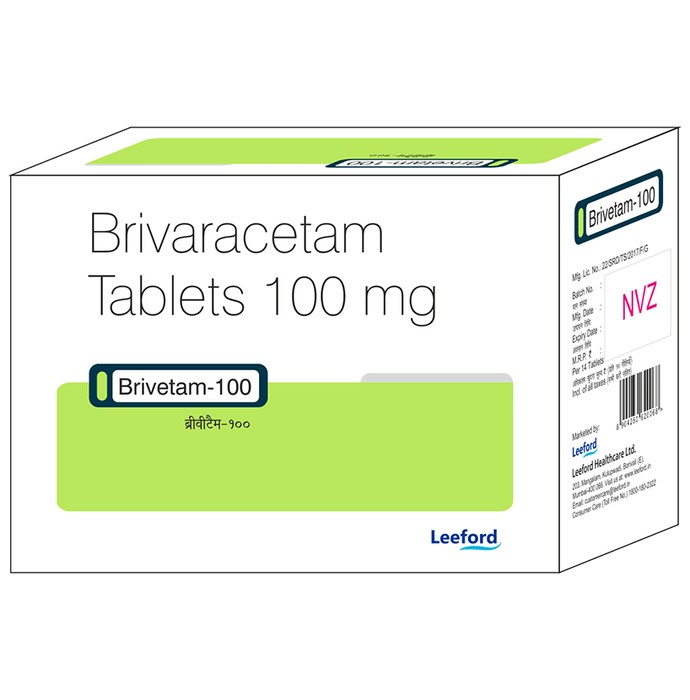
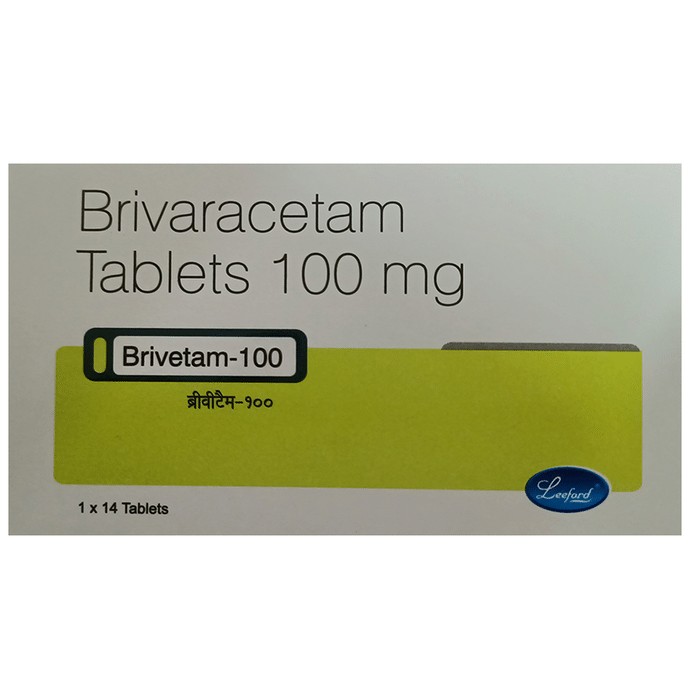
Brivetam 100 Tablet

Marketer
Leeford Healthcare Ltd
Salt Composition
Brivaracetam (100mg)
Overview Brivetam 100 Tablet
Epileptic seizures are managed with the anticonvulsant medication, Brivetam 100mg tablets. This medication can be administered independently or in conjunction with other therapies, providing ongoing seizure prevention with consistent usage. Brivetam 100mg tablets work by reducing abnormal brain electrical activity. For optimal efficacy, take this medication at the same time daily, with or without food. Dosage and frequency are determined by your physician to effectively control seizures, potentially increasing gradually. Long-term use is typical. Continue taking it as prescribed, even feeling well, as discontinuation or missed doses may worsen seizures. Never cease treatment without your doctor's instruction; abrupt cessation can exacerbate seizures. Common side effects, such as dizziness, headaches, nausea, and vomiting, often diminish after the initial weeks. Behavioral changes, including aggression, irritability, and agitation, are also possible. While many side effects require no intervention, some are serious. Suicidal ideation has been reported; notify your doctor of any mood deterioration. Prior to initiating treatment, inform your doctor of liver or kidney issues, depression, suicidal thoughts, pregnancy, or pregnancy plans. Nursing mothers should also consult their physician before use.
Primary Ingredients of Brivetam 100 Tablet
No information provided. Please provide the text you wish me to rephrase.
Uses of Brivetam 100 Tablet
Convulsive disorders
Major Benefits of Brivetam 100 Tablet:
Follow your doctor's instructions precisely regarding dosage and treatment length for Brivetam 100 Tablet. Ingest the tablet whole; do not break, crush, or chew it. This medication can be administered with or without food, although consistent timing is recommended.
Common Side effects of Brivetam 100 Tablet:
- Behavioral changes
- Agitation
- Aggressive behavior
- Dizziness
- Sedation
- Drowsiness
- Neuropsychiatric symptoms
How to use Brivetam 100 Tablet:
Follow your doctor's instructions precisely regarding the dosage and treatment length for this medication. The tablet should be swallowed whole; do not crush, chew, or break it. Brivetam 100 Tablets can be taken with or without food, however, consistent timing is recommended.
How Brivetam 100 Tablet works:
Nerix 100mg tablets are used to control epileptic seizures. The medication's mechanism involves binding to synaptic vesicle protein 2A (SV2A) receptors on neuronal membranes. This binding action reduces excessive neuronal firing and blocks the propagation of seizure-inducing electrical impulses within the brain.
SAFETY ADVICE
 AlcoholUNSAFE
Combining Brivetam 100 Tablet with alcohol is not advisable.
 PregnancyCONSULT YOUR DOCTOR
Using Brivetam 100 Tablet during pregnancy may pose risks. While human data is scarce, animal research indicates potential harm to the unborn child. A physician will assess the advantages against possible dangers prior to prescription. Seek medical advice.
 Breast feedingCONSULT YOUR DOCTOR
Data on Brivetam 100 Tablet use while breastfeeding is lacking. Seek your physician's advice.
 DrivingUNSAFE
Taking Brivetam 100 Tablet may cause drowsiness, blurred vision, and dizziness, reducing alertness. Refrain from driving if these effects are experienced.
 KidneySAFE IF PRESCRIBED
For patients with kidney disease, Brivetam 100 Tablet is considered safe, and no dosage modification is necessary. However, its use is not advised in end-stage renal disease, as sufficient clinical trial data is unavailable.
 LiverCAUTION
Patients with liver impairment should use Brivetam 100 Tablet cautiously; dosage modification may be necessary. Physician consultation is advised.
What if you forget to take Brivetam 100 Tablet :
NA
Facts to Know About Brivetam 100 Tablet
| Label | Value |
|---|---|
| Chemical Category | Levetiracetam Analog |
| Developing Habits | No. |
| Treatment Category | Neuroscience of the Central Nervous System |
| Action Class | AED, a protein ligand, within synaptic vesicle 2. |
 3,018 People bought this recently