


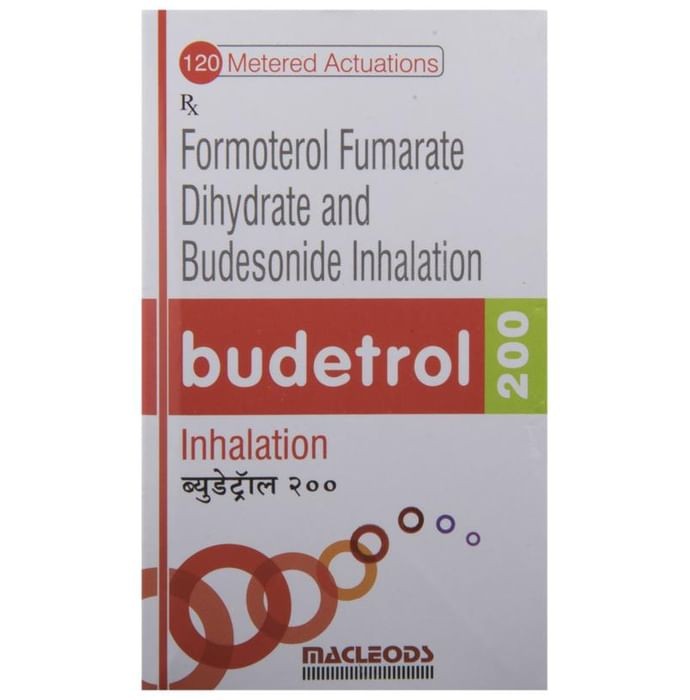
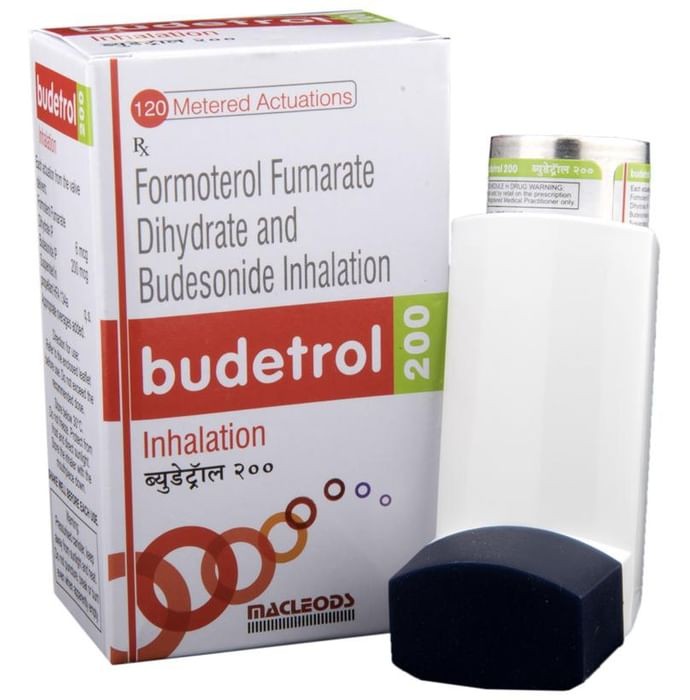
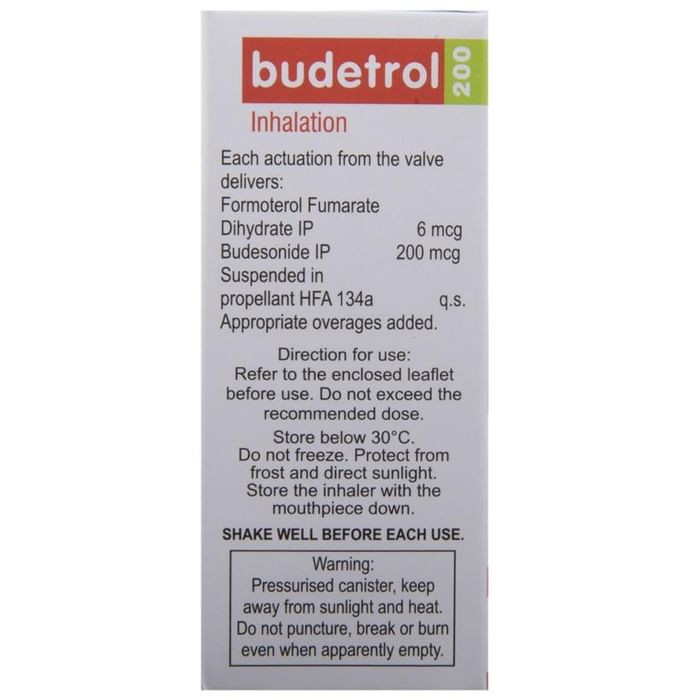
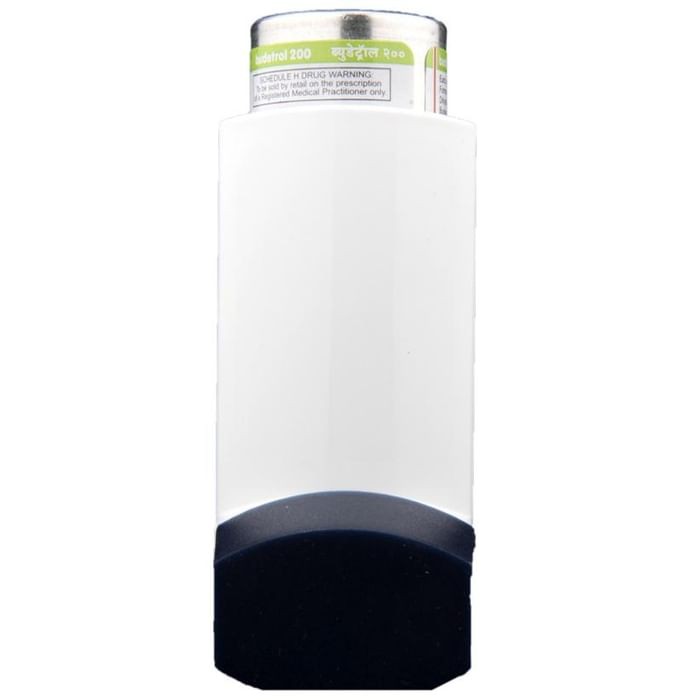
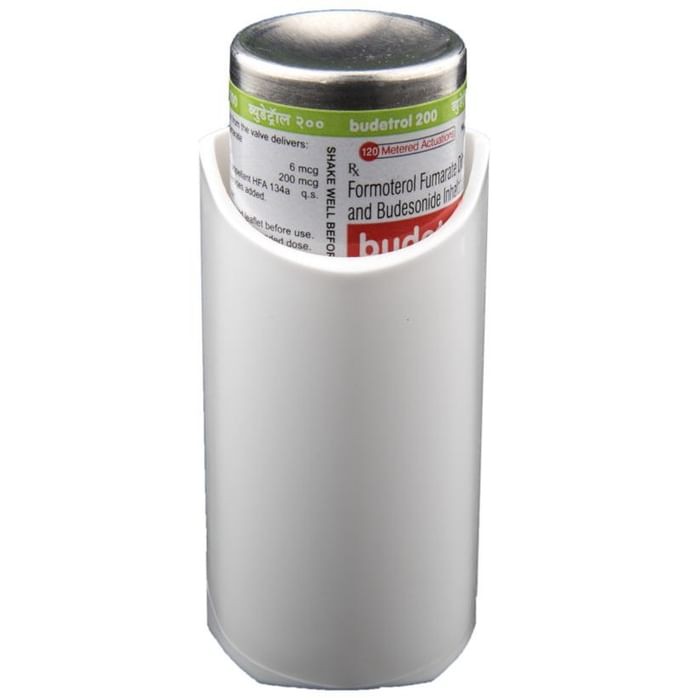
Budetrol 200 Inhaler

Marketer
Macleods Pharmaceuticals Pvt Ltd
Salt Composition
Formoterol (6mcg) + Budesonide (200mcg)
Overview Budetrol 200 Inhaler
Combivent Respimat 200mcg contains two medications in a single inhaler, providing long-term asthma and COPD symptom relief and easing breathing difficulties. Its mechanism involves suppressing inflammatory chemical messengers and airway muscle relaxation. Your physician will determine the appropriate inhalation frequency. While noticeable benefits may appear within days, peak efficacy takes several weeks. Consistent use, even during symptom-free periods, is crucial for maintaining effectiveness; discontinuation may worsen symptoms. This inhaler is unsuitable for treating sudden breathlessness; use your rescue inhaler instead. Proper inhalation technique is vital for optimal results. Common side effects include headache, nausea, vomiting, abdominal discomfort, and respiratory infections. While these shouldn't necessitate cessation, discuss them with your doctor. Rinsing your mouth and throat or brushing your teeth post-inhalation can mitigate some side effects. Less frequent, potentially serious, side effects warrant immediate medical consultation. Prior to use, disclose any kidney or liver conditions to ensure appropriate dosage. Pregnancy, pregnancy planning, or breastfeeding should also be reported to your doctor.
Uses of Budetrol 200 Inhaler
Managing chronic obstructive pulmonary disease (COPD) and asthma: therapy and prophylaxis.
Major Benefits of Budetrol 200 Inhaler:
Always consult the product label for proper administration instructions. Shake the inhaler well. Begin inhaling and simultaneously depress the inhaler once to dispense the medication. Retain your breath for ten seconds. Repeat this process for the prescribed number of inhalations as directed by your physician. Finally, rinse your mouth completely with water and discard the rinse water.
Common Side effects of Budetrol 200 Inhaler:
- Nausea
- Vomiting
- Headache
- Stomach discomfort
- Cough
- Nasopharyngitis (inflammation of the throat and nasal passages)
- Upper respiratory tract infection
- Sinus inflammation
- Fungal infection of oropharynx
- Tremors
- Palpitations
- Voice change
- Pharyngolaryngeal pain
- Influenza
- Back pain
- Oral fungal infection
How to use Budetrol 200 Inhaler:
Before using, carefully review the product label's instructions. Agitate the inhaler well. Simultaneously, begin a slow inhalation and depress the inhaler once to dispense the medication. Retain your breath for ten seconds. Continue this process until you've administered the prescribed number of inhalations. Finally, rinse your mouth completely with water and discard the rinse water.
How Budetrol 200 Inhaler works:
Airomist Duo 200, a dual-action inhaler, combines formoterol and budesonide. Formoterol, a long-acting bronchodilator, eases breathing by relaxing airway muscles, thus widening the passages. Budesonide, a corticosteroid, reduces airway inflammation by suppressing the release of inflammatory mediators. This synergistic action facilitates improved respiratory function.
SAFETY ADVICE
 AlcoholUNSAFE
Combining Budetrol 200 Inhaler and alcohol is inadvisable.
 PregnancySAFE IF PRESCRIBED
The inhalation of Budetrol 200 is typically deemed safe for pregnant individuals. Preclinical trials using animals revealed minimal or no negative consequences for fetal development; nevertheless, clinical data from human studies are scarce.
 Breast feedingSAFE IF PRESCRIBED
Using the Budetrol 200 Inhaler while breastfeeding is likely safe. Available human data indicates minimal risk to the infant.
 DrivingNone
No drug interactions identified.
 KidneyNone
No known drug interactions.
 LiverNone
No known drug interactions.
What if you forget to take Budetrol 200 Inhaler :
Forgetting a Budetrol 200 Inhaler dose? Inhale it as soon as you remember. But, if your next dose is nearly due, omit the missed one and resume your usual inhaler routine. Never take a double dose.
Facts to Know About Budetrol 200 Inhaler
| Label | Value |
|---|---|
| Developing Habits | No. |
| Treatment Category | Breathing |
 3,018 People bought this recently