


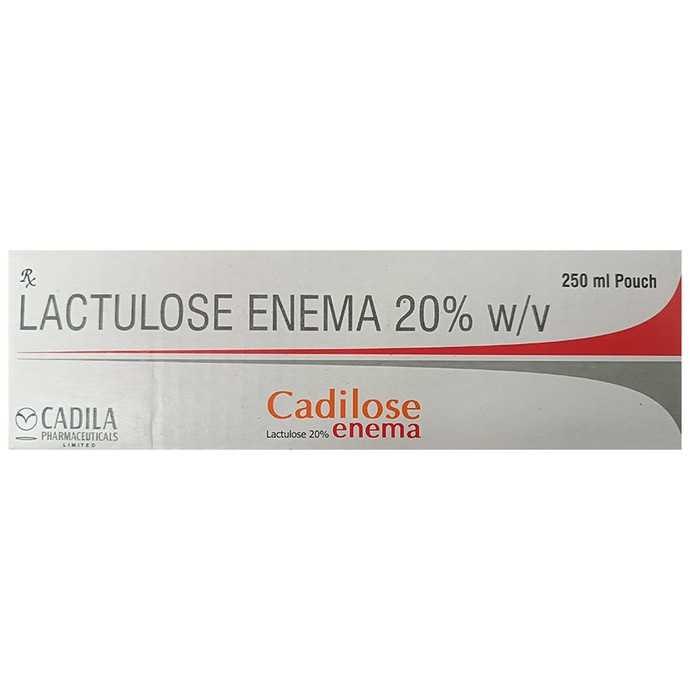

Cadilose Enema

Marketer
Cadila Pharmaceuticals Ltd
Salt Composition
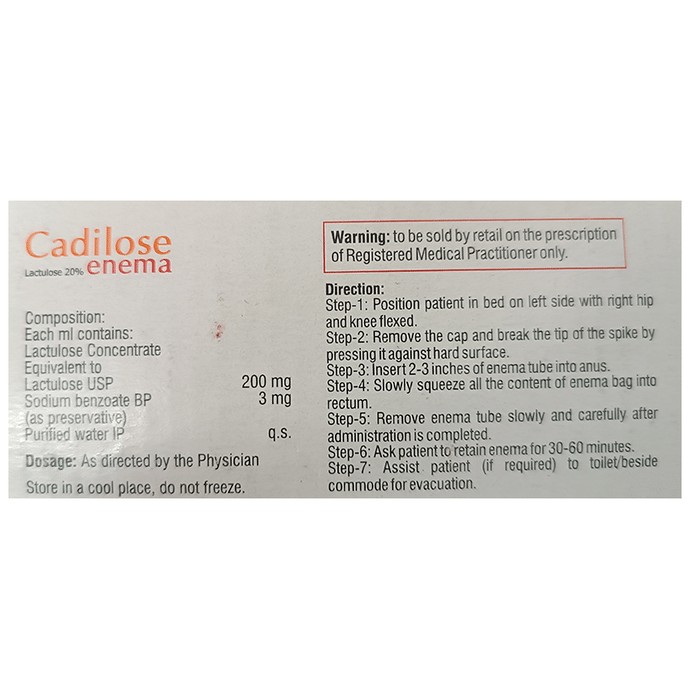
Lactulose (200mg)
Overview Cadilose Enema
Lactulose enema is a sugar-based medication employed to alleviate constipation. Its laxative action softens stools by drawing fluid into the bowel. It's also indicated for hepatic encephalopathy, a liver condition characterized by cognitive impairment, tremors, and reduced alertness. Administered rectally, it's primarily used in hospitalized patients or those unable to take oral medication. Common, usually transient, side effects include rectal irritation, nausea, and vomiting. More serious, though rare, adverse effects encompass intense abdominal pain, severe diarrhea, altered mood, and convulsions. Immediate medical attention is warranted should any of these occur. Prior to use, disclose any existing diabetes or lactose intolerance to your physician. Prolonged use may necessitate periodic blood tests to monitor electrolyte levels (such as potassium and sodium). Avoid concurrent use with other laxatives, and consult your doctor before use during pregnancy or breastfeeding.
Primary Ingredients of Cadilose Enema
No information provided. Please provide the text you wish me to rephrase.
Uses of Cadilose Enema
Managing constipation and hepatic encephalopathy
Major Benefits of Cadilose Enema:
This medication will be administered by your healthcare provider; self-medication is strictly prohibited.
Common Side effects of Cadilose Enema:
- Abdominal pain
- Diarrhea
- Nausea
- Vomiting
- Application site irritation
How to use Cadilose Enema:
This medication will be administered by your healthcare provider. Self-medication is strictly prohibited.
How Cadilose Enema works:
Cadilose Enema softens stool for easier bowel movements by osmotically attracting water into the intestines.
SAFETY ADVICE
 AlcoholNone
No known drug interactions.
 PregnancySAFE IF PRESCRIBED
The use of Cadilose Enema during pregnancy is typically deemed safe. Preclinical trials in animals have revealed minimal or no harmful consequences for the fetus; nonetheless, research involving human subjects is scarce.
 Breast feedingSAFE IF PRESCRIBED
Use of Cadilose Enema while breastfeeding appears to pose minimal risk. Available human data indicates negligible infant exposure.
 DrivingNone
No known drug interactions.
 KidneySAFE IF PRESCRIBED
The use of Cadilose Enema in patients with renal impairment appears to pose minimal risk. Preliminary evidence indicates that dosage modification is likely unnecessary. However, physician consultation is recommended.
 LiverSAFE IF PRESCRIBED
Use of Cadilose Enema in individuals with hepatic impairment appears to pose minimal risk. Available evidence indicates dose modification may be unnecessary; however, physician consultation is recommended.
What if you forget to take Cadilose Enema :
Omit any missed Cadilose Enema dose and resume your regular dosing regimen. Avoid taking a double dose.
Facts to Know About Cadilose Enema
| Label | Value |
|---|---|
| Chemical Type | Artificial Disaccharide |
| Developing Habits | No. |
| Type of Therapy | Gastrointestinal system |
| Behavior Class | Osmotic laxatives |
 3,018 People bought this recently