


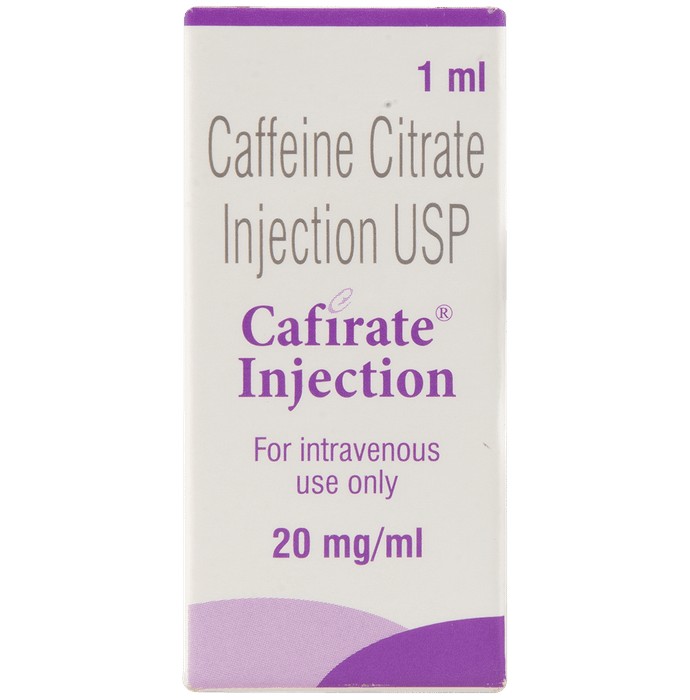

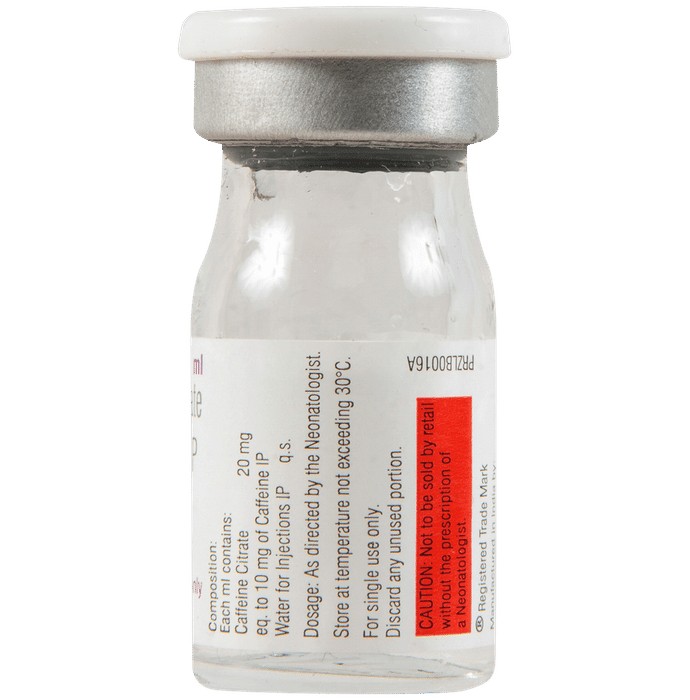
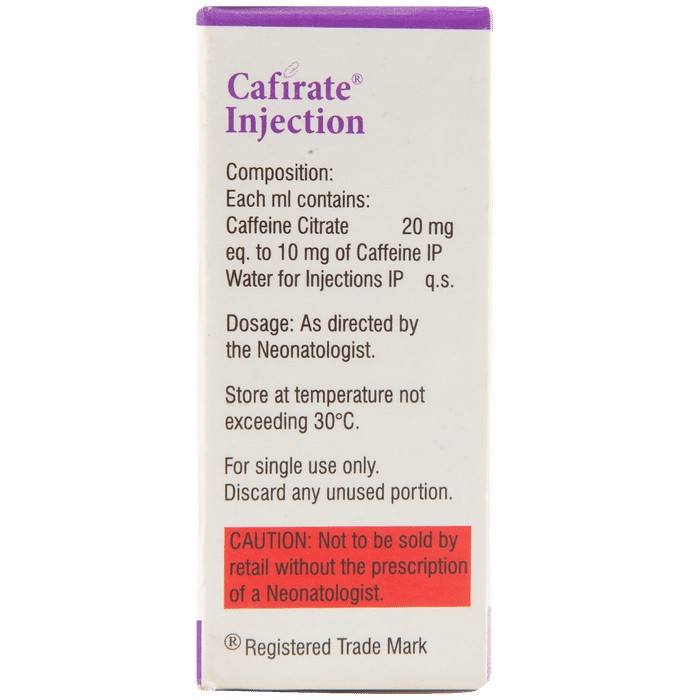
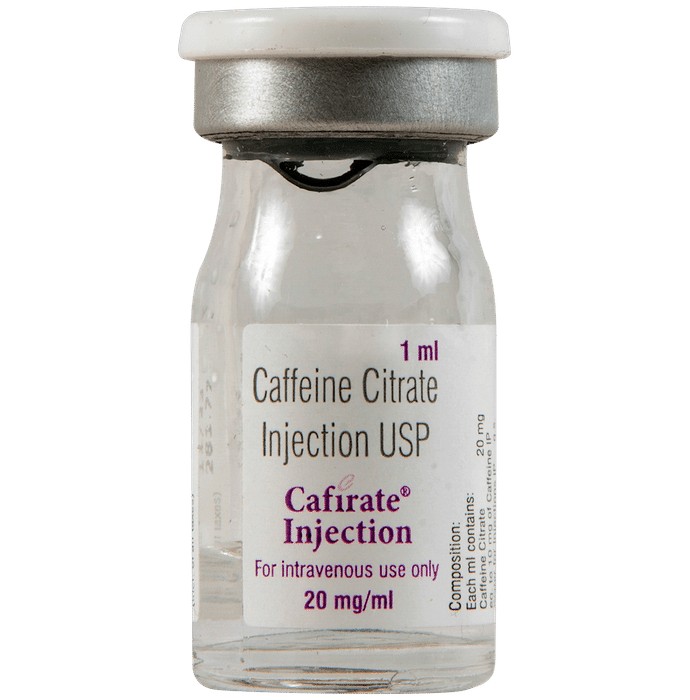
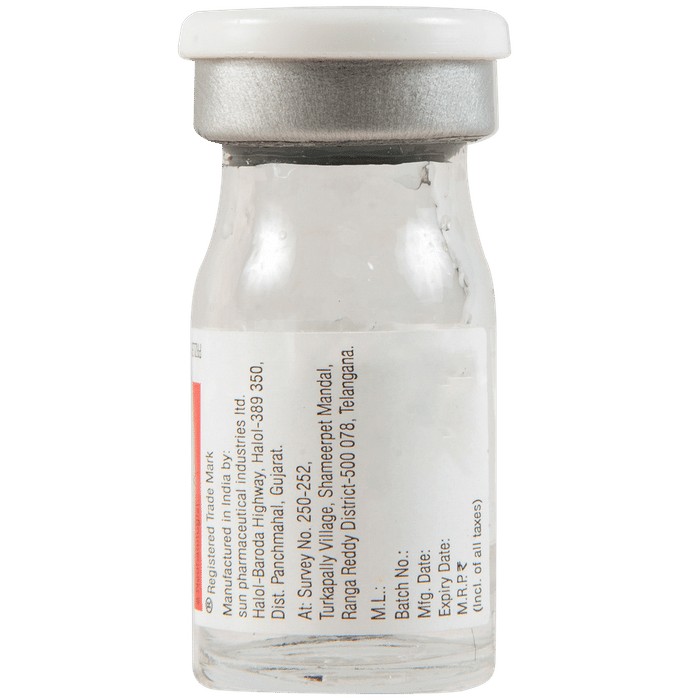
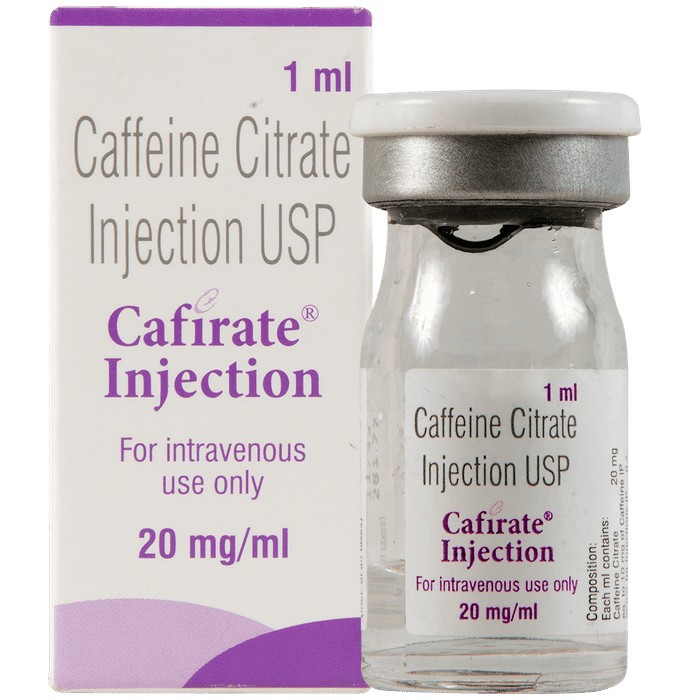
Cafirate Injection

Marketer
Sun Pharmaceutical Industries Ltd
Salt Composition
Caffeine (20mg/ml)
Overview Cafirate Injection
Premature infants experiencing apnea (interrupted breathing) may be treated with the prescription medication, Cafirate Injection. This injectable drug promotes regular respiration and lessens breathing pauses in premature babies. Administration must be performed by a healthcare provider. Nursing mothers whose infants receive Cafirate Injection should avoid caffeine and other high-caffeine products due to caffeine's transfer into breast milk. Minor side effects such as temporary confusion, sleeplessness, increased urination, fluid loss, rapid heart rate, and elevated temperature have been reported. If these side effects persist or worsen, medical advice is recommended to explore potential mitigation strategies.
Primary Ingredients of Cafirate Injection
No text provided. Please provide the text you wish me to rephrase.
Uses of Cafirate Injection
Respiratory pauses in premature infants
Major Benefits of Cafirate Injection:
This medication will be administered by your healthcare provider; self-medication is strictly prohibited.
Common Side effects of Cafirate Injection:
- Delirium (acute confusional state)
- Insomnia (difficulty in sleeping)
- Frequent urge to urinate
- Dehydration
- Fever
How to use Cafirate Injection:
This medication will be administered by your healthcare provider; self-medication is strictly prohibited.
How Cafirate Injection works:
Cafirate Injection acts as a respiratory stimulant. Its mechanism involves inhibiting the activity of adenosine and phosphodiesterase, thereby enhancing brain and respiratory function in preterm infants. Consequently, it lessens apnea episodes and promotes independent breathing.
SAFETY ADVICE
 AlcoholUNSAFE
Alcohol consumption alongside Cafirate Injection poses a safety risk.
 PregnancyCONSULT YOUR DOCTOR
The use of Cafirate Injection during pregnancy may pose risks. While human research is scant, animal studies indicate potential harm to a developing fetus. A physician will assess the advantages against possible hazards prior to prescribing. Seek medical advice.
 Breast feedingCAUTION
Administering Cafirate Injection to breastfeeding mothers requires careful consideration. Lactation should be temporarily suspended throughout the mother's treatment and until the medication is fully cleared from her system.
 DrivingUNSAFE
Administering Cafirate Injection can lead to reduced alertness, visual impairment, drowsiness, and dizziness. Driving should be avoided if any of these effects are experienced.
 KidneyCONSULT YOUR DOCTOR
Insufficient data exists regarding Cafirate Injection's use in individuals with renal impairment. Physician consultation is advised.
 LiverCONSULT YOUR DOCTOR
Data regarding Cafirate Injection use in individuals with hepatic impairment is scarce. Physician consultation is recommended.
What if you forget to take Cafirate Injection :
NA
Facts to Know About Cafirate Injection
| Label | Value |
|---|---|
| Chemical Type | Methylxanthine |
| Developing Habits | No. |
| Treatment Category | Heart |
| Action Class | A1 and A2 adenosine receptor blocker |
 3,018 People bought this recently