


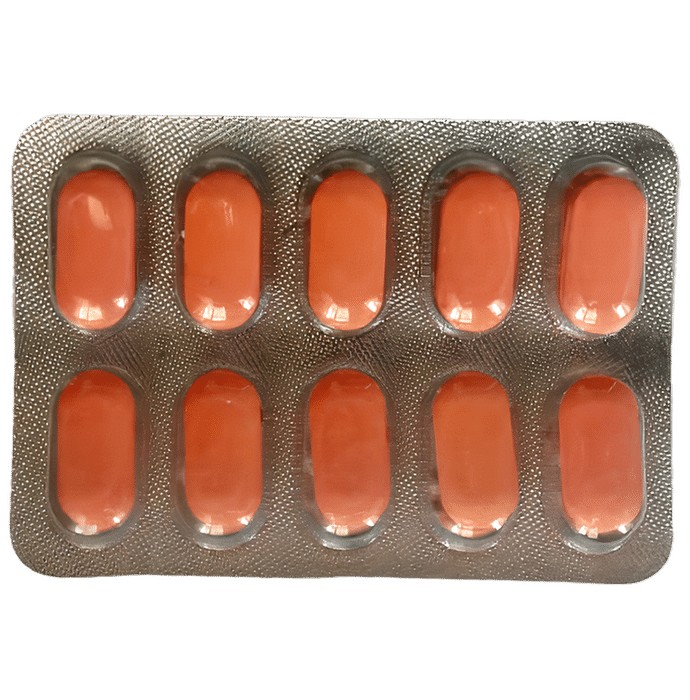
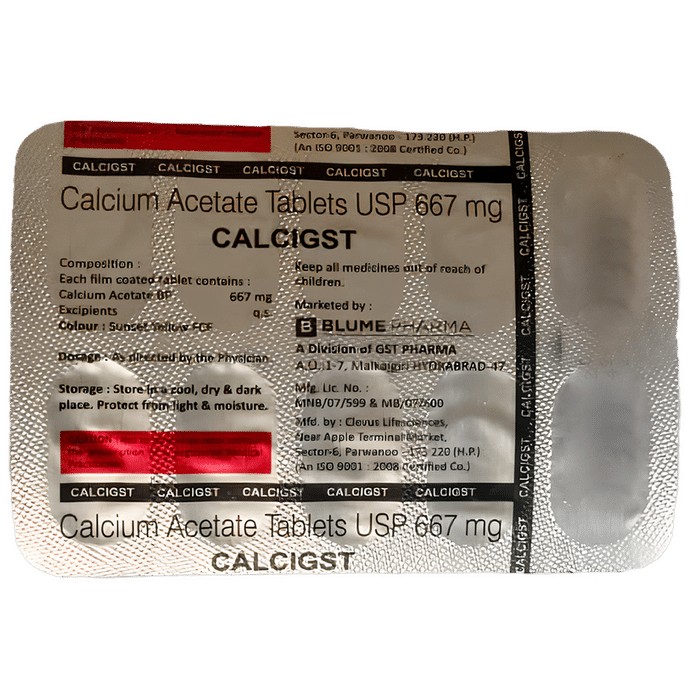
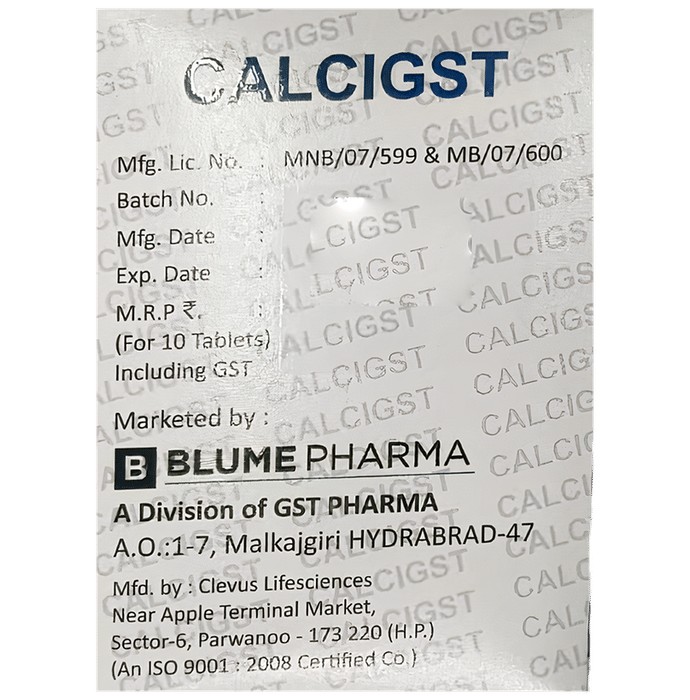
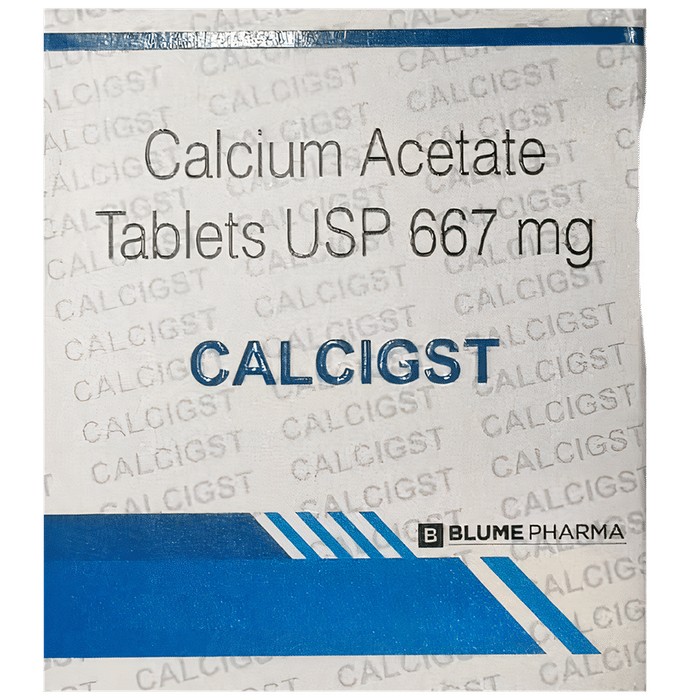
Calcigst Tablet

Marketer
Blume Pharma
Salt Composition
Calcium Acetate (667mg)
Overview Calcigst Tablet
PhosphateGuard tablets are indicated for managing elevated blood phosphate concentrations. This medication reduces blood phosphate levels, mitigating complications, especially in dialysis patients with kidney disease who experience difficulty eliminating excess phosphate. PhosphateGuard should be ingested with meals, adhering to a consistent, evenly spaced schedule as directed by your physician. Regular daily timing aids adherence. Dosage and treatment length vary depending on condition severity. Abrupt cessation is inadvisable; continue use as prescribed for optimal therapeutic outcomes. Commonly reported side effects include hypercalcemia, nausea, and diarrhea. Report any concerning side effects, including those not listed, to your doctor, who may offer strategies for management or prevention. Prior to initiating treatment, disclose all pre-existing medical conditions and concurrent medications to your physician. Avoid supplementary calcium intake unless specifically instructed by your doctor. Regular monitoring through blood tests is typically necessary to assess treatment effectiveness. Pregnant or breastfeeding individuals should consult their physician before commencing treatment.
Uses of Calcigst Tablet
Managing hyperphosphatemia
Major Benefits of Calcigst Tablet:
Consume this medication precisely as prescribed by your physician, adhering to the specified dosage and treatment period. Ingest the tablet whole; avoid chewing, crushing, or fracturing it. The Calcigst Tablet should be administered with a meal.
Common Side effects of Calcigst Tablet:
- Increased calcium level in blood
- Nausea
- Diarrhea
How to use Calcigst Tablet:
Follow your doctor's instructions precisely regarding dosage and treatment length for this medication. Ingest the tablet whole; avoid chewing, crushing, or breaking it. Consume Calcigst Tablet with a meal.
How Calcigst Tablet works:
Calcigst Tablets utilize calcium acetate to complex with dietary phosphate, facilitating its excretion and preventing absorption. This mechanism effectively lowers elevated blood phosphate concentrations.
SAFETY ADVICE
 AlcoholCONSULT YOUR DOCTOR
Alcohol consumption alongside Calcigst Tablet may pose unknown safety risks. Seek medical advice before combining them.
 PregnancyCONSULT YOUR DOCTOR
The use of Calcigst Tablets during pregnancy may pose risks. While human research is scarce, animal studies indicate potential harm to a developing fetus. A physician will assess the potential advantages against any possible dangers prior to prescribing. Seek medical advice.
 Breast feedingSAFE IF PRESCRIBED
Use of Calcigst tablets while breastfeeding is likely safe. Available human data indicates minimal risk to the infant.
 DrivingCONSULT YOUR DOCTOR
The effect of Calcigst Tablet on driving ability is unknown. Refrain from driving if you develop symptoms impairing concentration or reaction time.
 KidneySAFE IF PRESCRIBED
Patients with kidney disease can safely use Calcigst tablets without any required dosage modification.
 LiverCONSULT YOUR DOCTOR
Insufficient data exists regarding Calcigst Tablet's use in individuals with hepatic impairment. Physician consultation is advised.
What if you forget to take Calcigst Tablet :
Should you forget a Calcigst Tablet dose, administer it at your earliest convenience. If, however, your next scheduled dose is imminent, omit the missed dose and resume your usual dosing regimen. Never take a double dose.
Facts to Know About Calcigst Tablet
| Label | Value |
|---|---|
| Chemical Type | Organic acids |
| Developing Habits | No. |
| Type of Therapy | KINSHIP |
 3,018 People bought this recently