


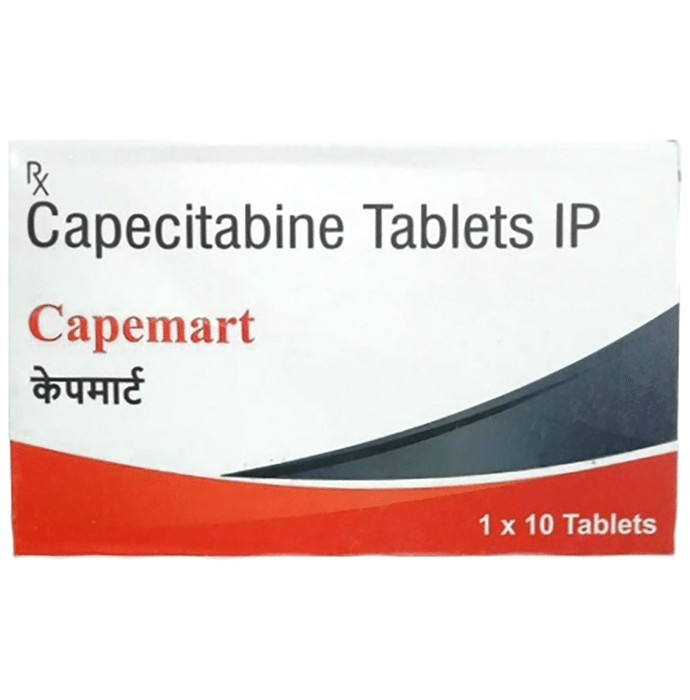
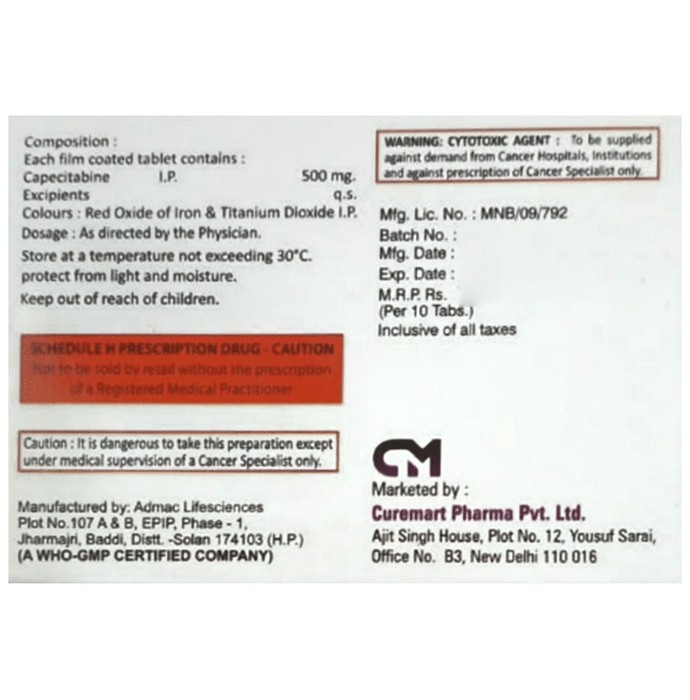
Capemart Tablet

Marketer
Curemart Pharma Pvt Ltd
Salt Composition
Capecitabine (500mg)
Overview Capemart Tablet
Oncaspar tablets are indicated for breast, colorectal, and rectal cancers. Other uses may be determined by your physician. It's administered as part of chemotherapy, either solely or in conjunction with other medications. Take Oncaspar tablets with food, within 30 minutes post-meal. Dosage and frequency are physician-determined, varying based on your condition and potentially adjusted over time. Strict adherence to your doctor's instructions is vital; incorrect usage or overdose can cause severe adverse reactions. Therapeutic effects might not be apparent for weeks or months; discontinue only upon your doctor's advice. Common side effects include nausea, vomiting, weakness, abdominal discomfort, and diarrhea. The medication can lower blood cell counts (particularly white blood cells), raising infection risk. Regular blood tests are necessary to monitor blood cell levels, as well as heart, liver, and uric acid levels. Inform your doctor of any kidney or liver issues, or concurrent use of infection-fighting drugs before commencing treatment. Interactions with other medications are possible; disclose all medications to your doctor. This medication is contraindicated during pregnancy and breastfeeding. Effective contraception for both partners is crucial during treatment to prevent pregnancy.
Uses of Capemart Tablet
Malignancy of the mammary glands | Colorectal carcinoma
Major Benefits of Capemart Tablet:
Follow your doctor's instructions precisely regarding dosage and treatment length for this medication. Ingest the Capemart Tablet whole; avoid chewing, crushing, or breaking it. Administer this medication with food.
Common Side effects of Capemart Tablet:
- Vomiting
- Weakness
- Nausea
- Abdominal pain
- Diarrhea
- Blisters on fingers/feet
How to use Capemart Tablet:
Consume this medication according to your physician's prescribed dosage and schedule. Ingest the tablet whole; avoid chewing, crushing, or fracturing it. Administer Capemart Tablet with a meal.
How Capemart Tablet works:
Capemart tablets function as an antineoplastic agent. Metabolic processes transform the drug into 5-fluorouracil, which inhibits the production of nucleic acids (RNA and DNA) within cancerous cells. This disruption of cellular replication leads to decelerated tumor growth and ultimately, cellular death.
SAFETY ADVICE
 AlcoholCONSULT YOUR DOCTOR
Alcohol consumption alongside Capemart Tablet hasn't been established as safe. Seek medical advice before combining them.
 PregnancyCONSULT YOUR DOCTOR
Using Capemart Tablets during pregnancy poses a confirmed risk to the fetus and is therefore inadvisable. In exceptional, life-threatening circumstances, a physician might prescribe it if the potential benefits outweigh the known hazards. Always seek medical advice.
 Breast feedingUNSAFE
The use of Capemart Tablets while breastfeeding is contraindicated. Evidence indicates potential infant toxicity from this medication.
 DrivingUNSAFE
Taking Capemart Tablets might reduce alertness, impair vision, or cause drowsiness and dizziness. Refrain from driving if you experience these effects.
 KidneyCAUTION
Patients with impaired kidney function should use Capemart Tablets cautiously, potentially requiring dosage modification under medical supervision. Capemart Tablets are contraindicated in individuals with severely compromised kidney function.
 LiverCAUTION
Individuals with liver impairment should use Capemart Tablet cautiously, potentially requiring dosage modification under medical supervision. Capemart Tablet is contraindicated for patients exhibiting severe kidney dysfunction.
What if you forget to take Capemart Tablet :
NA
Facts to Know About Capemart Tablet
| Label | Value |
|---|---|
| Chemical Type | Modified Deoxycytidine |
| Developing Habits | No. |
| Treatment Category | Cancer Medications |
| Action Class | Metabolic Inhibitors |
 3,018 People bought this recently