


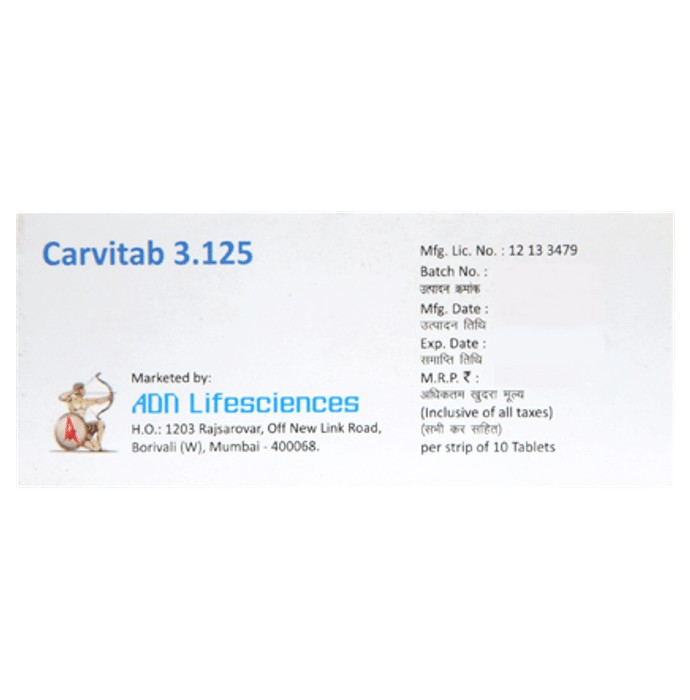
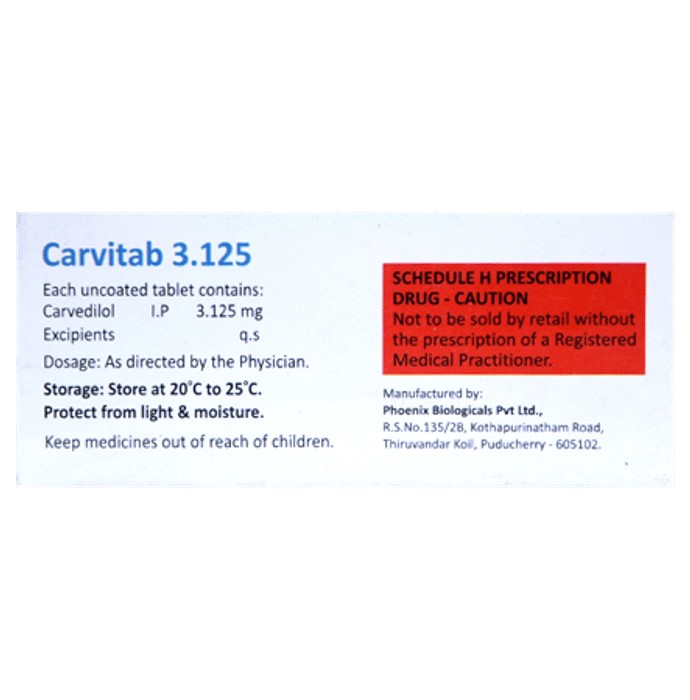
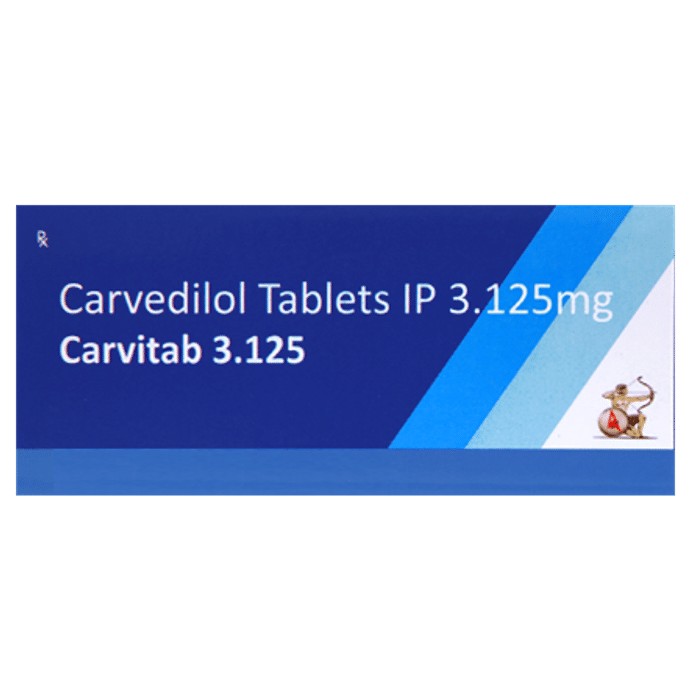

Carvitab 3.125 Tablet

Marketer
ADN Life Sciences
Salt Composition
Carvedilol (3.125mg)
Overview Carvitab 3.125 Tablet
Cardiovasc 3.125mg tablets manage hypertension, angina pectoris, and congestive heart failure. Its mechanism involves vasodilation, improving cardiac blood flow. Reduced blood pressure mitigates stroke and myocardial infarction risk. Administer this medication with meals, following your physician's prescribed dosage and regimen. Consistent use is vital, even with symptom improvement or controlled blood pressure. Discontinue only under medical supervision to prevent condition exacerbation. Lifestyle modifications, such as regular physical activity, weight management, smoking cessation, moderate alcohol consumption, and a low-sodium diet (as directed), enhance treatment efficacy. While generally well-tolerated, potential side effects include vertigo, cephalalgia, dyspnea, and fatigue. Report persistent or bothersome adverse effects to your doctor. Prior to commencing therapy, inform your doctor of any pre-existing cardiac or renal conditions, and pregnant or lactating women should seek medical counsel before use.
Uses of Carvitab 3.125 Tablet
Managing elevated blood pressure | Addressing angina pectoris | Cardiac insufficiency management
Major Benefits of Carvitab 3.125 Tablet:
Administer this medication precisely as your physician directs, adhering to both the prescribed dosage and treatment length. Ingest the tablet whole; avoid chewing, crushing, or fracturing it. Consume Carvitab 3.125 Tablet with a meal.
Common Side effects of Carvitab 3.125 Tablet:
- Decreased blood pressure
- Headache
- Fatigue
- Dizziness
- Breathlessness
How to use Carvitab 3.125 Tablet:
Follow your doctor's instructions precisely regarding dosage and treatment length for this medication. Ingest the Carvitab 3.125 Tablet whole; avoid crushing, chewing, or breaking it. Administer this medication with food.
How Carvitab 3.125 Tablet works:
Carvitab 3.125 mg tablets combine alpha and beta-blocking properties. This medication reduces heart rate and dilates blood vessels, thereby improving the heart's pumping efficiency.
SAFETY ADVICE
 AlcoholUNSAFE
Avoid alcohol consumption while taking Carvitab 3.125 Tablet.
 PregnancyCONSULT YOUR DOCTOR
The use of Carvitab 3.125 Tablet during pregnancy may pose risks. While human research is scarce, animal studies indicate potential harm to the fetus. A physician will assess the potential advantages against any risks prior to prescribing. Medical advice is recommended.
 Breast feedingSAFE IF PRESCRIBED
Lactation and Carvitab 3.125 mg tablets appear compatible. Available human data indicates minimal infant risk associated with this medication.
 DrivingUNSAFE
Taking Carvitab 3.125 mg tablets can cause drowsiness, blurred vision, and dizziness. Refrain from driving if you experience these effects.
 KidneySAFE IF PRESCRIBED
Carvitab 3.125mg tablets can be used by patients with kidney disease without altering the prescribed dose. Nevertheless, disclosure of pre-existing kidney conditions to your physician is advised. Routine blood pressure monitoring is suggested to guide any necessary dosage modifications.
 LiverCAUTION
Patients with hepatic impairment should use Carvitab 3.125mg tablets cautiously, potentially requiring dosage modification. Medical advice is recommended. Carvitab 3.125mg tablets are contraindicated in individuals with severe liver dysfunction.
What if you forget to take Carvitab 3.125 Tablet :
Should you forget a Carvitab 3.125 Tablet dose, administer it promptly. Nevertheless, if your next dose is imminent, omit the missed one and resume your usual dosing regimen. Avoid taking a double dose.
Facts to Know About Carvitab 3.125 Tablet
| Label | Value |
|---|---|
| Pharmaceutical Category | Carbazole-based compound with a propanol moiety. |
| Potential for Dependence | None. |
| Medication Classification | Heart-related |
| Mechanism of Action | Combined alpha and beta adrenergic receptor antagonist |
 3,018 People bought this recently