


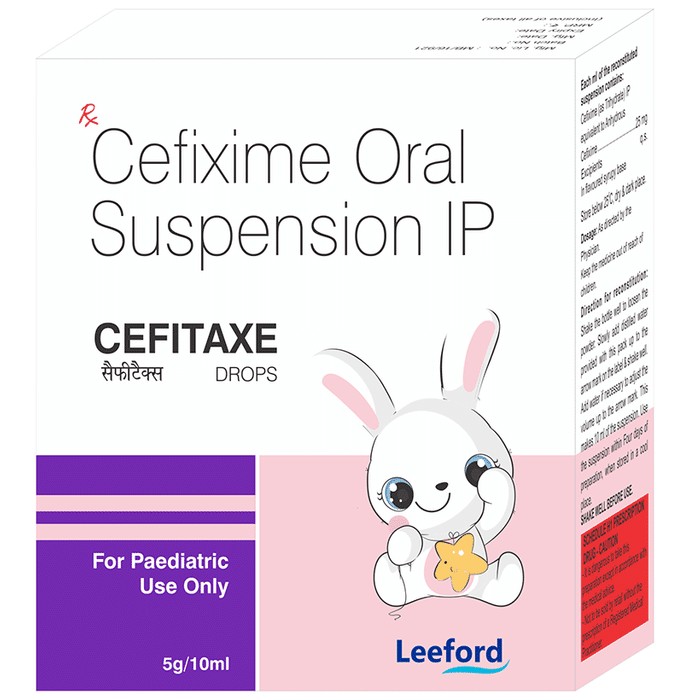
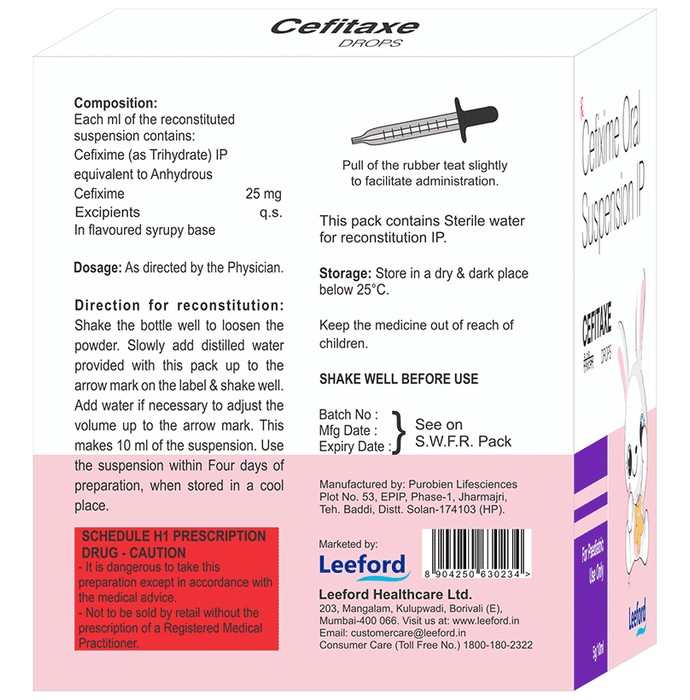
Cefitaxe Drop

Marketer
Leeford Healthcare Ltd
Salt Composition
Cefixime (25mg)
Overview Cefitaxe Drop
Cefitaxe Drops, an antibiotic medication, effectively combats various bacterial infections affecting children's ears, eyes, nose, throat, lungs, skin, digestive system, and urinary tract. It's also indicated for uncomplicated typhoid fever in children and adolescents. For optimal absorption, administer one hour before or two hours after meals; however, if stomach upset occurs, give it with food. Dosage and treatment duration are infection-dependent; strictly follow your doctor's instructions. If vomiting occurs within 30 minutes, repeat the dose; however, avoid doubling if it's near the next scheduled dose. Avoid using this medication for common colds or flu, as these are typically viral and unresponsive to antibiotics. Antibiotic use for these symptoms is only justified if a secondary bacterial infection is confirmed. Minor, transient side effects like nausea, vomiting, diarrhea, abdominal pain, and allergic reactions may occur, usually resolving as the child adjusts. Persistent or concerning side effects warrant immediate medical attention. Always provide your child's complete medical history to their physician, including allergies, heart conditions, blood disorders, congenital defects, respiratory issues, lung abnormalities, digestive problems, skin conditions, liver impairment, and kidney dysfunction. This comprehensive information is essential for accurate dosing and treatment planning.
Uses of Cefitaxe Drop
Managing bacterial infections
Major Benefits of Cefitaxe Drop:
Administer this medication precisely as your physician directs, adhering to both the prescribed dosage and timeframe. Consult the product label for detailed instructions prior to consumption. Use a measuring device for accurate dosing and ingest orally. Ensure thorough shaking before each use. Cefitaxe Drops can be consumed with or without food; however, consistent timing is recommended for optimal results.
Common Side effects of Cefitaxe Drop:
- Abdominal pain
- Nausea
- Stomach pain
- Indigestion
- Diarrhea
- Allergy
How to use Cefitaxe Drop:
Administer this medication according to your physician's prescribed dosage and schedule. Always consult the product label for instructions prior to use. Use a measuring device for accurate dispensing and oral ingestion. Ensure thorough shaking before each dose. Cefitaxe Drop can be consumed with or without food; however, consistent timing is recommended.
How Cefitaxe Drop works:
Cefitaxe Drops function as an antibiotic, inhibiting bacterial growth by disrupting cell wall synthesis. This essential bacterial structure is vital for survival; its disruption halts bacterial proliferation and infection spread, while preserving the efficacy of future treatments.
SAFETY ADVICE
 AlcoholCAUTION
Exercise caution when combining Cefitaxe Drops with alcohol. Physician consultation is recommended.
 PregnancyCONSULT YOUR DOCTOR
The use of Cefitaxe Drops during pregnancy may pose risks. While human data is scarce, animal research indicates potential harm to the fetus. A physician will assess the advantages against possible risks prior to prescription. Physician consultation is recommended.
 Breast feedingCONSULT YOUR DOCTOR
Lactational use of Cefitaxe Drops is likely inadvisable. Available human data indicates potential transfer to breast milk, posing a risk to the infant. To minimize potential adverse reactions, including rash and diarrhea, prolonged Cefitaxe Drop administration should be avoided.
 DrivingUNSAFE
Using Cefitaxe Drops might reduce awareness, impair vision, or cause drowsiness and dizziness. Refrain from driving if you experience these effects.
 KidneyCAUTION
Patients with kidney impairment should use Cefitaxe Drops judiciously; dosage modification may be necessary. Physician consultation is advised.
 LiverSAFE IF PRESCRIBED
Cefitaxe Drop poses no known safety risk for patients with liver conditions; dosage modification isn't necessary. Nevertheless, for children with severe liver disease, parental consultation with a physician is advised prior to administration.
What if you forget to take Cefitaxe Drop :
If your pediatrician hasn't prescribed an alternative, administer the forgotten dose immediately upon recollection. However, omit the missed dose if the next scheduled dose is imminent. Avoid doubling the dose to compensate, and adhere to the recommended dosage frequency.
Facts to Know About Cefitaxe Drop
| Label | Value |
|---|---|
| Chemical Type | Third- and fourth-generation cephalosporins (broad-spectrum); Not habit-forming |
| Treatment Category | Antimicrobial Agents |
 3,018 People bought this recently