


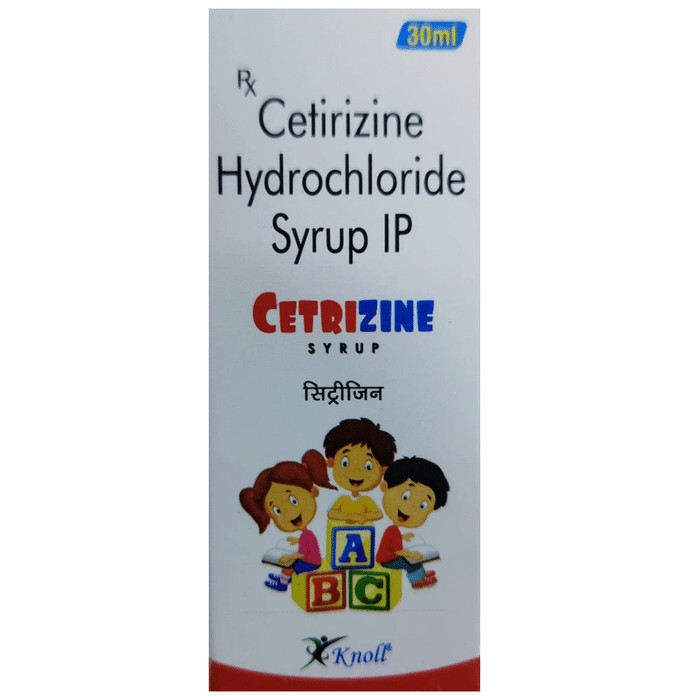
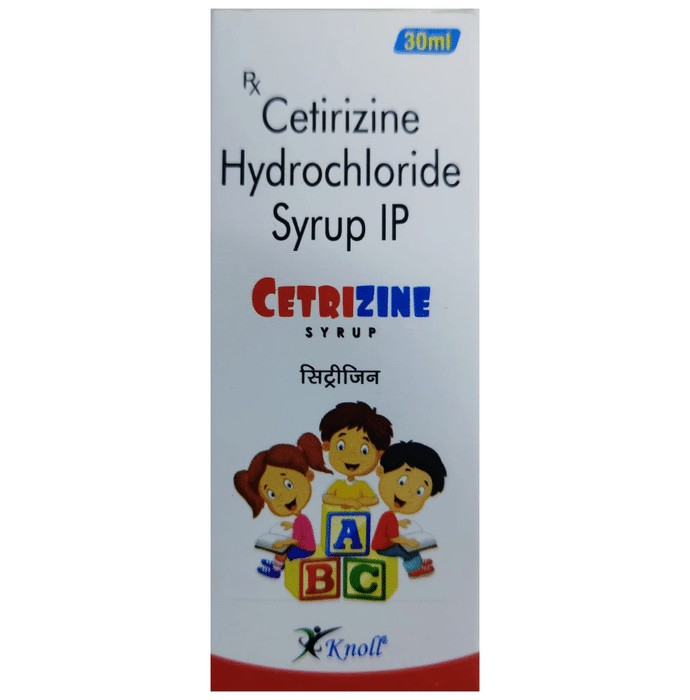
Cetrizine Syrup

Marketer
Knoll Pharmaceuticals Ltd
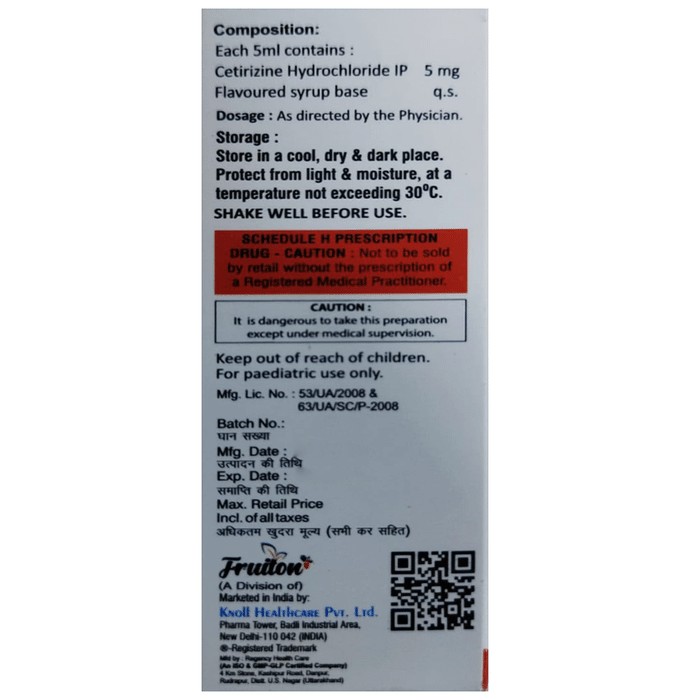
Salt Composition
Cetirizine (5mg)
Overview Cetrizine Syrup
Pediatric use of cetrizine syrup addresses allergic symptoms like eye watering, nasal discharge, sneezing, and itching stemming from conditions such as hay fever, hives, conjunctivitis, and the common cold. Administer this oral medication as directed by your child's physician, with or without food. It may be used alone or as part of a broader treatment plan. Relief from allergy symptoms is often seen after the initial doses. For severe allergies, a course of one to two weeks may be necessary. If vomiting occurs within 30 minutes, repeat the dose once your child feels well, unless the next dose is due. Minor side effects, such as nausea, vomiting, dry mouth, drowsiness, dizziness, sore throat, rhinorrhea, and headache are possible but typically resolve spontaneously. Persistent or troubling side effects warrant immediate medical attention. Always inform your child's doctor about existing medications, allergies (to drugs, foods, or other substances), pre-existing or past heart, liver, or kidney conditions, prematurity, bowel obstructions, malnutrition, weight issues, or thyroid problems. This comprehensive medical history ensures optimal treatment and care.
Primary Ingredients of Cetrizine Syrup
No text provided. Please provide the text you wish me to rephrase.
Uses of Cetrizine Syrup
Managing Allergic Reactions
Major Benefits of Cetrizine Syrup:
Follow your doctor's instructions precisely regarding dosage and treatment length for this medication. Always read the label carefully before administering. Use a measuring device for accurate dosing and take orally. Ensure thorough shaking before each use. Cetrizine Syrup can be consumed with or without food, however, consistent timing is recommended.
Common Side effects of Cetrizine Syrup:
- Fatigue
- Vomiting
- Sleepiness
- Nausea
- Muscle pain
- Edema (swelling)
- Headache
- Constipation
- Dryness in mouth
- Dizziness
- Sore throat
- Runny nose
How to use Cetrizine Syrup:
Follow your doctor's instructions precisely regarding dosage and treatment length for this medication. Always consult the product label for usage guidelines prior to administration. Use a measuring cup for accurate dosing and ingest orally. Ensure thorough shaking before each use. This Cetrizine Syrup can be consumed with or without food; however, consistent timing is recommended.
How Cetrizine Syrup works:
Cetirizine syrup is an antihistamine that counteracts histamine, a body-produced chemical released during allergic reactions. This medication reduces your child's allergic response, thereby alleviating symptoms and ultimately resolving the condition.
SAFETY ADVICE
 KidneyCAUTION
Patients with impaired kidney function should use cetrizine syrup cautiously, potentially requiring a modified dosage. Physician consultation is advised.
 LiverSAFE IF PRESCRIBED
Cetirizine syrup poses no safety concerns for individuals with liver impairment and typically requires no dosage modification. Nevertheless, dose alteration may be necessary in cases of severe hepatic dysfunction. Patients with severe liver disease should seek medical advice prior to administering cetirizine to children.
What if you forget to take Cetrizine Syrup :
Remain calm. Unless otherwise directed by your child's physician, give the missed dose immediately upon recollection. Omit the missed dose if the next dose is nearly due. Avoid doubling the dose to compensate; adhere precisely to the recommended medication schedule.
Facts to Know About Cetrizine Syrup
| Label | Value |
|---|---|
| Chemical Type | Piperazine-based benzyl derivative |
| Developing Habits | No. |
| Type of Therapy | Breathing |
 3,018 People bought this recently