


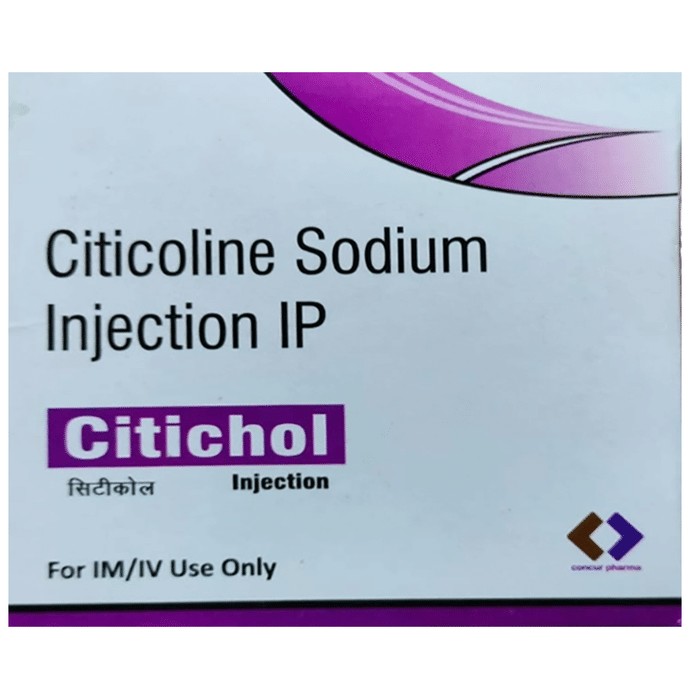
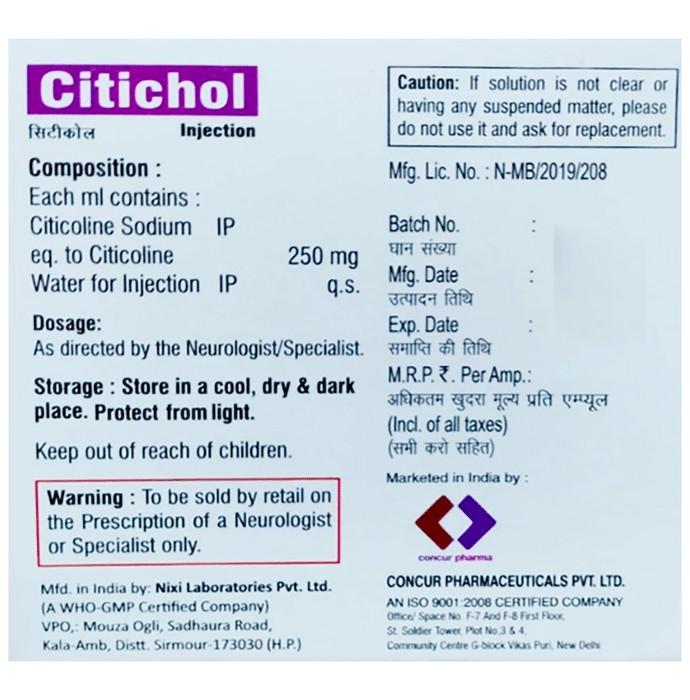
Citichol Injection

Marketer
Concur Pharmaceuticals Pvt.Ltd
Salt Composition
Citicoline (250mg/ml)
Overview Citichol Injection
Citisine injection is a therapeutic agent employed in managing stroke, traumatic brain injury, Alzheimer's disease, and cognitive decline associated with Parkinson's disease. Its mechanism involves safeguarding brain neurons from injury and facilitating their repair, consequently enhancing cognitive function and memory. Administration is strictly via injection under professional medical guidance; self-injection is contraindicated, reserved for situations precluding oral intake. Dosage and treatment duration should adhere to the physician's instructions. Missed doses should be taken upon recollection. Potential side effects include hypotension, abdominal discomfort, diarrhea, cardiac arrhythmia, skin rash, sleep disturbances, and altered or worsened paresthesia in affected limbs. Injection site reactions such as soreness, erythema, or edema may also occur, generally resolving spontaneously. Persistent or bothersome symptoms warrant medical consultation. Prior to treatment initiation, disclose any history of renal impairment or seizures (epilepsy). Dosage is individualized based on age and underlying condition. Comprehensive disclosure of all current medications is crucial before commencing treatment. Pregnant, intending to conceive, or breastfeeding individuals must inform their physician before using this medication.
Uses of Citichol Injection
Management of cerebrovascular accident | Management of traumatic brain injury | Alzheimer's disease intervention | Dementia management in Parkinson's disease
Major Benefits of Citichol Injection:
Administering this medication will be handled by your healthcare provider. Self-medication is strictly prohibited.
Common Side effects of Citichol Injection:
- Injection site reactions (pain, swelling, redness)
- Decreased blood pressure
- Arrhythmia (irregular heartbeats)
- Stomach pain
- Diarrhea
- Insomnia (difficulty in sleeping)
- Rash
- Peripheral neuropathy (tingling and numbness of feet and hand)
How to use Citichol Injection:
This medication will be administered by your healthcare provider. Self-medication is strongly discouraged.
How Citichol Injection works:
Citicoline injection safeguards neural tissue. Its mechanism involves nourishing nerve cells, shielding them from injury, and enhancing their viability through the synthesis of crucial neurochemicals such as phosphatidylcholine and acetylcholine. Additionally, it mitigates the accumulation of free fatty acids at sites of nerve injury.
SAFETY ADVICE
 AlcoholCONSULT YOUR DOCTOR
The interaction between alcohol and Citichol Injection is undefined regarding safety. Seek medical advice before combining them.
 PregnancyCONSULT YOUR DOCTOR
Data on the use of Citichol Injection in pregnant individuals is lacking. Physician consultation is recommended.
 Breast feedingCONSULT YOUR DOCTOR
Data on Citicholine injection use while breastfeeding is lacking. Seek medical advice from your physician.
 DrivingCONSULT YOUR DOCTOR
Citichol Injection's impact on driving ability is undetermined. Refrain from operating a vehicle if experiencing symptoms impairing concentration or reaction time.
 KidneyCAUTION
Patients with kidney impairment should receive Citichol Injection only with careful monitoring. A modified Citichol Injection dosage may be necessary. Physician consultation is advised.
 LiverCONSULT YOUR DOCTOR
Data on Citichol Injection's use in individuals with hepatic impairment is scarce. Physician consultation is advised.
What if you forget to take Citichol Injection :
NA
Facts to Know About Citichol Injection
| Label | Value |
|---|---|
| Chemical Type | Pyrimidine Nucleoside Diphosphate |
| Developing Habits | No. |
| Treatment Category | Neuroscience of the Central Nervous System |
| Actions | Cognitive enhancer |
 3,018 People bought this recently