


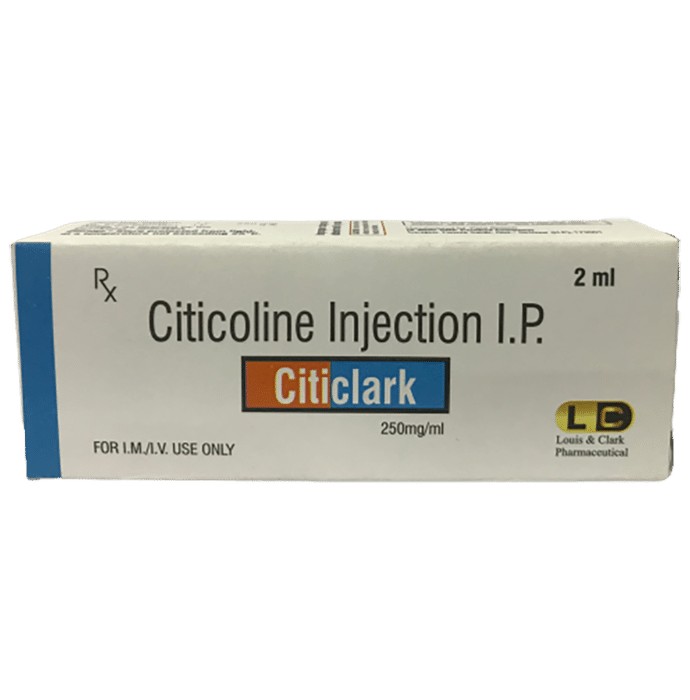
Citiclark Injection

Marketer
Louis and Clark Pharmaceutical
Salt Composition
Citicoline (250mg/ml)
Overview Citiclark Injection
NeuroClark injection treats stroke, head trauma, Alzheimer's disease, and Parkinson's-related dementia by safeguarding and repairing brain cells, thus enhancing cognitive function. Administered intravenously by a healthcare provider (not for self-injection), it's indicated when oral medication isn't feasible. Follow your doctor's prescribed dosage and regimen; if a dose is missed, take it immediately upon recall. Potential side effects include hypotension, gastrointestinal upset (pain, diarrhea), arrhythmia, skin rash, sleep disturbances, and worsening numbness in affected limbs. Injection site reactions (pain, redness, swelling) may also occur, but are generally transient. Report persistent or bothersome side effects to your physician. Prior to treatment, disclose any kidney issues, history of seizures, or current medications. Dosage is tailored to age and condition. Pregnant, breastfeeding, or planning pregnancy necessitates informing your doctor before commencing treatment.
Uses of Citiclark Injection
Managing stroke, head trauma, Alzheimer's disease, and Parkinson's-related dementia.
Major Benefits of Citiclark Injection:
Administering this medication will be handled by your physician or their associate; self-medication is strictly prohibited.
Common Side effects of Citiclark Injection:
- Injection site reactions (pain, swelling, redness)
- Decreased blood pressure
- Arrhythmia (irregular heartbeats)
- Stomach pain
- Diarrhea
- Insomnia (difficulty in sleeping)
- Rash
- Peripheral neuropathy (tingling and numbness of feet and hand)
How to use Citiclark Injection:
This medication will be administered by your healthcare provider. Self-medication is not permitted.
How Citiclark Injection works:
Citiclark Injection safeguards nerve tissue, promoting nerve cell health and survival. This is achieved through the generation of key neurochemicals, such as phosphatidylcholine and acetylcholine, which also mitigate the accumulation of free fatty acids at injury sites.
SAFETY ADVICE
 AlcoholCONSULT YOUR DOCTOR
Alcohol consumption alongside Citiclark Injection may pose unknown risks. Seek medical advice before combining them.
 PregnancyCONSULT YOUR DOCTOR
Data on the use of Citiclark Injection in pregnant individuals is lacking. Seek medical advice from your physician.
 Breast feedingCONSULT YOUR DOCTOR
Data on Citiclark Injection's compatibility with breastfeeding is absent. Seek medical advice from your physician.
 DrivingCONSULT YOUR DOCTOR
Citiclark Injection's impact on driving ability is undetermined. Refrain from driving if experiencing symptoms impairing concentration or reaction time.
 KidneyCAUTION
The use of Citiclark Injection requires careful consideration in individuals with impaired kidney function. Dosage modification for Citiclark Injection might be necessary. Physician consultation is advised.
 LiverCONSULT YOUR DOCTOR
Insufficient data exists regarding the administration of Citiclark Injection to individuals with hepatic impairment. Physician consultation is advised.
What if you forget to take Citiclark Injection :
NA
Facts to Know About Citiclark Injection
| Label | Value |
|---|---|
| Chemical Type | Pyrimidine Nucleoside Diphosphate |
| Developing Habits | No. |
| Type of Therapy | Neuroscience of the Central Nervous System |
| Behavioral Class | Cognitive enhancer |
 3,018 People bought this recently