


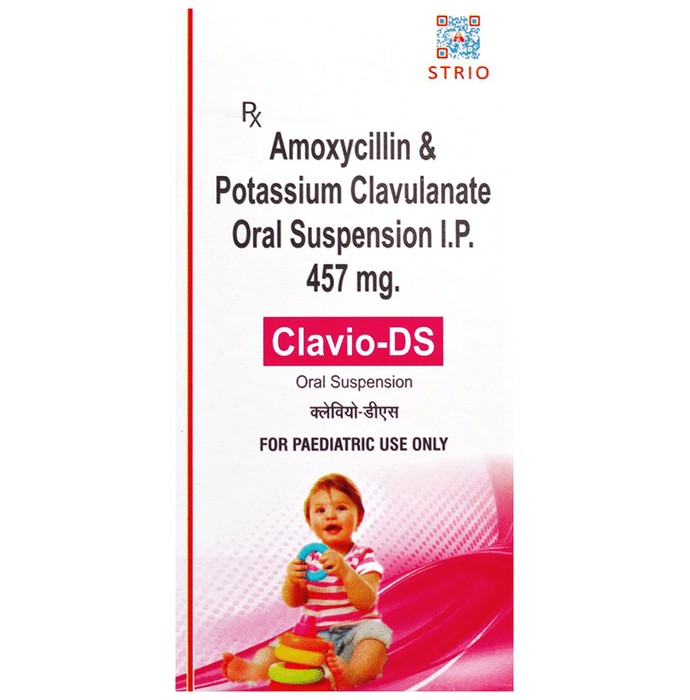
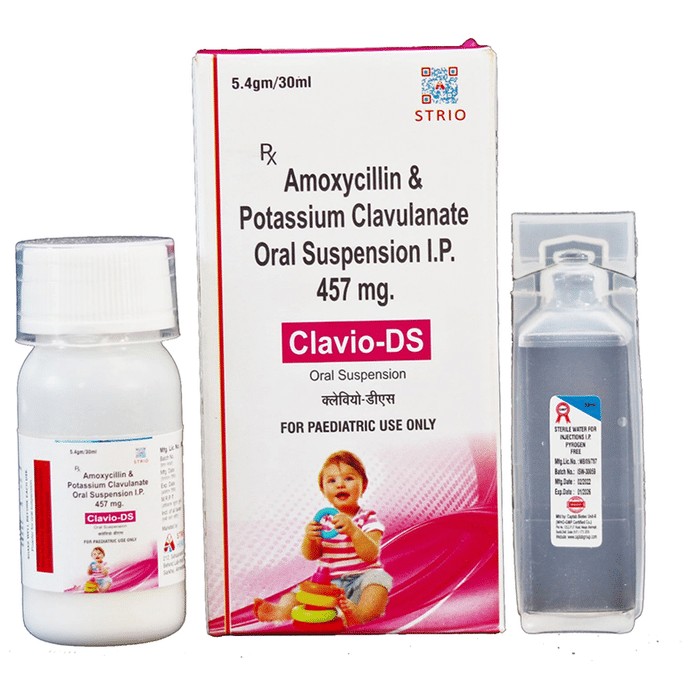
Clavio-DS Oral Suspension

Marketer
Strio Healthcare
Salt Composition
Amoxycillin (400mg/5ml) + Clavulanic Acid (57mg/5ml)
Overview Clavio-DS Oral Suspension
Pedio-RX oral suspension is a broad-spectrum antibiotic effective against various bacterial infections affecting the ears, nose, throat, respiratory system, teeth, skin, and urinary tract. Its efficacy extends to bacteria resistant to other treatments, including multi-drug resistant tuberculosis. Administer Pedio-RX to your child with or without food; however, co-administration with food improves absorption and reduces potential stomach discomfort. The prescribed dosage, typically two to three times daily, is determined by the infection's severity, type, and your child's weight and age. Strictly adhere to the prescribed dosage regimen. If vomiting occurs within 30 minutes of administration, allow your child to settle before re-administering the dose. Avoid doubling the dose if it's near the next scheduled time. Potential side effects include nausea, vomiting, diarrhea, abdominal pain, and allergic reactions. Most side effects are transient; however, persistent or concerning symptoms warrant immediate consultation with your pediatrician. Provide your child's complete medical history to the doctor, including any prior allergies, cardiac issues, hematological disorders, congenital defects, respiratory problems, gastrointestinal conditions, dermatological issues, hepatic or renal dysfunction. This comprehensive information is crucial for accurate dosage adjustment and optimal treatment planning.
Uses of Clavio-DS Oral Suspension
Combating Multi-Drug Resistant Tuberculosis | Bacterial Infection Therapy
Major Benefits of Clavio-DS Oral Suspension:
Administer this medication precisely as your physician directs, adhering to both the prescribed dosage and treatment length. Always consult the product label for complete instructions prior to ingestion. Use a measuring device to accurately dispense the oral suspension and consume it. Ensure thorough shaking before each use. Clavio-DS Oral Suspension should be taken with a meal.
Common Side effects of Clavio-DS Oral Suspension:
- Abdominal pain
- Allergy
- Vomiting
- Nausea
- Diarrhea
- Mucocutaneous candidiasis
How to use Clavio-DS Oral Suspension:
Follow your doctor's instructions precisely regarding dosage and treatment length for this medication. Always refer to the product label for administration guidelines prior to use. Administer the oral suspension using a measuring device and swallow. Ensure the suspension is thoroughly shaken before each dose. Clavio-DS Oral Suspension should be taken with food.
How Clavio-DS Oral Suspension works:
Clavio-DS Oral Suspension, an antibiotic medication, contains amoxycillin and clavulanic acid. Amoxycillin's mechanism of action disrupts bacterial cell wall synthesis, a crucial process for bacterial viability. Conversely, clavulanic acid neutralizes beta-lactamase, an enzyme produced by antibiotic-resistant bacteria, thus enhancing amoxycillin's effectiveness. This synergistic combination effectively combats a wide range of infections.
SAFETY ADVICE
 KidneyCAUTION
Patients with kidney impairment should use Clavio-DS Oral Suspension judiciously. Dosage modification of Clavio-DS Oral Suspension might be necessary. Physician consultation is advised.
 LiverCAUTION
Exercise caution when administering Clavio-DS Oral Suspension to individuals with hepatic impairment. Dosage modification of Clavio-DS Oral Suspension might be necessary. Physician consultation is recommended. For children with severe liver disease, seek medical advice from a pediatrician before administering Clavio-DS Oral Suspension.
What if you forget to take Clavio-DS Oral Suspension :
Remember to administer the omitted dose immediately upon recollection, unless your physician instructs differently. However, if the next scheduled dose is imminent, forgo the missed one. Avoid doubling the dose to compensate; instead, adhere to the recommended dosage regimen.
Facts to Know About Clavio-DS Oral Suspension
| Label | Value |
|---|---|
| Developing Habits | No. |
| Type of Therapy | Antimicrobial Agents |
 3,018 People bought this recently