



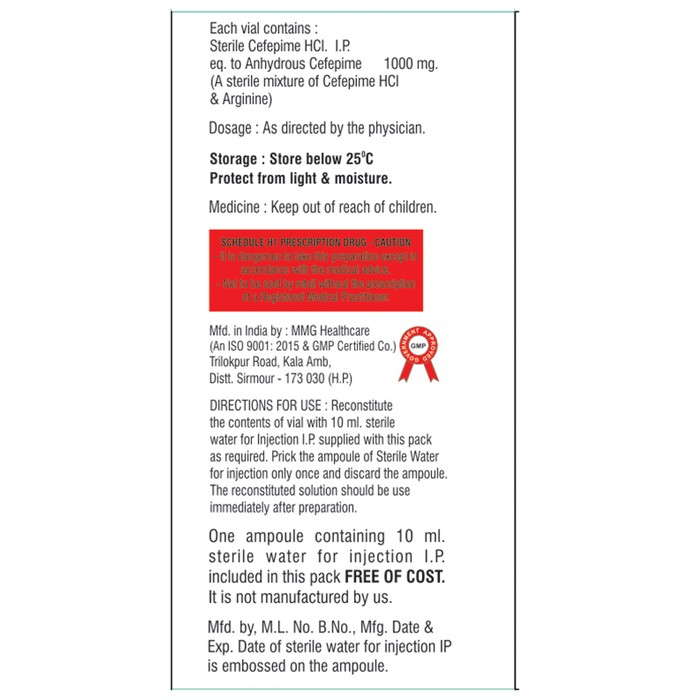
Clopime 1000 Injection

Marketer
Clock Remedies Pharma Pvt Ltd
Salt Composition
Cefepime (1000mg)
Overview Clopime 1000 Injection
Clopime 1000 Injection combats bacterial infections with potent antibiotic action. It's indicated for severe bacterial infections affecting the skin, respiratory system, gastrointestinal tract, urinary system, and bloodstream. Its mechanism involves bacterial destruction. Importantly, it's ineffective against viral infections. Primarily administered intravenously (IV) in hospitals to critically ill patients, either by infusion or direct injection, dosage is tailored to infection severity, location, and type under strict medical supervision. Complete the prescribed course, even with symptom improvement; premature cessation risks infection relapse or exacerbation. Potential side effects include skin rash, itching, nausea, vomiting, headache, fever, diarrhea, and localized injection site reactions (redness, swelling). These are often transient and resolve with continued treatment. Report persistent or bothersome side effects to your physician. Prior to commencing treatment, disclose any pre-existing kidney or liver conditions, or antibiotic allergies. Regular blood tests to monitor kidney function may be recommended. Generally considered safe for pregnant and breastfeeding individuals under medical guidance.
Primary Ingredients of Clopime 1000 Injection
No text was provided. Please provide the text you wish me to rephrase.
Uses of Clopime 1000 Injection
Managing life-threatening bacterial infections
Major Benefits of Clopime 1000 Injection:
This medication will be administered by your healthcare provider; self-medication is strictly prohibited.
Common Side effects of Clopime 1000 Injection:
- Injection site reactions (pain, swelling, redness)
- Diarrhea
- Increased white blood cell count (eosinophils)
- Injection site phlebitis
- Skin rash
- Increased liver enzymes
- Positive Coombs test
- Increased prothrombin time
- Decreased phosphate level in blood
- Increased partial thromboplastin time (PTT)
How to use Clopime 1000 Injection:
This medication will be administered by your healthcare provider; self-medication is strictly prohibited.
How Clopime 1000 Injection works:
Clopime 1000 Injection is a bactericidal antibiotic that works by disrupting bacterial cell wall synthesis, a process essential for bacterial viability.
SAFETY ADVICE
 AlcoholSAFE
Clopime 1000 Injection may be used concurrently with alcohol without adverse reactions.
 PregnancySAFE IF PRESCRIBED
Administration of Clopime 1000 Injection is typically deemed safe for pregnant individuals. Preclinical trials using animal models revealed minimal or no negative consequences for fetal development; nevertheless, research involving human subjects is currently insufficient.
 Breast feedingSAFE IF PRESCRIBED
Clopime 1000 Injection is considered safe for breastfeeding mothers. Research in humans indicates minimal drug transfer to breast milk, posing no known risk to infants. However, extended Clopime 1000 Injection use should be avoided due to potential side effects including skin rashes and diarrhea.
 DrivingCONSULT YOUR DOCTOR
Clopime 1000 Injection's effect on driving ability is undetermined. Refrain from driving if experiencing symptoms impairing concentration or reaction time.
 KidneyCAUTION
Caution is advised when administering Clopime 1000 Injection to individuals with impaired renal function. Dosage modification for Clopime 1000 Injection might be necessary. Physician consultation is recommended.
 LiverSAFE IF PRESCRIBED
The use of Clopime 1000 Injection in individuals with hepatic impairment is likely safe. Existing evidence indicates that dose modification for Clopime 1000 Injection might be unnecessary in such cases. However, physician consultation is advised.
What if you forget to take Clopime 1000 Injection :
Omit a Clopime 1000 Injection dose? Seek medical advice immediately.
Facts to Know About Clopime 1000 Injection
| Label | Value |
|---|---|
| Chemical Type | Cephalosporins (third and fourth generation) |
| Developing Habits | No. |
| Type of Therapy | Antimicrobials |
| Actions | Fourth-Generation Cephalosporins |
 3,018 People bought this recently