


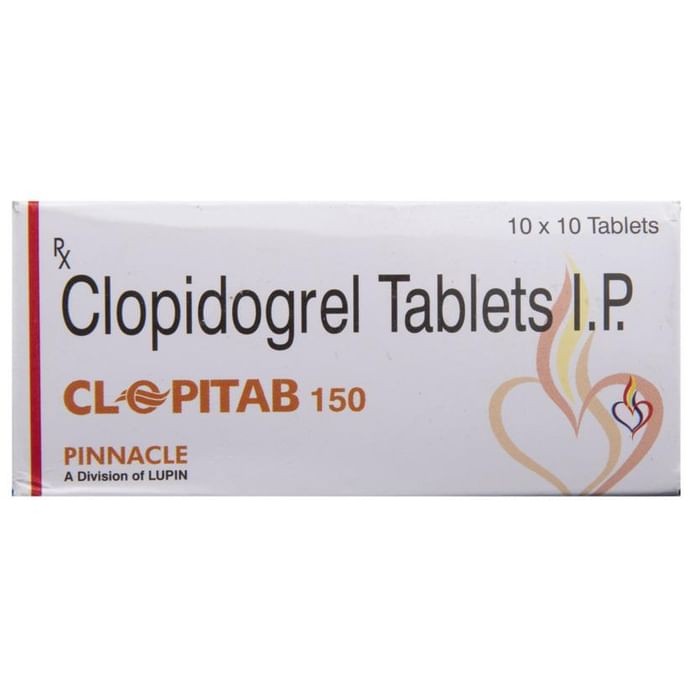
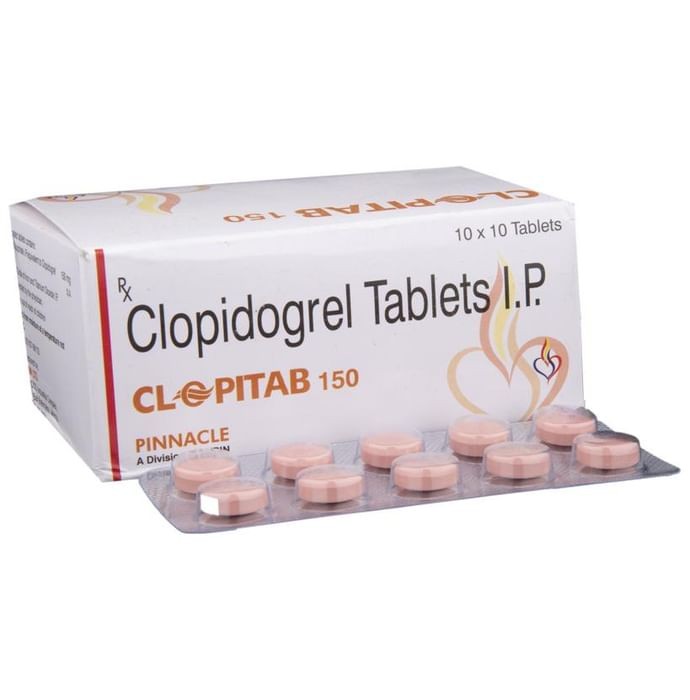
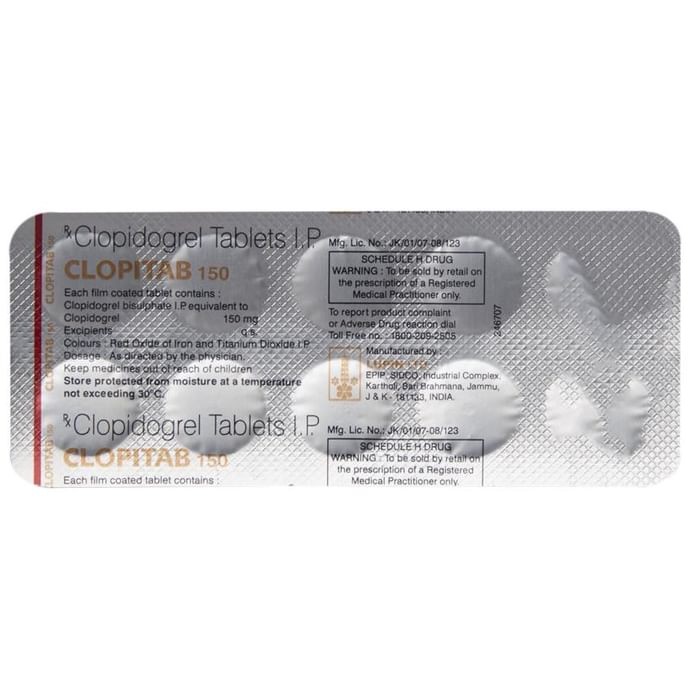

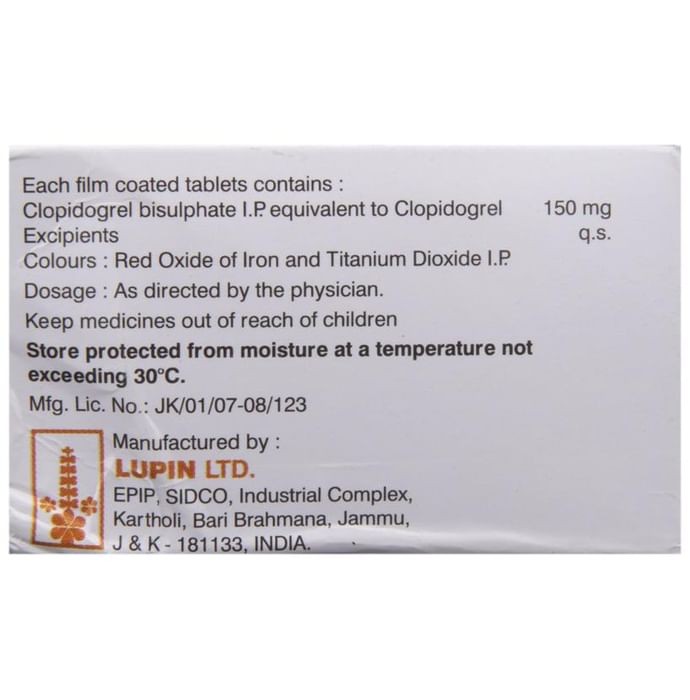

Clopitab 150 Tablet

Marketer
Lupin Ltd
Salt Composition
Clopidogrel (150mg)
Overview Clopitab 150 Tablet
CardioGuard 150mg tablets function as an antithrombotic agent, preventing the formation of potentially dangerous blood clots within your circulatory system. This reduces your risk of experiencing a stroke or heart attack, making it a common medication for cardiovascular protection. CardioGuard 150mg is prescribed to individuals at elevated risk of heart complications, including those with peripheral artery disease (circulatory issues from narrowed vessels), recent stroke or myocardial infarction, arrhythmias, and post-stenting patients. It's also used adjunctively with other medications to treat heart attacks and unstable angina. This medication can be taken with or without food, but should be ingested at the same time daily for optimal effect. Continued use is crucial; discontinuation increases stroke and heart attack risk. The most frequent adverse effect is bleeding, manifesting as bruising, epistaxis, hematuria, melena (dark stools), or heavier menstrual bleeding. Wound healing may be prolonged. While usually mild and self-limiting, persistent or concerning bleeding necessitates immediate medical attention. This medication is contraindicated in individuals with active internal bleeding (e.g., stomach ulcers, intracranial hemorrhage). Prior to commencing treatment, inform your physician of any history of bleeding disorders or recent major injury/surgery. Temporary discontinuation may be necessary before scheduled surgeries or dental procedures.
Uses of Clopitab 150 Tablet
Averting cardiovascular events such as heart attack and stroke
Major Benefits of Clopitab 150 Tablet:
Administer this medication precisely as your physician directs, adhering to both the prescribed dosage and duration. Ingest the tablet whole; avoid chewing, crushing, or fracturing it. Clopitab 150 Tablets can be consumed with or without food, though consistent timing is recommended.
Common Side effects of Clopitab 150 Tablet:
- Abdominal pain
- Bruise
- Diarrhea
- Hematoma
- Nosebleeds
- Gastrointestinal bleeding
- Dyspepsia
How to use Clopitab 150 Tablet:
Administer this medication according to your physician's prescribed dosage and schedule. Ingest the tablet whole; avoid chewing, crushing, or fracturing it. Clopitab 150mg tablets can be consumed with or without food, though consistent timing is recommended.
How Clopitab 150 Tablet works:
Plavix 150mg tablets inhibit platelet aggregation, reducing the risk of dangerous blood clots and subsequently lowering the likelihood of cardiovascular events such as stroke or myocardial infarction.
SAFETY ADVICE
 AlcoholCAUTION
Use caution when combining Clopitab 150 Tablet and alcohol. Seek medical advice before doing so.
 PregnancyCONSULT YOUR DOCTOR
Use of Clopitab 150 Tablet during pregnancy may pose risks. While human data is scarce, animal studies indicate potential harm to a developing fetus. A physician will assess the potential benefits against any risks prior to prescribing. Seek medical advice before taking this medication.
 Breast feedingSAFE IF PRESCRIBED
Breastfeeding mothers can likely use Clopitab 150 Tablet without significant risk to their infants. Available human data indicates minimal danger to the baby.
 DrivingSAFE
Driving ability is typically unaffected by Clopitab 150 Tablet.
 KidneySAFE IF PRESCRIBED
Clopitab 150 mg tablets are suitable for patients with renal impairment. No dosage modification is necessary for Clopitab 150 mg tablets in this patient population.
 LiverSAFE IF PRESCRIBED
Clopitab 150mg tablets can be administered to patients with hepatic impairment without modification to the prescribed dosage.
What if you forget to take Clopitab 150 Tablet :
Should you forget to take your Clopitab 150 Tablet, administer it immediately. If, however, your next scheduled dose is imminent, omit the missed dose and resume your usual dosing regimen. Never take a double dose.
Facts to Know About Clopitab 150 Tablet
| Label | Value |
|---|---|
| Chemical Type | Amino acid alkyl esters |
| Developing Habits | No. |
| Treatment Category | KINSHIP |
| Action Class | ADP receptor antagonists (P2Y12 inhibitors) |
 3,018 People bought this recently