


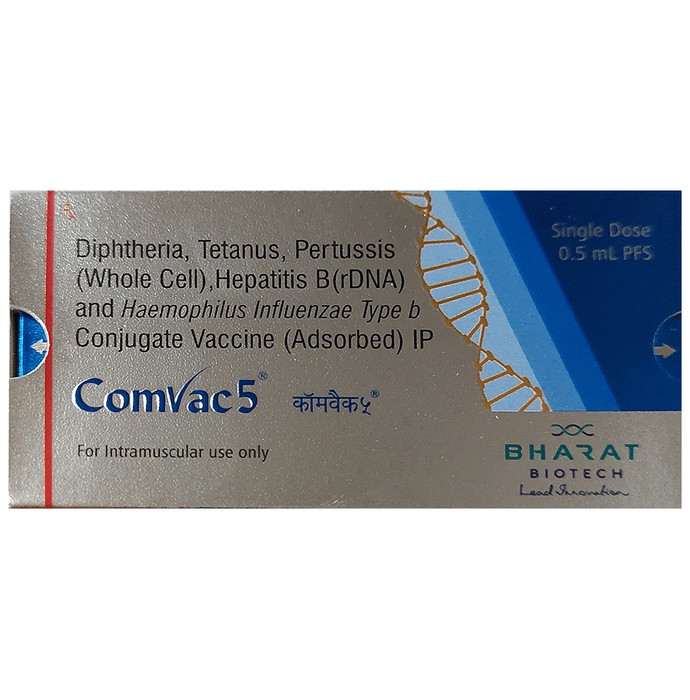
Comvac 5 Vaccine

Marketer
Bharat Biotech
Salt Composition
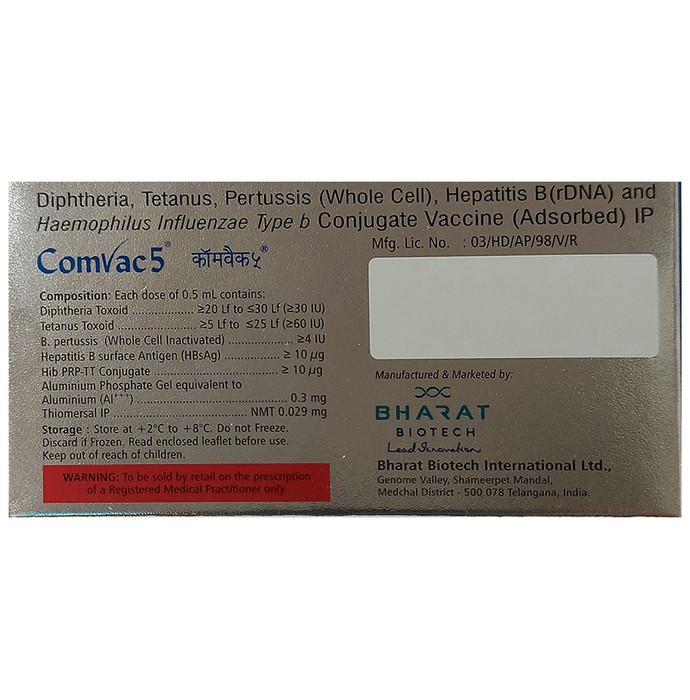
Diphtheria Toxoid (30IU) + Tetanus Toxoid (60IU) + Pertussis Toxoid (4IU) + Hepatitis B Vaccine (rDNA) (10mcg) + Haemophilus Type B Conjugate Vaccine (10mcg)
Overview Comvac 5 Vaccine
Pentavalent Comvac 5 protects infants and young children against five serious illnesses: diphtheria, Haemophilus influenzae type b, hepatitis B, pertussis, and tetanus. This single injection vaccine stimulates antibody production, providing active immunity. Administration is exclusively by a pediatrician, intramuscularly; infants receive the injection in the thigh, older children in the arm. The three-dose regimen involves injections spaced four weeks apart, ideally before six months of age (typically at six, ten, and fourteen weeks). If the first dose is delayed past one year, immediate vaccination is recommended, with scheduling guidance from your child's physician. Minor, self-limiting side effects may include fever, reduced appetite, injection site discomfort (pain, swelling, redness), and rash. Serious concerns warrant immediate medical attention. Pre-vaccination consultation with your pediatrician is crucial if your child has pre-existing conditions such as liver or kidney disease, blood disorders, congenital defects, cardiac or pulmonary issues, limb pain/swelling, Guillain-Barré syndrome, or a history of severe allergic reactions or neurological problems (seizures, coma). This information aids your doctor in creating a safe and effective vaccination plan.
Primary Ingredients of Comvac 5 Vaccine
The information is unavailable.
Uses of Comvac 5 Vaccine
Protecting against tetanus, pertussis, diphtheria, hepatitis B, and Haemophilus influenzae type b.
Major Benefits of Comvac 5 Vaccine:
Administering this medication will be handled by your healthcare provider. Self-medication is strictly discouraged.
Common Side effects of Comvac 5 Vaccine:
- Irritation
- Loss of appetite
- Injection site reactions (pain, swelling, redness)
- Skin rash
- Fever
How to use Comvac 5 Vaccine:
Administering this medication will be done by your healthcare provider. Self-medication is strictly prohibited.
How Comvac 5 Vaccine works:
The pentavalent Comvac 5 immunization triggers antibody production, providing protection against several diseases. It achieves this by inducing a weakened, non-pathogenic response within the body, prompting the immune system to generate protective antibodies.
SAFETY ADVICE
 AlcoholCONSULT YOUR DOCTOR
Alcohol consumption alongside Comvac 5 Vaccine lacks established safety data. Physician consultation is advised.
 PregnancyCONSULT YOUR DOCTOR
Data on Comvac 5 Vaccine administration in pregnant individuals is currently lacking. Seek medical advice from your physician.
 Breast feedingCONSULT YOUR DOCTOR
Data on Comvac 5 Vaccine use while breastfeeding is currently lacking. Seek medical advice from your physician.
 DrivingCONSULT YOUR DOCTOR
Comvac 5 Vaccine's impact on driving ability is undetermined. Refrain from driving if experiencing symptoms impairing concentration or reaction time.
 KidneySAFE IF PRESCRIBED
Comvac 5 Vaccine presents no safety concerns for individuals with kidney disease and requires no dosage modification.
 LiverSAFE IF PRESCRIBED
Comvac 5 Vaccine poses no safety concerns for individuals with hepatic impairment. No alteration of the Comvac 5 Vaccine dosage is necessary.
What if you forget to take Comvac 5 Vaccine :
Remain calm. If your child misses a Comvac 5 vaccination, contact their physician immediately to reschedule the dose.
Facts to Know About Comvac 5 Vaccine
| Label | Value |
|---|---|
| Potential for Dependence | None. |
| Type of Treatment | Immunizations |
 3,018 People bought this recently