


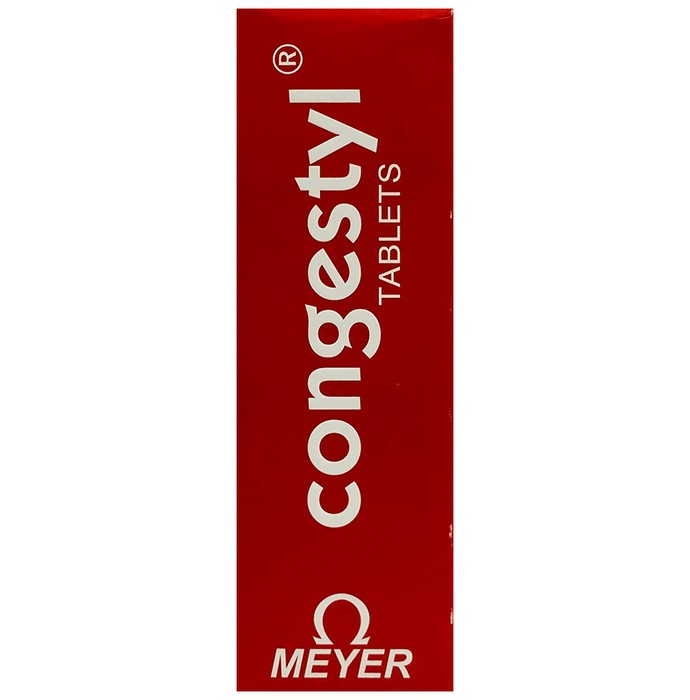

Congestyl Tablet

Marketer
Meyer Organics Pvt Ltd
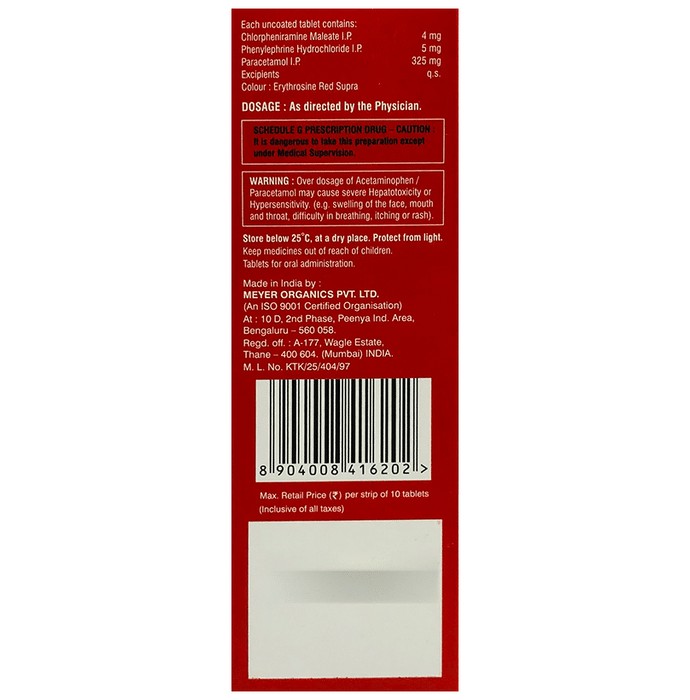
Salt Composition
Chlorpheniramine Maleate (4mg) + Paracetamol (500mg) + Phenylephrine (5mg)
Overview Congestyl Tablet
Cold symptoms find relief with Congestyl Tablets, a medication easing headache, sore throat, nasal congestion, muscle aches, and fever. Congestyl may be taken with or without food; dosage and treatment length depend on symptom severity. Continue the prescribed course even with improvement, ceasing only under your physician's guidance. Common side effects, including nausea, vomiting, drowsiness, dizziness, and headache, may occur. Persistent or worsening side effects warrant medical attention; your doctor can offer management strategies. Minimize dosage while effectively managing symptoms. Inform your doctor of pre-existing medical conditions, all other medications, and any liver or kidney issues before starting Congestyl. Alcohol consumption should be avoided during treatment due to potential side effect exacerbation. Pregnant or breastfeeding individuals require prior medical consultation before use.
Primary Ingredients of Congestyl Tablet
No text provided. Please provide the text you wish me to rephrase.
Uses of Congestyl Tablet
Managing the common cold
Major Benefits of Congestyl Tablet:
Administer this medication precisely as your physician directs, adhering to both the prescribed dosage and treatment period. Ingest the tablet whole; avoid chewing, crushing, or fracturing it. Congestyl Tablets can be consumed with or without food; however, consistent daily timing is recommended.
Common Side effects of Congestyl Tablet:
- Nausea
- Headache
- Insomnia (difficulty in sleeping)
- Dizziness
- Tachycardia
- Palpitations
- Fear
- Anxiety
- Restlessness
- Tremors
- Weakness
- Discomfort when urinating
- Hallucination
- Convulsion
How to use Congestyl Tablet:
Administer this medication precisely as directed by your physician, adhering to both the prescribed dosage and treatment period. The tablet should be swallowed whole; avoid chewing, crushing, or fracturing it. Congestyl Tablets can be ingested with or without food, although consistent timing is recommended for optimal results.
How Congestyl Tablet works:
Tri-Med Congestyl tablets contain a three-part medicinal formulation.
SAFETY ADVICE
 AlcoholUNSAFE
Concurrent alcohol use with Congestyl Tablets is contraindicated.
 PregnancyCONSULT YOUR DOCTOR
The use of Congestyl Tablet during pregnancy may pose risks. While human research is scarce, animal studies indicate potential harm to the fetus. A physician will assess the potential benefits against any risks prior to prescribing. Physician consultation is advised.
 Breast feedingSAFE IF PRESCRIBED
Use of Congestyl tablets while breastfeeding is likely safe. Available human data indicates minimal risk to the infant.
 DrivingUNSAFE
Taking Congestyl Tablets may cause drowsiness, blurred vision, and dizziness, reducing alertness. Driving should be avoided if these effects are experienced.
 KidneySAFE IF PRESCRIBED
The use of Congestyl Tablets in patients with kidney disease appears to be generally safe. Preliminary findings indicate dose modification may not be necessary; however, medical advice is recommended. Patients with end-stage renal disease may experience significant drowsiness as a side effect of Congestyl Tablet use.
 LiverCAUTION
Patients with liver impairment should use Congestyl tablets cautiously; dosage modification may be necessary. Physician consultation is advised.
What if you forget to take Congestyl Tablet :
Should you forget a Congestyl Tablet dose, ingest it promptly. Nevertheless, if your next scheduled dose is imminent, omit the missed one and resume your usual dosing regimen. Avoid taking a double dose.
Facts to Know About Congestyl Tablet
| Label | Value |
|---|---|
| Developing Habits | No. |
| Treatment Category | Breathing |
 3,018 People bought this recently