Search Icon

AUM Pharmacy

Hi there!

Hello, Login
All Categories
VisaVisaVisa
slide-0
slide-1
slide-2

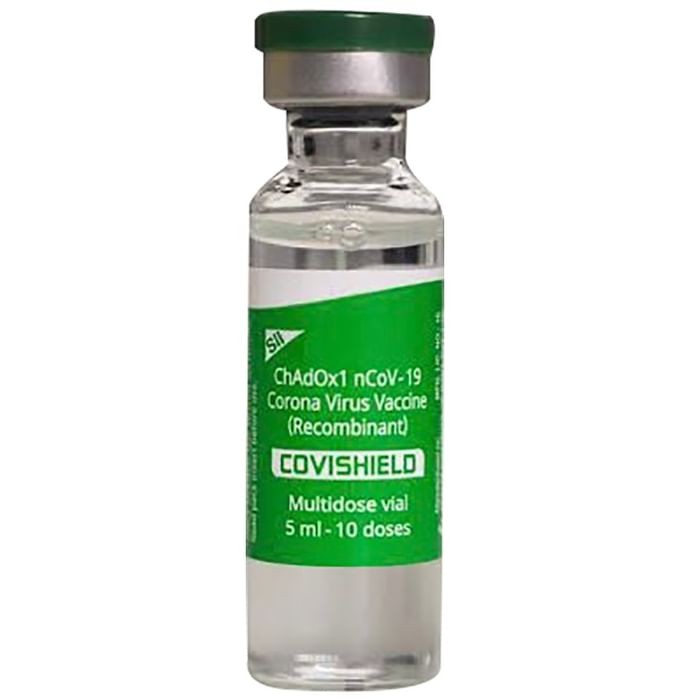
Covishield Vaccine

Prescription Icon
Prescription Required

Marketer

Serum Institute Of India Ltd

Salt Composition

ChAdOx1 nCoV-19 Corona Virus Vaccine (Recombinant) (NA)

Overview Covishield Vaccine

The Serum Institute of India (SII) produces Covishield, an AstraZeneca and Oxford University-developed vaccine, approved in India for COVID-19 prevention in adults (18+). COVID-19, a highly contagious illness caused by SARS-CoV-2, necessitates vaccination. Covishield's efficacy was established through clinical trials in South Africa, Brazil, and the UK, with bridging studies in India, leading to DCGI approval. Administered intramuscularly in the upper arm, the two-dose regimen requires a 4-6 week interval; a single dose provides inadequate protection. Common, generally mild and short-lived (2-3 days) side effects include injection site reactions (pain, swelling, redness), headache, nausea, vomiting, muscle/joint pain, fatigue, malaise, fever, chills, and flu-like symptoms. Paracetamol may alleviate symptoms; persistent or worsening effects warrant medical attention. Prior to vaccination, disclose any pre-existing conditions (allergies, fevers, bleeding disorders), medications (especially blood thinners or immunosuppressants), to your physician. Due to a lack of trial data, Covishield is currently not recommended for children, pregnant or breastfeeding individuals, or those already vaccinated against COVID-19.

Uses of Covishield Vaccine

Averting Coronavirus Disease 2019 (COVID-19)

Major Benefits of Covishield Vaccine:

Your healthcare provider will instruct you on the proper administration of this medication.

Common Side effects of Covishield Vaccine:

  • Injection site reactions (pain, swelling, redness)
  • Headache
  • Nausea
  • Vomiting
  • Muscle pain
  • Joint pain
  • Feeling of discomfort
  • Fever
  • Chills
  • Flu-like symptoms
  • Fatigue

How to use Covishield Vaccine:

Your healthcare provider will instruct you on the proper administration of this medication.

How Covishield Vaccine works:

The Covishield vaccine utilizes a modified chimpanzee adenovirus, incapable of replication, to introduce coronavirus proteins into the body. This engineered virus, harmless in itself, triggers an immune response. This active immunization process prepares the body to combat COVID-19, significantly lowering the likelihood of infection and its associated complications.

SAFETY ADVICE

AlcoholAlcoholCONSULT YOUR DOCTOR

Alcohol consumption alongside the Covishield vaccine lacks established safety data. Seek medical advice. Current expert opinion indicates no proof that alcohol reduces vaccine efficacy.

PregnancyPregnancySAFE IF PRESCRIBED

The use of the Covishield vaccine in pregnancy is considered safe. The majority of research indicates minimal to no adverse effects on the fetus.

Breast feedingBreast feedingSAFE IF PRESCRIBED

The Covishield vaccine presents no known breastfeeding contraindications. Research in humans indicates negligible transfer of the vaccine component into breast milk, posing no identified risk to infants.

DrivingDrivingSAFE

The Covishield vaccine typically does not impair driving ability. Its impact on operating vehicles or machinery is minimal to nonexistent. Nevertheless, certain side effects might transiently affect these capabilities.

KidneyKidneyCONSULT YOUR DOCTOR

Data regarding Covishield vaccination in individuals with renal impairment is scarce. Seek medical advice from your physician.

LiverLiverCONSULT YOUR DOCTOR

Data regarding Covishield vaccination in individuals with hepatic impairment is scarce. Physician consultation is advised.

What if you forget to take Covishield Vaccine :

Should you forget a scheduled Covishield vaccination, seek medical advice.

Facts to Know About Covishield Vaccine

LabelValue
Chemical Category Immunizations
Developing Habits No.
Treatment Category Immunizations

FAQs on Covishield Vaccine

Covishield vaccine trials in children are ongoing, and insufficient evidence exists to recommend its use in this age group. This is due to higher morbidity and mortality rates in older populations, especially those over 50. Neither Covishield nor Covaxin have undergone sufficient pediatric safety and efficacy studies. Consequently, COVID-19 vaccination is not advised for children until more data becomes available.
India's COVID-19 vaccination prioritizes frontline workers, as per government guidelines. Their family members will receive vaccines based on the government's age-based prioritization schedule.
Yes. COVID-19 vaccination is recommended for those with prior infection, unless a healthcare provider advises against it. Vaccination provides immune system reinforcement, even after previous infection. Reinfection is possible, further emphasizing the vaccine's importance.
Following Indian Drug Controller General approval, the second Covishield dose should be given 4 to 12 weeks after the first.
Yes. Current vaccines offer considerable protection against emerging COVID-19 variants. They stimulate the production of multiple antibodies, effectively neutralizing the virus. Available data suggests these mutations are unlikely to render the vaccines ineffective, providing continued protection against COVID-19.
No direct comparison exists between Covishield and Covaxin in India, precluding a definitive assessment of which is superior. Both vaccines effectively prevent COVID-19 infection, especially in older individuals and those with comorbidities like diabetes or hypertension.
Full immunity from Covishield or Covaxin typically develops two to three weeks after receiving the second dose.
Covishield vaccination may cause mild side effects including injection site pain, headache, tiredness, muscle aches, general discomfort, fever, chills, joint pain, and nausea. Rarely, demyelinating disorders have been reported after vaccination, though a causal link hasn't been confirmed.
Covishield is contraindicated for individuals with a history of anaphylaxis or allergic reactions to any prior vaccine dose, injectable therapy, or other substance (e.g., food). Pregnant or breastfeeding women, and those unsure of their pregnancy status, should not receive the COVID-19 vaccine currently, as they weren't included in clinical trials. Consult your physician if you have any concerns.
Yes, the Covishield vaccine is safe and effective for adults with health conditions like hypertension, diabetes, kidney disease, heart disease, or high cholesterol. Those with such conditions benefit most from vaccination. If you have any concerns, consult your physician.
Covishield vaccine requires storage and transport between 2°C and 8°C. India's cold chain, comprising roughly 29,000 points using active and passive equipment, ensures this temperature is maintained.
Register and schedule appointments conveniently via the Co-WIN portal. Registration requires basic personal information and photo ID details. A single mobile number can register up to four individuals, each needing their own photo ID.
Yes, vaccination is possible without prior online registration. Consult a local government healthcare worker for the nearest COVID-19 Vaccination Centre (CVC), its operating days, and vaccination availability. Bring your mobile phone and photo ID; on-site registration, appointment scheduling, and vaccination are all facilitated at the CVC.
The Covishield vaccine received emergency use authorization following successful completion of clinical trials.
Indian regulatory bodies grant Emergency Use Authorization (EUA) for certain vaccines, medicines, or diagnostic devices to combat serious public health threats like COVID-19. This aligns with international guidelines and permits restricted use, even without full regulatory approval, when the potential benefits outweigh the risks. Ongoing laboratory assessments and clinical trials continuously monitor safety, efficacy, and quality.
India's Drug Controller General of India (DCGI) has granted emergency use authorization to five COVID-19 vaccines: Covishield (AstraZeneca, manufactured by Serum Institute of India), Covaxin (Bharat Biotech), Sputnik V (Russia's vaccine, manufactured in India by Dr. Reddy's Laboratories), Moderna (imported by Cipla), and Johnson & Johnson's single-dose vaccine.
COVID-19, or coronavirus disease 2019, is a new lung illness caused by the SARS-CoV-2 virus. Highly contagious, it spreads rapidly between individuals. Common symptoms include fever, cough, and shortness of breath.
Covishield vaccine trials in children are ongoing, and insufficient data exists to recommend its use in this age group. This is because older populations, especially those over 50, experience higher morbidity and mortality rates from COVID-19. Neither Covishield nor Covaxin have undergone sufficient pediatric safety and efficacy studies. Consequently, COVID-19 vaccination is not advised for children until adequate data becomes available.
Following Indian government guidelines, COVID-19 frontline workers receive priority vaccination. Their families, however, will be vaccinated based on the government's age-based prioritization schedule.
Yes. COVID-19 vaccination is recommended for those with prior infection, unless a healthcare provider advises against it. Vaccination provides an immune boost, even after prior infection, as re-infection is possible.
India's Drug Controller General approved extending the interval between Covishield vaccine doses to 12-16 weeks. This decision followed findings showing a 79% efficacy rate with this extended interval, compared to 54% with the previously recommended 4-6 week gap. The government subsequently revised its guidelines to reflect this longer dosing schedule.
Yes. Current vaccines offer substantial protection against emerging COVID-19 variants. The immune response generates diverse antibodies effectively neutralizing the virus. Available data suggests these mutations are unlikely to render the vaccines ineffective, providing continued protection against COVID-19.
In India, no comparative study exists between Covishield and Covaxin, precluding a definitive judgment on which is superior. Both vaccines effectively protect against COVID-19 infection, especially in older individuals and those with comorbidities like diabetes or hypertension.
Full immunity from Covishield or Covaxin typically develops two to three weeks after receiving the second dose.
Covishield vaccination may cause mild side effects such as injection site pain, headache, fatigue, muscle aches, general discomfort, fever, chills, joint pain, and nausea. Rarely, demyelinating disorders have been reported after vaccination, though a causal link hasn't been confirmed.
Covishield is contraindicated for individuals with a history of anaphylaxis or allergic reaction to any previous vaccine dose, injectable therapy, pharmaceutical product, or food. Pregnant or breastfeeding women, and those unsure of their pregnancy status, should not receive the COVID-19 vaccine currently, but should consult their doctor for advice.
Yes, the Covishield vaccine is safe and effective for adults with pre-existing conditions like hypertension, diabetes, kidney disease, heart disease, or high cholesterol. Individuals with such conditions particularly benefit from vaccination. Nevertheless, consult your doctor if you have any specific concerns.
Covishield vaccine requires storage and transport between 2°C and 8°C. India's cold chain system, comprising roughly 29,000 points using active and passive equipment, ensures this temperature is maintained.
Register and schedule appointments conveniently via the Co-WIN portal. Registration requires basic personal information and photo ID details. A single mobile number can register up to four individuals, each needing their own photo ID.
Yes, walk-in vaccinations are available. Consult a local government healthcare worker for the nearest COVID-19 Vaccination Centre (CVC) and its operating days. Bring your mobile phone and photo ID; on-site registration, scheduling, and vaccination are possible.
The Covishield vaccine received emergency use authorization after completing required clinical trials.
Indian regulators grant Emergency Use Authorization (EUA) for vaccines, medicines, or diagnostic devices to combat serious public health threats like COVID-19. This authorization, mirroring international practices, permits restricted use even without full regulatory approval, balancing potential benefits against risks. Ongoing laboratory assessments and clinical trials continuously monitor safety, efficacy, and quality.
India's Drug Controller General of India (DCGI) has granted emergency use authorization to five COVID-19 vaccines: Covishield (AstraZeneca, manufactured by Serum Institute of India), Covaxin (Bharat Biotech), Sputnik V (Russia's vaccine, manufactured in India by Dr. Reddy's Laboratories), Moderna (imported by Cipla), and Johnson & Johnson's single-dose vaccine.
COVID-19, or coronavirus disease 2019, is a newly discovered lung infection caused by the SARS-CoV-2 virus. This highly contagious viral illness spreads rapidly between individuals and commonly presents with fever, cough, and shortness of breath.
Covishield Vaccine
205
MRP 250
18% off
